
Explore NASA’s space laboratory for the International Space Station from every angle in this panorama
Spitzer maps climate patterns on a super-Earth
The map reveals extreme temperature swings from one side of the planet to the other, and hints that a possible reason for this is the presence of lava flows.
A planet is forming in an Earth-like orbit around a young star
New images reveal never-before-seen details in the planet-forming disk around a nearby Sun-like star, including a tantalizing gap at the same distance from the star as Earth is from the Sun.
Tracking Tim’s iceberg
Human spaceflight and operations image of the week: Iceberg seen from International Space Station
‘Mixed Reality’ Technology Brings Mars to Earth
NASA and Microsoft have teamed up to create “Destination: Mars,” a guided tour of a part of Mars using technologies that help scientists plan the Curiosity rover’s activities.
NASA’s Spitzer Maps Climate Patterns on a Super-Earth
Observations from NASA’s Spitzer Space Telescope have led to the first temperature map of a super-Earth planet — a rocky planet nearly two times as big as ours.
Spikes of silence
Technology image of the week: this spiky foam absorbs sound as well as radio waves, helping to simulate space conditions for satellite testing
INTEGRAL sets limits on gamma rays from merging black holes
Following the discovery of gravitational waves from the merging of two black holes, the satellite has revealed no simultaneous gamma rays, just as models predicted.
Trigger for Milky Way’s youngest supernova identified
The stellar explosion occurred when two white dwarfs collided. Understanding type Ia supernovae causes more precisely will give astronomers greater insight into the expansion rate of the universe.
Star-forming ribbon
Space science image of the week: A super-cold filament of dust contains 800 times as much matter as our Sun
Astronomers crowdfund effort to recreate “alien” signal
Passing comets could provide an answer to the decades-old mystery of the ‘Wow!’ signal, if researchers can afford the equipment to check.
Computer model explains sustained eruptions on icy moon of Saturn
Scientists have pinpointed a mechanism by which cyclical tidal stresses exerted by Saturn can drive Enceladus’ long-lived eruptions.
Earth-space telescope system produces hot surprise
The astronomers’ achievement produced a pair of scientific surprises that promise to advance the understanding of quasars, supermassive black holes at the cores of galaxies.
Investigating the Mystery of Migrating ‘Hot Jupiters’
How do some gas giant planets end up so feverishly close to their stars? NASA’s Spitzer Space Telescope finds new clues.
Mini NASA Methane Sensor Makes Successful Flight Test
As part of a project to improve energy pipeline industry safety, researchers have successfully flight tested a mini JPL methane gas sensor on a small unmanned aerial system.
Communication failure of X-ray astronomy satellite “Hitomi”
While the cause of communication failure is under investigation, JAXA received short signal from the satellite and is working for recovery.
A highly eccentric exoplanet
Observations of an extreme-weather planet raise questions about hot Jupiters’ origins
NASA Announces Astronomy and Astrophysics Fellows for 2016
NASA has selected 36 fellows for its prestigious Einstein, Hubble and Sagan fellowships.
Week In Images
Our week through the lens: 21-25 March 2016
Moons of Saturn may be younger than the dinosaurs
New research suggests that the birth of some of Saturn’s icy moons, as well as its famous rings, might have taken place a mere 100 million years ago.
Cassini Spies Titan’s Tallest Peaks
In a nod to extraterrestrial mountaineers of the future, scientists working on NASA’s Cassini mission have identified the highest point on Saturn’s largest moon, Titan.
Comet Flying by Earth Observed with Radar and Infrared
Astronomers captured detailed radar images of a comet that passed Earth this week.
Teamwork

Operations image of the week: A team of teams at ESA’s operations centre assumes control of humanity’s next mission to the Red Planet
Earth from Space

Join us Friday, 25 March, at 10:00 CET for the ‘Earth from Space’ video programme. This week features a Sentinel-2A image of the Etosha salt pan in Namibia
Space Station 360: Zvezda
Explore the heart of the Russian segment of the International Space Station in this global view
Tales of a tilting Moon hidden in its polar ice
The spin axis of the Moon has moved by at least 6°, and that motion is recorded in ancient lunar ice deposits.
Frosty martian valleys
Nestled within the fractured rim of a vast impact basin on Mars are valley floors dusted in frost.
Cassini spies Titan’s tallest peaks
Titan’s tallest peak is 10,948 feet high and is found within a trio of mountainous ridges called the Mithrim Montes.
NASA Gets Down to Earth with Globe-Spanning Campaigns
NASA is sending Earth scientists around the world in 2016 to study how our planet is changing.
ExoMars performing flawlessly

Following a spectacular liftoff, ESA’s ExoMars Trace Gas Orbiter is performing flawlessly en route to the Red Planet.
To feel a falling feather
Technology image of the week: ESA’s new microvibration machine can measure the forces imparted by a single dropped feather
Stressed in space
Solar storms trigger Jupiter’s “northern lights”
New research finds solar storms trigger the northern lights by generating a new X-ray aurora that is eight times brighter than normal and hundreds of times more energetic than Earth’s aurora borealis.
Astronomers report most “outrageously luminous” galaxies ever observed
Scientists estimate that the newly observed galaxies identified are about 10 billion years old and were formed only about 4 billion years after the Big Bang.
Bright Spots and Color Differences Revealed on Ceres
Dawn mission scientists have unveiled new images from the spacecraft’s lowest orbit at Ceres, including the mysterious bright spots in Occator Crater.
Lonely lunch
Human spaceflight and robotic exploration image of the week: Last sunlit lunch in solitude at Concordia research station in Antarctica
Radar vision

The second Sentinel-1 satellite, Sentinel-1B, is set for launch on 22 April. Discover more about the constellation and ‘radar vision’ for Copernicus
Astronomers glimpse supernova shockwave
Astronomers have captured the earliest minutes of two exploding stars and for the first time have seen a shockwave generated by a star’s collapsing core.
Tiny ancient galaxy preserves record of catastrophic event
New observations of Reticulum II show that heavy elements are likely left over from rare collisions between two neutron stars.
NASA’s Kepler Catches Early Flash of an Exploding Star
The planet-hunting telescope Kepler has set its eyes on a new target: exploding stars.
New Gravity Map Gives Best View Yet Inside Mars
A new map of Mars’ gravity made with three NASA spacecraft is the most detailed to date, providing a revealing glimpse into the hidden interior of the Red Planet.
The future, etched in sand
This remarkable sand-based art show from artist Didi Rodan took place at a recent conference on ESA’s Asteroid Impact Mission, sponsored by GMV in Madrid
Intricate solar structure
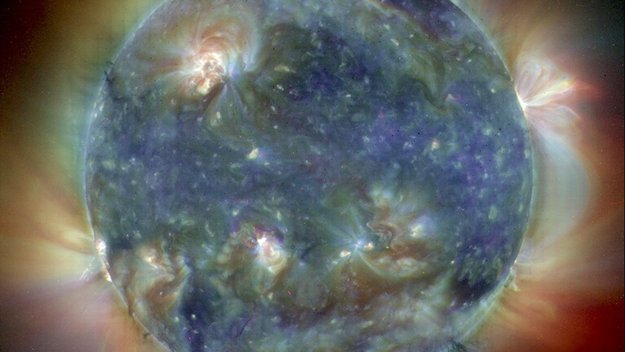
Space science image of the week: Superheated iron atoms show what human eyes cannot see in the Sun’s atmosphere
A “tail” of two comets
Two comets that will safely fly past Earth later this month may have more in common than their intriguingly similar orbits. They may be twins of a sort.
New gravity map gives best view yet inside Mars
The map will be helpful for future Mars exploration because better knowledge of the planet’s gravity anomalies helps mission controllers insert spacecraft more precisely into orbit about Mars.
A ‘Tail’ of Two Comets
Two comets that will safely fly past Earth later this month may have more in common than their intriguingly similar orbits.
Shoulders of giants
Stunning ultra high-definition video of ESA astronaut Tim Peake’s Principia mission
Week In Images
Our week through the lens: 14-18 March 2016
Making the case for an ice giants mission
By year’s end, we should know what NASA’s proposed mission to Neptune and/or Uranus could look like.
Astronomers Discover Colossal ‘Super Spiral’ Galaxies
A new class of behemoth spiral galaxies has been uncovered using NASA archival data.
Cold Atom Laboratory Doing Cool Research
The Cold Atom Laboratory will forge “fluffy molecules” and probe the wonders of quantum physics when it launches to the International Space Station next year.
ExoMars spotted in space
Operations image of the week: Asteroid hunters in three countries spotted ExoMars en route to the Red Planet
Space Station 360: Unity

Explore the Space Station’s second module on your mobile phone or virtual reality headset
Earth from Space
Join us Friday, 18 March, at 10:00 CET for the ‘Earth from Space’ video programme. This week features a Sentinel-2A image of Yuma in the US
Astronomers find source of most powerful cosmic rays
Astronomers have traced the source of the most energetic cosmic radiation to the center of the Milky Way.
News and Features – NASA's Jet Propulsion Laboratory 2016-03-16 22:03:00

Jason-3, a new U.S.-European satellite with NASA participation, has produced its first complete science map of global sea surface height, capturing the current El Niño.
All-in-one space antenna
Technology image of the week; ESA’s first 3D-printed dual-reflector antenna undergoes radio-frequency testing
Astronomers see black hole raging red
A black hole called V404 Cygni underwent dramatic brightening for about two weeks as it devoured material that it had stripped off an orbiting companion star.
Burning like the Sun
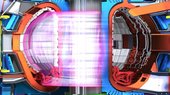
Engineers building parts of a new type of power plant for generating green energy with nuclear fusion are using their expertise from building rockets like Europe’s Ariane 5 to create the super-strong structures to cope with conditions similar to those inside the Sun.
Ceres’ bright spots show unexpected changes
Observations suggest that the material of the spots is volatile and evaporates in the warm glow of sunlight.
Inspiring the future

ESRIN’s Open Days 2016 gave 2000 schoolchildren an opportunity to learn more about ESA’s Centre for Earth Observation
Soft docking

Human spaceflight and robotic operations image of the week: ESA’s new docking ring
ExoMars sets off to solve the Red Planet’s mysteries
The spacecraft has begun a seven-month journey to Mars, where it will address unsolved mysteries of the planet’s atmosphere.
Signal received
Relive key moments as ExoMars 2016 separates from the Breeze upper stage and sends its first signals back to Earth
ExoMars on its way to solve the Red Planet’s mysteries
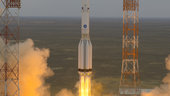
The first of two joint ESA-Roscosmos missions to Mars has begun a seven-month journey to the Red Planet, where it will address unsolved mysteries of the planet’s atmosphere that could indicate present-day geological – or even biological – activity.
Europe’s New Mars Mission Bringing NASA Radios Along
Two NASA radios aboard the European Space Agency’s Mars mission that launched today are engineered to provide communication relay service for rovers and landers on Mars.
Dawn Mission Wins Two Awards
The Dawn project team has earned two prestigious awards, honoring its mission to Vesta and Ceres.
Dueling Climate Cycles May Increase Sea Level Swings
A new study explores the relationship between climate cycles and sea level variations, and could lead to better predictions of sea level changes.
Local High Schools Win Robotics Competition
Proving their robots have what it takes to storm a castle, an alliance of three high schools won the Los Angeles regional FIRST Robotics Competition on March 12.
NASA Selects Proposals to Build Better Solar Technologies for Deep Space Missions
NASA’s Game Changing Development (GCD) program has selected four proposals to develop solar array technologies that will aid spacecraft in exploring destinations well beyond low-Earth orbit, including Mars.
Giotto mission at 30
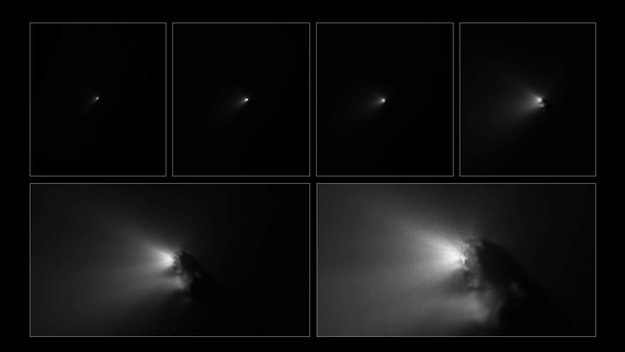
Space Science Image of the Week: ESA’s Giotto made its historic flyby of Comet Halley 30 years ago
Launch event replay
Watch ExoMars 2016 lift off into space, with launch build-up and commentary from mission experts
What’s eating at Pluto?
Scientists have discovered a giant “bite mark” on Pluto’s surface that may have been caused by a process known as sublimation.
Liftoff replay
Watch ExoMars 2016 liftoff from Baikonur, Kazakhstan on a Proton rocket
Mission control ready for Mars launch

ESA’s mission control conducted the dress rehearsal for the ExoMars launch today, an important final step in preparing the ground teams and systems for the 14 March departure to the Red Planet.
NASA Selects Scientists for Mars Rover Research Projects
NASA has selected 28 researchers as participating scientists for the Curiosity Mars rover mission, including six newcomers to the rover’s science team.
Rocket rollout
Video showing the rocket carrying the ExoMars 2016 spacecraft being rolled out to the launch pad
Week In Images
Our week through the lens: 7-11 March 2016
Telescopes combine to push frontier on galaxy clusters
These cosmic giants are not merely novelties of size or girth, rather they represent pathways to understanding how our entire universe evolved in the past and where it may be heading in the future.
Clocking the rotation rate of a supermassive black hole
A recent observational campaign allowed a team of astronomers to measure accurately the rotational rate of one of the most massive black holes in the universe.
Giotto 30
Thirty years ago, Giotto met Comet Halley, inspiring an art competition for children
ExoMars updates
Follow updates as we count down to the launch of ExoMars on Monday
Cyprus
Earth observation image of the week: a Sentinel-2A image of Cyprus, also featured on the Earth from Space video programme
ExoMars launch updates
Updates from the Baikonur cosmodrome in Kazakhstan for the launch of ExoMars 2016 today.
New NASA Instruments to Study Air Pollution, Cyclones
NASA has selected two new Earth science investigations, including one from JPL, that will put instruments in orbit to track harmful air pollutants and study tropical cyclones.
Space Station 360: Zarya

Explore the Space Station’s first module with your mobile phone or virtual-reality headset
The ESA Academy is born!
Space science and engineering education gets a new boost
First contact

Operations image of the week: In its first operational usage, ESA’s new tracking antenna in Australia followed Ariane’s launch yesterday, providing perfect contact
Earth from Space
Join us Friday, 11 March, at 10:00 CET for the ‘Earth from Space’ video programme. This week features a Sentinel-2A image of Cyprus
Close comet flyby threw Mars’ magnetic field into chaos
Scientists think the encounter blew away part of Mars’ upper atmosphere, much like a strong solar storm would.
Follow ExoMars launch
Watch live launch coverage on 14 March from 08:30 GMT. Launch is scheduled for 09:31 GMT and acquisition of signal is expected at 21:29 GMT
NASA Targets May 2018 Launch of Mars InSight Mission
NASA’s InSight mission to study the deep interior of Mars is targeting a new launch window that begins May 5, 2018.
NASA’s K2 mission: The Kepler Space Telescope’s Second Chance to Shine
How engineers devised a clever solution to give NASA’s Kepler spacecraft a new mission.
Ten Years of Discovery by Mars Reconnaissance Orbiter
True to its purpose, the big NASA spacecraft that began orbiting Mars a decade ago this week has delivered huge advances in knowledge about the Red Planet.
Close Comet Flyby Threw Mars’ Magnetic Field Into Chaos
Just weeks before the historic encounter of comet C/2013 A1 (Siding Spring) with Mars in October 2014, NASA’s Mars Atmosphere and Volatile Evolution (MAVEN) spacecraft entered orbit around the Red Planet.
Spooky lightning
Human spaceflight and robotic exploration image of the week: Lightning captured by ESA astronaut Tim Peake
Sharpest view ever of dusty disk around aging star
The Very Large Telescope Interferometer found disks around aging stars are similar to those around young ones.
NASA targets new May 2018 launch for Mars InSight mission
The mission’s primary goal is to help us understand how rocky planets — including Earth — formed and evolved.
Data hub
Technology image of the week: Tenerife, as imaged by ESA’s Proba-V minisatellite, is set to host the Big Data from Space conference
Ariane 5 launch contributes to Ariane 6 development

An Ariane 5 lifted off this morning to deliver telecom satellite Eutelsat-65 West A into its planned transfer orbit. Liftoff of flight VA229 occurred at 05:20 GMT (02:20 local time, 06:20 CET) from Europe’s Spaceport in Kourou, French Guiana.