
Yesterday, a ‘team of teams’ working at ESA’s control centre conducted a final rehearsal for tomorrow’s launch of Sentinel-3A.
Elu, loodus, teadus ja tehnoloogia
Yesterday, a ‘team of teams’ working at ESA’s control centre conducted a final rehearsal for tomorrow’s launch of Sentinel-3A.

Space Science Image of the Week: ESA’s SMART-1 orbited the Moon for 21 months , and sent back many striking views of the lunar surface
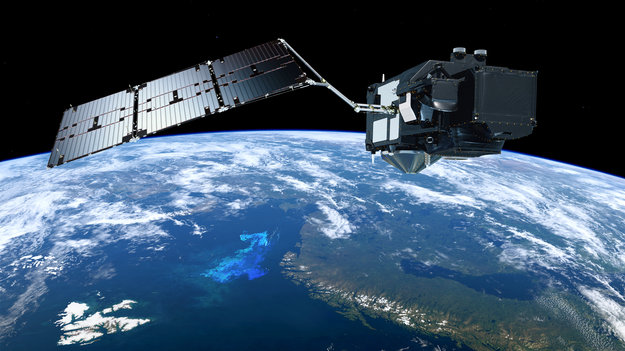
Live from ESA’s control centre in Germany: follow the events leading up to the launch of Sentinel-3A. Streaming begins at 17:00 GMT (18:00 CET) on 16 February
A special terahertz camera developed by ESA has been used by a UK company to develop an advanced scanner to spot even objects well hidden under clothes
For Valentine’s Day, a story about “entangled” particles, sensitive to each other no matter how far apart they may be.

ESA inaugurated a new tracking dish in Australia yesterday, marking a significant step in the Agency’s worldwide satcom network.

With four days to liftoff, the next Sentinel satellite for Copernicus is now on the launch pad at the Plesetsk cosmodrome in northern Russia.
The rocket will be fuelled the day before the launch – set for 16 February at 17:57 GMT (18:57 CET).
Our week through the lens: 8-12 February 2016
This new video explains how the ESA-designed EGNOS satnav augmentation system is making European aircraft landings even safer
A significant event happened at the Laser Interferometer Gravitational-wave Observatory on September 15 — a ripple in spacetime had occurred. But where?
The “Valentine Dome” is a gentle volcanic protrusion tucked against the western flank of Mare Serenitatis. It shows up only at the lowest of Sun angles, perfectly timed for viewing on the evening of Valentine’s Day (February 14).
West Coast viewers can watch the Moon occult Aldebaran on February 15/16, but everyone can see our satellite posing with the Hyades Cluster.
The Philae lander is facing conditions on Comet 67P from which it is unlikely to recover.
The story of the Copernicus satellites, present and future

Silent since its last call to mothership Rosetta seven months ago, the Philae lander is facing conditions on Comet 67P/Churyumov–Gerasimenko from which it is unlikely to recover.
New NASA satellite data have allowed researchers to identify and quantify, for the first time, how climate-driven increases of liquid water storage on land have affected sea level rise.
LIGO opens new window on the universe with observation of gravitational waves from colliding black holes.
ESA is thrilled to learn that gravitational waves have been detected, and is looking forward to starting its mission to test technologies that could extend the study of these exotic waves to space.

Join us Friday, 12 February, at 10:00 CET for the ‘Earth from Space’ video programme. This week features a Sentinel-2A image of Madrid, Spain
Learn about gravitational waves in this interview with Joseph Taylor, who discovered gravitational radiation in 1978 and won physics’ top prize 15 years later.
Albert Einstein’s 1936 paper denouncing gravitational waves was rejected by the journal that just published proof of their existence.
Fourteen space travel posters of colorful, exotic cosmic settings are now available free for downloading and printing.
These basins could have been episodically covered, perhaps during hundreds of millions of years, by lava and water lakes that were discharged from subsurface pressurized sources.
ASTRO-H is expected to provide breakthroughs in a wide variety of high-energy phenomena in the cosmos.
Tune into an announcement from the LIGO collaboration about gravitational waves on Thursday at 10:30 a.m. EST.
Technology image of the week: ESA’s proposed Asteroid Impact Mission would put down a micro-lander on its target body
Adam Steltzner, a JPL engineer who helped pioneer the breakthrough technique for landing a one-ton rover on Mars, has been elected into the National Academy of Engineering.
Human spaceflight and robotic exploration image of the week: investigating proxy atoms on the International Space Station in a discharge plasma tube

Asteroid Day, a global movement to increase knowledge and awareness of asteroids, announced its plans for 2016 from a press conference hosted at ESA’s technical heart in the Netherlands and livestreamed around the world.
Dwarf galaxies are considered building blocks of the giants, but the evidence for giants absorbing dwarfs has been largely circumstantial. Now we have caught a pair of galaxies in the act of a deadly embrace.
The discovery may help to explain the Great Attractor region, which appears to be drawing the Milky Way and hundreds of thousands of other galaxies towards it with a gravitational force equivalent to a million billion Suns.
A NASA/Duke University study provides new evidence why global temperatures remain stable in the long run unless pushed by outside forces, such as increased greenhouse gases.
New, detailed maps of the world’s natural landscapes created using NASA satellite data could help scientists better predict the impacts of future climate change.

Antarctica is surrounded by huge ice shelves. New research, using ice velocity data from satellites such as ESA’s heritage Envisat, has revealed that there is a critical point where these shelves act as a safety band, holding back the ice that flows towards the sea. If lost, it could be the point of no return.
Watch the live press conference unveiling Asteroid Day 2016’s events and partners from 1500 CET (1400 UTC) on Tuesday, 9 February
Watch a replay of the press conference announcing Asteroid Day 2016
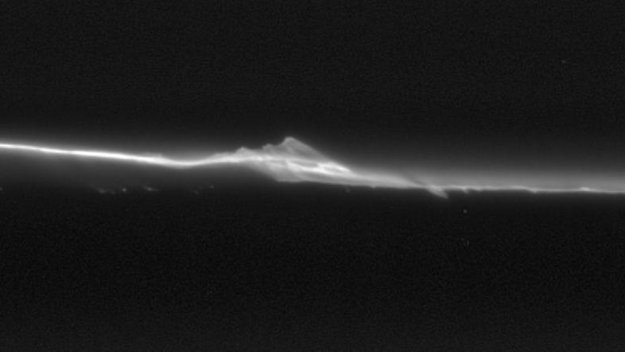
Space Science Image of the Week: Small moonlets within Saturn’s rings disrupt their surroundings and leave telltale trails, such as these spied by Cassini
Mitchell joined Apollo 14 commander Alan Shephard, Jr., in the lunar module Antares, which touched down February 5, 1971 in the Fra Mauro highlands.

ESA’s Sentinel-3 Mission Manager Susanne Mecklenburg and Mission Scientist Craig Donlon join the show to tell us more about the Sentinel-3A satellite and its mission

A start-up company from ESA’s business incubator in Flanders is helping to keep Belgian researchers safe in Antarctica
Moments after Sentinel-3A separates from its rocket, a team of European mission control specialists will assume control, shepherding the new spacecraft through its critical first days in space.

The 18th and final segment on James Webb Space Telescope’s primary mirror was installed on 3 February
Our week through the lens: 1-5 February 2016
The hills are likely miniature versions of the larger jumbled mountains on Sputnik Planum’s western border.
ESA and the European Polar Board sign a Memorandum of Understanding

Operations image of the week: #SocialSpaceWA – ESA’s first-ever social media event down under – happens at the New Norcia deep-space tracking station, Western Australia, next week
Join us Friday, 5 February, at 10:00 CET for the ‘Earth from Space’ video programme. This week features a Sentinel-1A image of the Siljan crater in Sweden
The excess of gamma rays from the center of the Milky Way probably originates from rapidly rotating neutron stars and not from dark matter annihilation as previously claimed.
There are no large caverns inside Comet 67P/Churyumov-Gerasimenko. ESA’s Rosetta mission has made measurements that clearly demonstrate this, solving a long-standing mystery.
NASA’s Juno spacecraft performs maneuver. Jupiter is five months away.

With the launch of Sentinel-3A confirmed for 16 February, preparations for liftoff are charging full speed ahead. The tricky task of fuelling the satellite has now been ticked off the ‘to do list’ and the propulsion team is already decontaminating their equipment before returning home.
Results confirm that more opaque areas in Saturn’s rings do not necessarily contain more material.

Technology image of the week: a commercial forest seen through the ‘eyes’ of a 3D laser scanning system
A small asteroid that two years ago flew past Earth at a comfortable distance of about 1.3 million miles (2 million kilometers) will safely fly by our planet again in a few weeks, though this time it may be much closer.
The first flight of NASA’s new rocket, the Space Launch System (SLS), will carry 13 low-cost CubeSats to test innovative ideas along with an uncrewed Orion spacecraft in 2018.
A recent study from NASA’s Cassini mission proves that, in the mysterious and beautiful rings of Saturn, appearances can be deceiving.
Human spaceflight and robotic operations image of the week: the capital of the United Kingdom at midnight on a Saturday seen from 400 km above
Groundhog Day is one of the four so-called cross-quarter days, which mark the midpoints between the solstices and equinoxes.
The Pictor A Galaxy contains a supermassive black hole at its center, and a huge amount of gravitational energy is released as material swirls toward the event horizon.

Europe’s ninth and tenth Galileo satellites have started broadcasting working navigation messages.

2 February marks World Wetlands Day. Discover some of Earth’s most important wetlands seen from 800 km high
Troy High School triumphed over 23 other teams at the National Science Bowl regional competition held at JPL on Jan. 30.
ESA is teaming up with the organisers of Asteroid Day 2016, scheduled for 30 June
Lifeforms taken from the most Mars-like place on Earth managed to survive the harsh conditions of space.
Space science image of the week: A fragile-looking rectangular shape is revealed to be a dying star
Watch the replay of the launch of the European Data Relay System’s first laser node from Baikonur, Kazakhstan on 29 January at 22:20 GMT
Watch the replay of the launch of the European Data Relay System’s first laser node from Baikonur, Kazakhstan on 29 January at 22:20 GMT
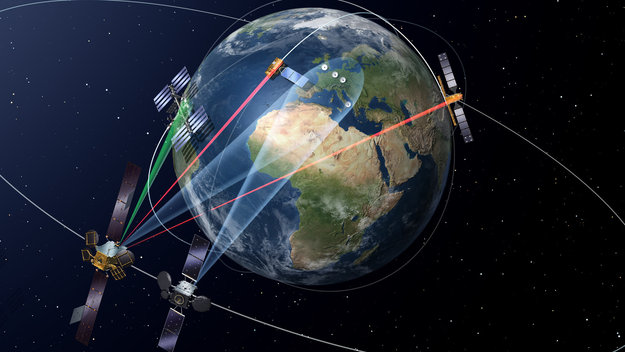
The European Data Relay System’s first laser terminal has reached space aboard its host satellite and is now under way to its final operating position
The first laser node of the European Data Relay System lifted off from Baikonur, Kazakhstan atop a Proton rocket on 29 January at 22:20 GMT
A colorful new animation shows a simulated flight over the surface of dwarf planet Ceres, based on images from NASA’s Dawn spacecraft.
The latest self-portrait from NASA’s Curiosity Mars rover shows the car-size mobile laboratory beside a dark dune where it has been scooping and sieving samples of sand.
Researchers have developed a way to make maps of natural disaster damage using remote sensing technology.
Our week through the lens: 25-29 January 2016
The key to reconstructing the giant impact was a chemical signature revealed in the rocks’ oxygen atoms.
A new map shows exposed water ice to be considerably more widespread across Pluto’s surface than was previously known.
Earth observation image of the week: a Sentinel-2A image of Sierra Leone, also featured on the Earth from Space video programme

Operations image of the week: Mission control teams begin intensive simulation training for the launch of Sentinel-1B, part of Europe’s Copernicus programme
Join us Friday, 29 January, at 10:00 CET for the ‘Earth from Space’ video programme. Ahead of World Wetlands Day this week’s video features the Sierra Leone River Estuary
Globular clusters can somehow bear second or even third sets of thousands of sibling stars.
Though hundreds of enormous high-velocity gas clouds whiz around the outskirts of our galaxy, this so-called “Smith Cloud” is unique because its trajectory is well known.
This block of martian terrain, etched with an intricate pattern of landslides and wind-blown dunes, is a small segment of a vast labyrinth of valleys, fractures and plateaus.

Watch the launch of ESA’s first European Data Relay System (EDRS) laser node live on 29 January. Streaming starts 20 minutes before liftoff, with launch expected at 22:20 GMT

An Ariane 5 last night delivered telecom satellite Intelsat-29e into its planned orbit. Liftoff of Ariane flight VA228 occurred on 27 January at 23:20 GMT (20:20 local time, 00:20 CET on 28 January) from Europe’s Spaceport in Kourou, French Guiana.
NASA’s Jet Propulsion Laboratory in Pasadena, Calif., has selected four companies to conduct design studies for a solar-electric-propulsion-based spacecraft for the agency’s Asteroid Redirect Robotic Mission (ARRM).
In just two 10-minute overflights, an airborne NASA synthetic aperture radar proved it could pinpoint areas of disturbance in Peru’s Nasca lines World Heritage Site.
Sixteen telescopes from space and the ground revealed a gorging black hole in a galaxy 900 million light-years from Earth.
Technology image of the week: the Mercury Planetary Orbiter of the BepiColombo mission standing high above the floor of its test chamber
NASA’s PRISM instrument is part of a flying lab that is studying the Southern Ocean’s appetite for carbon dioxide.
In 1801, when an astronomer pointed his telescope at a seemingly star-like point of light, he probably had no idea a robotic emissary from Earth would one day be sent there.
Once thought to be a free-floating planet, astronomers have now discovered it orbits its star only once every 900,000 years.
A new study suggests that the internal structure of a cluster is linked to the dark matter environment surrounding it.

Human spaceflight and robotic operations image of the week: Looking up at the European Service Module test model that will power NASA’s Orion spacecraft
When you go to Mars, bring a chef, argued Thorsten Schmidt at TEDxESA. Watch his talk on preparing meals for ESA astronaut Andreas Mogensen’s mission

Normally busy with observing high-energy black holes, supernovas and neutron stars, ESA’s Integral space observatory recently had the chance to look back at our own planet’s aurora.
A new study finds connections between properties of galaxy clusters and their surrounding dark-matter environment.
The Saturn-orbiting spacecraft has begun a series of maneuvers that will carry it out of Saturn’s ringplane toward the next phase of its mission.
NASA’s Opportunity rover, which landed on Mars 12 years ago this week, remained active through the shortest-sunshine days of the current Martian winter.
The first laser node of the European Data Relay System will be launched into space on 29 January from Baikonur, Kazakhstan

Space science image of the week: Soak up the sights of the diverse landscape in the Imhotep region of Rosetta’s comet