New research suggests the existence of “primordial standard clocks,” in the form of heavy particles, which can be used to measure the passage of time at the universe’s birth.
Primitive star offers clues about the early universe
This new, brightest example of an ultra metal-poor star will help astronomers understand how the first stars in the universe lived and died.
All the classical planets align under one sky this week
For those willing to brave January’s cold, five planets will look spectacular before sunrise all week.
Voyager Mission Celebrates 30 Years Since Uranus
Looking back at the first and only encounter with this mysterious planet (so far).
Launch timelapse
A timelapse of last month’s Principia launch to the Internaional Space Station with ESA astronaut Tim Peake, in 4K ultra-high definition
LISA Pathfinder arrives at its worksite
After a six-week journey, LISA Pathfinder arrived at its destination today, an orbit around a point of balance in space where it will soon start testing technologies crucial for exploring the gravitational Universe.
Week In Images
Our week through the lens: 18-22 January 2016
Dark ‘noodles’ may lurk in the Milky Way
Invisible structures shaped like noodles, lasagna sheets, or hazelnuts could be floating around in our galaxy radically challenging our understanding of gas conditions in the Milky Way.
NASA’s LISA Pathfinder Thrusters Operated Successfully
The Disturbance Reduction System on LISA Pathfinder has the goal of keeping the spacecraft as still as possible.
NASA Mars Rover Curiosity Tastes Scooped, Sieved Sand
At its current location for inspecting an active sand dune, NASA’s Curiosity Mars rover is adding some sample-processing moves not previously used on Mars.
A Planetary Quintet is Dancing Across the Skies
For the next month, early risers will have a chance to feast their eyes on a rare lineup of five planets.
Earth from Space

Join us Friday, 22 January, at 10:00 CET for the ‘Earth from Space’ video programme. This week features a Sentinel-2A satellite image of Bahrain
The aliens are silent because they are extinct
In research aiming to understand how life might develop, scientists realized new life would commonly die out due to runaway heating or cooling on their fledgling planets.
Colours of Bahrain
Earth observation image of the week: a Sentinel-2A image of Bahrain, also featured on the Earth from Space video programme
500 000 likes
Our Facebook page has passed 500 000 likes, thanks for joining us!
Nearing the limits of life on Earth
Failure to find active microbes in coldest Antarctic soils has implications for the search for life on Mars.
Researchers see signs of a real Planet X
The gravitational tug on outer solar system objects indicates this giant world — if it exists — would be 5,000 times more massive than Pluto and take up to 20,000 years to orbit the Sun.
From sea to space
Technology image of the week: What looks like an abstract artwork is actually a novel antenna to track global ship traffic from orbit
Spacewalk replay
Highlights from Friday’s spacewalk with Tim Peake and Tim Kopra
Plant gravity
Human spaceflight and robotic exploration image of the week: A lentil root grown on the International Space Station
Tim’s Star Wars
Tim Peake remembers his favourite Star Wars experience before his launch into space
Meet Sentinel-3
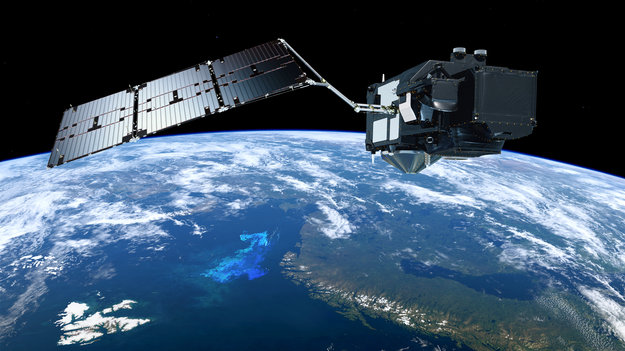
The third satellite for Europe’s Copernicus programme is set for launch on 4 February. Discover this multitalented mission
Earth from Space
Join us Tuesday, 19 January, at 14:00 CET for a special edition on Sentinel-3A in the cleanroom
Spokes in Serpens Core

Space Science Image of the Week: ESA’s Herschel space observatory has revealed much about our galaxy’s dense molecular clouds, including the nearby Serpens Core
Signs of second largest black hole in the Milky Way
Astronomers assume that this possible “intermediate mass” black hole is a key to understanding the birth of supermassive black holes located in the centers of galaxies.
Green pea galaxy provides insights to early universe evolution
This type of galaxy represents a special and rare class in the nearby universe, and it is believed to host stellar explosions or winds strong enough to eject ionizing photons.
Jason-3 Launches to Monitor Global Sea Level Rise
Jason-3, a U.S.-European oceanography satellite mission with NASA participation, lifted off from Vandenberg Air Force Base in California Sunday at 10:42 a.m. PST (1:42 EST) aboard a SpaceX Falcon 9 rocket.
Spacewalk selfie
ESA astronaut Tim Peake captures his spacewalk with Earth reflecting in his helmet’s visor
Most Luminous Galaxy Is Ripping Itself Apart
About 12.4 billion years ago, a supermassive black hole produced so much energy, it stirred up gas across its entire galaxy.
NASA’s Stardust Sample Return was 10 Years Ago Today
The Stardust capsule carried precious cargo that revolutionized our understanding of comets.
Jason-3 Lifts Off!
The Jason-3 international oceanography satellite mission is scheduled for launch from Vandenberg Air Force Base in central California on Sunday, Jan. 17.
Tim and Tim safely back in Space Station after spacewalk
After a 4 hour 43 minute spacewalk to replace a failed power regulator and install cabling, ESA astronaut Tim Peake and NASA astronaut Tim Kopra are back inside the International Space Station.
Week In Images
Our week through the lens: 11-15 January 2016
EDRS briefing
Replay of today’s media briefing on the European Data Relay System (EDRS) at ESA headquarters, 15 January
Most luminous galaxy is ripping itself apart
In this far-off galaxy, a ravenous black hole is devouring galactic grub. Its feeding frenzy produces so much energy, it stirs up gas across its entire galaxy.
Auld lang tracking syne
After 30 years of working on dozens of missions, an ESA antenna in Australia has been retired because of urban expansion and the increased risk of radio interference.
DG media briefing

Replay of ESA Director General Jan Woerner’s media briefing at ESA headquarters in Paris, 15 January
NOAA’s Jason-3 Spacecraft Ready for Launch
Jason-3, an international mission led by NOAA to continue U.S.-European satellite measurements of ocean-surface topography, is scheduled for launch on Jan. 17.
Test your astronaut skills and help ESA

With ESA astronaut Tim Peake stepping out of the International Space Station tomorrow, have you ever wanted to know if you have what it takes to be an astronaut? ESA is offering a trial version of a test developed for future astronauts for you to try at home – and by taking part you will help us select a new generation of astronauts.
EDRS briefing
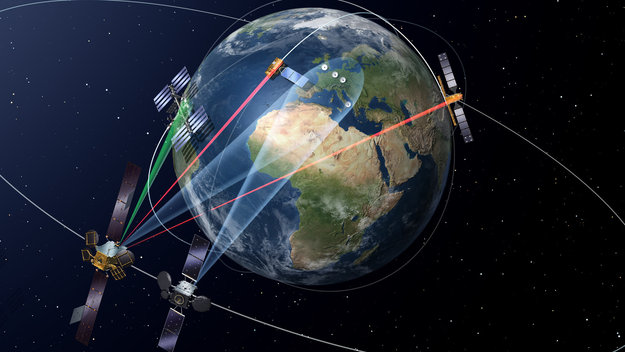
Watch media briefing on the European Data Relay System (EDRS) on Friday 15 January at ESA Headquarters, from 11:30 CET
View over an alien world

Operations image of the week: Huygens’ fish-eye view of Titan a decade ago
Rosetta team confirms water ice on Comet 67P’s surface
Although water vapor is the main gas seen flowing from Comet 67P/Churyumov–Gerasimenko, very few examples of exposed water ice have been found on the surface.
Brightest supernova ever seen pushes theoretical models to the edge
Researchers have discovered the brightest supernova ever seen, and the unusual object powering it could challenge what physicists know about dying stars.
Spacewalk live
Watch the spacewalk of ESA astronaut Tim Peake and NASA astronaut Tim Kopra on Friday as they exit the International Space Station
A Milky Way twin swept by an ultra-fast X-ray wind
ESA’s XMM-Newton has found a wind of high-speed gas streaming from the centre of a bright spiral galaxy like our own that may be reducing its ability to produce new stars.
NASA’s Juno Spacecraft Breaks Solar Power Distance Record
NASA’s Juno mission to Jupiter has broken the record to become humanity’s most distant solar-powered emissary.
Exposed ice on Rosetta’s comet confirmed as water
Observations made shortly after Rosetta’s arrival at its target comet in 2014 have provided definitive confirmation of the presence of water ice.
DG media briefing
Watch media briefing with ESA Director General Jan Woerner on Friday 15 January, from ESA headquarters. Streaming starts at 09:00 CET
New details on Ceres seen in Dawn images
Kupalo Crater has bright material exposed on its rim, which could be salts, and its flat floor likely formed from impact melt and debris.
New Details on Ceres Seen in Dawn Images
Intriguing features on dwarf planet Ceres stand out in exquisite detail in new images from NASA’s Dawn spacecraft, which recently reached its lowest-ever altitude at Ceres.
Testing LISA Pathfinder
While the spacecraft is en route to its operational orbit, scientists and engineers are checking that everything on LISA Pathfinder is working well. Watch how they trained for that
Launch tower
Human spaceflight and robotic exploration image of the week: Inside a rocket launch tower in Sweden
“X” marks a curious corner on Pluto’s icy plains
The New Horizons spacecraft shows some intriguing surface activity in the latest picture of Pluto.
Space on Dailymotion
Welcome to ESA’s new Dailymotion channel: Connect with us!
Proof that some galaxies are “LIERs”
A new study reveals the true origin of puzzling light from nearby galaxies — white dwarfs, not central black holes, explain these observations.
The case of the missing quasar
Astronomers can’t find any sign of the black hole at the center of a quasar. It is still there, of course, but over the past 10 years, it appears to have swallowed all the gas in its vicinity and gone quiet.
Dark pools on Titan

Space Science Image of the Week: Cassini–Huygens has discovered much about Saturn’s moon Titan, including pools of liquid methane and ethane on its surface
Week In Images
Our week through the lens: 4-8 January 2016
Galaxy quakes could improve hunt for dark matter
A team of scientists used spectroscopic observations to calculate the speed of the three Cepheid variables — stars used as yardsticks to measure distance in galaxies.
NASA Office to Coordinate Asteroid Detection, Hazard Mitigation
NASA has formalized its ongoing program for detecting and tracking near-Earth objects.
The future of 3D printing
Watch materials technology specialist Tommaso Ghidini’s talk from the inaugural TEDxESA event
Most distant massive galaxy cluster identified
The megastructure is about 250 trillion times more massive than the Sun, or 1,000 times more massive than the Milky Way Galaxy.
NASA Telescopes Find ‘Twins’ of Superstar Eta Carinae
A new study has found five objects with similar properties to the most luminous and massive stellar system within 10,000 light-years of Earth.
NASA CORAL Mission to Raise Reef Studies to New Level
A NASA field campaign will measure the condition of the world’s threatened coral reef ecosystems over a larger area, and in greater detail, than ever before.
NuStar’s latest image maps Andromeda’s dead stars
NuSTAR has observed 40 “X-ray binaries” — intense sources of X-rays comprised of a black hole or neutron star that feeds off a stellar companion.
Space telescopes see “twins” of superstar Eta Carinae in other galaxies
As one of the nearest laboratories for studying high-mass stars, Eta Carinae has been a unique, important astronomical touchstone since its eruption in the 1840s.
Exit Envisat
Technology image of the week: dismantling a replica of Europe’s largest environmental satellite
Andromeda Galaxy Scanned with High-Energy X-ray Vision
Astronomers are looking to the Andromeda galaxy for new views of dead stellar remains.
Runaway Stars Leave Infrared Waves in Space
Cosmic bow shocks are leading astronomers to some of the galaxy’s speediest stars.
Northern lights
Human spaceflight and operations image of the week: Aurora borealis seen during recent suborbital launch
Tim Peake set for spacewalk
ESA astronaut Tim Peake and NASA astronaut Tim Kopra will exit the International Space Station next week to repair a power unit on the outside.
Schiaparelli emerges
Space Science Image of the Week: The ExoMars Schiaparelli module is unpacked in a cleanroom in Baikonur, to be prepared for launch in March
Galactic merger reveals an unusual black hole that has shed its stars
An unusually star-deprived black hole at the site of two merged galaxies could provide new insight into black hole evolution and behavior.
Chandra finds supermassive black hole burping nearby
Astronomers found this outburst in the supermassive black hole centered in the small galaxy NGC 5195.
Orion spacecraft
Read about ESA’s service module that will power NASA’s Orion spacecraft to the Moon and beyond
2016 preview
2016 will be another exciting year for the European Space Agency
Rover Rounds Martian Dune to Get to the Other Side
NASA’s Curiosity rover has driven to the downwind side of an active sand dune and returned images of cascaded sand.
Message to the Queen
British ESA astronaut Tim Peake’s message to Her Majesty Queen Elizabeth II of the United Kingdom of Great Britain and Northern Ireland
Rotational clock for stars needs recalibration
One recently developed method for determining a star’s age needs to be recalibrated for stars that are older than our Sun.
Strong magnetic fields prevalent in stars
A survey of red giants shows that most host strong magnetic fields deep within their cores.
Holiday highlights
Images from Rosetta taken over the holiday period
Power to ISS
Sunrise strikes the solar panels that power the International Space Space Station, caught by astronaut Tim Peake on New Year’s Eve
Measuring gravity’s pull at the surface of distant stars
Researchers have found a new way to measure the pull of gravity at the surface of a star.
Postal service celebrates Pluto exploration and more
The U.S. Postal Service has previewed the New Year’s series of stamps highlighting NASA’s Planetary Science program, including a do-over of a famous Pluto stamp commemorating the NASA New Horizons’ historic 2015 flyby.
Cassini Completes Final Close Enceladus Flyby
Cassini will continue to monitor activity on Enceladus from a distance, through the end of its mission in Sept. 2017.
News and Features – NASA's Jet Propulsion Laboratory 2015-12-29 23:12:00

The current strong El Niño brewing in the Pacific Ocean shows no signs of waning, as seen in the latest satellite image from the U.S./European Ocean Surface Topography Mission (OSTM)/Jason-2 mission.
James Webb mirrors meet halfway mark
The installation of its ninth mirror marks the halfway completion point for the James Webb Space Telescope’s segmented primary mirror.
What stops solar eruptions?
Physicists determine the difference between false starts and true eruptions by studying the Sun’s magnetic field.
Europe’s first decade of navigation satellites

Ten years ago today saw the launch of Europe’s very first navigation satellite. A decade of hard work later, more than a third of the Galileo constellation has followed it into orbit and a ground network sharpening the satnav system’s accuracy encompasses the globe.
This year marks the first Full Moon on Christmas Day since 1977
Santa likely won’t need Rudolph’s help this year, not with a Full Moon sharing the sky over Christmas Eve and morning. This is the first Full Moon to occur on Christmas Day since 1977; another one won’t arrive until 2034.
Our satell…
Christmas Eve asteroid
The closest this object will come to Santa and his eight tiny reindeer is about 28 times the distance between Earth and the moon.
Radar Images of a Christmas-Eve Asteroid: An Early Gift for Astronomers
New radar images show asteroid 2003 SD220, which will safely fly past Earth on Dec. 24.
Radar Images of a Christmas-Eve Asteroid: An Early Gift for Astronomers
New radar images show asteroid 2003 SD220, which will safely fly past Earth on Dec. 24.
Year in images
Our year through the lens: a selection of our favourite images for 2015
NASA suspends InSight mission to Mars
Unable to fix a leak with the mission’s main science instrument in time to make the 2016 launch window, NASA must wait two years to try again.
Probing Mars, charging cars

Engineers developing a drill for probing Mars, the Moon and asteroids have created the world’s first portable charger to power up electric cars anywhere, anytime.
Giant comets could pose danger to life on Earth
The discovery of hundreds of giant comets in the outer solar system over the last two decades means that these objects pose a much greater hazard to life than asteroids.
Lowdown on Ceres: Images From Dawn’s Closest Orbit
NASA’s Dawn spacecraft, cruising in its lowest and final orbit at dwarf planet Ceres, has delivered the first images from its best-ever viewpoint.
NASA Suspends 2016 Launch of InSight Mission to Mars
After thorough examination, NASA managers have decided to suspend the planned March 2016 launch of the Interior Exploration using Seismic Investigations Geodesy and Heat Transport (InSight) mission.
U.S. Demonstrates Production of Fuel for Missions to the Solar System and Beyond
The Department of Energy, with NASA funding, has completed the first U.S. production in nearly 30 years of a specialized fuel to power future deep space missions.