The Department of Energy, with NASA funding, has completed the first U.S. production in nearly 30 years of a specialized fuel to power future deep space missions.
Chandra finds remarkable galactic ribbon unfurled
An extraordinary ribbon of hot gas trailing behind galaxy cluster Zwicky 8338 has been discovered using data from NASA’s Chandra X-ray Observatory.
Methane Emissions in Arctic Cold Season Higher Than Expected
The amount of methane escaping from the ground during the Arctic’s long cold period each year and entering Earth’s atmosphere is likely much higher than current estimates.
Cassini Completes Final Close Enceladus Flyby
NASA’s Cassini spacecraft has begun transmitting data and images from the mission’s final close flyby of Saturn’s active moon Enceladus, which took place on Saturday, Dec. 19.
2015 highlights
A look back at the highlights of 2015 for Europe in Space
New findings from New Horizons shape understanding of Pluto and its moons
Among the highlights of a recent meeting are insights into Pluto’s geology and composition as well as new details about the unexpected haze in Pluto’s atmosphere and its interaction with the solar wind.
How big can a black hole grow?
Black holes in the hearts of galaxies could swell to 50 billion times the Sun’s mass before losing the gas disks they rely on.
A sparkling quintet

Space Science Image of the Week: A multicolour view of the galaxies in Stephan’s Quintet as revealed by Herschel, XMM-Newton and ground observatories
NuSTAR finds clumpy doughnut around black hole
Scientists used the NASA NuSTAR and ESA XMM-Newton X-ray observatories to peer inside the thick disk of material around a massive black hole.
Silica presents puzzles for Mars rover team
NASA’s Curiosity rover has found much higher concentrations of silica at recent sites than anywhere else it has visited since landing on Mars.
Week In Images
Our week through the lens: 7-11 December 2015
Christmas comet
Season’s greetings from Rosetta and Philae
Tim’s media briefing
Watch replay of ESA astronaut Tim Peake’s first live video link since he arrived at the International Space Station
Lightsabres for real
ESA’s animated guide to lasers on Earth and in space, for kids of all ages
Mongolian marvel
Earth observation image of the week: a Sentinel-2A image of Southern Mongolia, also featured on the Earth from Space video programme
Hubble sees the force awakening in a newborn star
Hubble catches Star Wars fever, showing off “lightsaber” feature shooting out of a young star system.
Cassini closes in on Enceladus one last time
NASA’s Saturn-orbiting Cassini spacecraft makes its final close flyby of the ocean-bearing moon Enceladus on December 19.
Mars Spacecraft Shipped to California for March Launch
NASA’s next Mars spacecraft has arrived at Vandenberg Air Force Base, California, for final preparations before a launch scheduled in March 2016 and a landing on Mars six months later.
NuSTAR Finds Cosmic Clumpy Doughnut Around Black Hole
The donut-shaped disks of material that feed growing black holes may not be as smooth as once thought.
Rocks Rich in Silica Present Puzzles for Mars Rover Team
At recently studied sites, Mars Curiosity has found higher silica concentrations than at sites visited earlier in its Martian travels.
Asteroid Looks Even Better Second Time Around
Radar imagery of asteroid 1998 WT24 has been obtained by NASA’s Goldstone Solar System Radar.
Dark Universe Mission Ready to Take Shape
The Euclid mission has passed its preliminary design review, clearing the way to start construction.
Galileo’s power of 12
Europe now has a dozen navigation satellites in orbit
Earth from Space

Join us Friday, 18 December, at 10:00 CET for the ‘Earth from Space’ video programme. This week features a Sentinel-2A image of Southern Mongolia
Shifting ice

ESA’s CryoSat mission has provided the best maps yet of the changing height of Earth’s largest ice sheets
Galileo’s dozen: 12 satellites now in orbit

The pace of deploying Europe’s own satellite navigation system continued to increase with today’s launch of the latest pair of Galileo satellites, doubling the number of satellites in space within nine months.
Launch replay
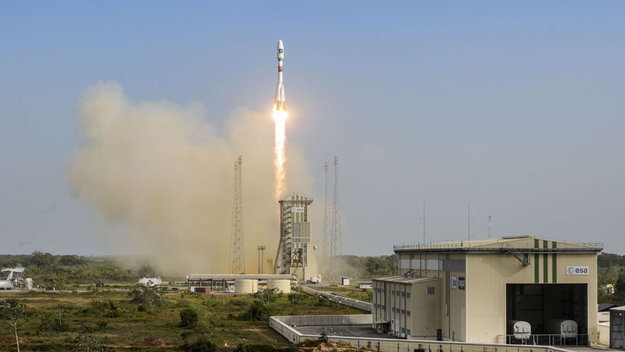
Replay of the launch transmission of Soyuz carrying Galileo satellites 11 and 12 on 17 December at 11:51 GMT from Europe’s Spaceport in French Guiana
Galileo lifts off

Replay of liftoff of Soyuz carrying Galileo satellites 11 and 12, at 11:51 GMT, from Europe’s Spaceport in French Guiana
ESA confirms James Webb telescope Ariane launch
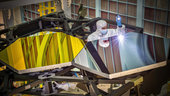
The next great space observatory took a step closer this week when ESA signed the contract with Arianespace that will see the James Webb Space Telescope launched on an Ariane 5 rocket from Europe’s Spaceport in Kourou in October 2018.
Euclid dark Universe mission ready to take shape
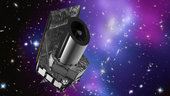
Euclid, ESA’s dark Universe mission, has passed its preliminary design review, providing confidence that the spacecraft and its payload can be built. It’s time to start ‘cutting metal’.
Stellar remains reveal Andromeda’s history
Planetary nebulae, stars similar to the Sun which have burnt up their fuel and ejected their external layers, make it possible to study two main substructures of the Andromeda galaxy and determine their histories.
Hubble captures first-ever predicted exploding star
The reappearance of the supernova was calculated from different models of the galaxy cluster whose immense gravity is warping the supernova’s light.
Cassini Closes in on Enceladus, One Last Time
A thrilling chapter in solar system exploration will soon conclude, as NASA’s Saturn-orbiting Cassini spacecraft makes its final close flyby of the ocean-bearing moon Enceladus.
Studies of Recent and Ancient Nepal Quakes Yield Surprises
The Gorkha, Nepal earthquake in 2015 triggered far fewer landslides and much less damage to glacial lakes than expected; while medieval times earthquakes caused massive landscape changes.
Study: Climate Change Rapidly Warming World’s Lakes
Climate change is rapidly warming lakes around the world, threatening freshwater supplies and ecosystems, according to a new NASA and National Science Foundation-funded study.
NASA Spinoff 2016: Space Technologies Used on Earth
NASA technology is all around us, turning trash into oil, saving women from a deadly complication of childbirth, and putting the bubbles in beer.
Watch Galileo launch
See the launch of Galileo satellites 11 and 12 on Thursday 17 December. Streaming starts at 11:30 GMT (12:30 CET)
Gamma rays tell story of their travels
A flare of very high-energy gamma rays emitted from a galaxy halfway across the universe has put new bounds on the amount of background light in the universe and given astrophysicists clues to how and where such gamma rays are produced.
The XXL hunt for galaxy clusters
A team of telescopes reveals a 3-D view of a giant sample of monstrous galaxy clusters.
NASA Examines Global Impacts of the 2015 El Nino

People the world over are feeling, or will soon feel, the effects of the strongest El Niño event since 1997-98, currently unfolding in the eastern equatorial Pacific Ocean.
Meanwhile, in a galaxy not so far, far away…
The fantasy creations of the “Star Wars” universe are strikingly similar to real planets in our own Milky Way galaxy.
ESA astronaut Tim Peake begins six-month stay on Space Station
ESA astronaut Tim Peake, NASA astronaut Tim Kopra and Russian cosmonaut commander Yuri Malenchenko arrived at the International Space Station today, six hours after their launch at 11:03 GMT.
Galileos in the zone for launch

Galileos 11 and 12 are on the launch pad, attached to the top of their Soyuz rocket in readiness for this week’s launch.
Up close
Human spaceflight and operations image of the week: Principia launch pictured from just 113 m away
Season’s greetings
Send an out-of-this-world e-card to your friends
Deal sealed for new Sentinel-1 satellites

ESA has ensured the continuation of the Sentinel-1 Earth observation satellite series for Europe’s Copernicus environmental programme by ordering two more satellites.
The €400 million contract was signed today with Thales Alenia Space of Italy to build Sentinel-1C and -1D.
Vote for the Top Space Stories of 2015
In 2015, astronomers found signs of dark matter close to home, unraveled the mystery of a famous supernova, and took a trip to Pluto.
Principia launch
Replay: ESA astronaut Tim Peake, NASA astronaut Tim Kopra and commander Yuri Malenchenko heading to the International Space Station
Principia liftoff
ESA astronaut Tim Peake, NASA astronaut Tim Kopra and commander Yuri Malenchenko were launched into space at 11:03 GMT (12:03 CET)
Go for the burn: how to melt a satellite

Imagine being confronted with half a tonne or more of metal and composite structures, electronics boxes and solar panels – an unwanted satellite. And then being handed a blowtorch and told to melt it into vapour.
New spin on star-forming galaxies
Astronomers think low spin is the ultimate cause of clumpy gas that drives high rates of galactic star formation.
Hubble solves missing water mystery for Hot Jupiters
Astronomers used the space telescope to probe whether the exoplanets lacked water or were simply hiding it with clouds or hazes.
Missing Water Mystery Solved in Comprehensive Survey of Exoplanets
Missing Water Mystery Solved in Vast Exoplanet Survey
Some Mars Minerals with Watery Past May be Relatively Young
Alteration of minerals by water may have been common on Mars into the second half of the planet’s age, a new analysis of observations by NASA’s Mars Reconnaissance Orbiter suggests.
How NASA Sees El Nino Effects From Space

NASA data are helping scientists learn more about some of El Niño’s key impacts around the globe.
Window on the past
Space Science Image of the Week: Mighty black holes at the core of distant galaxies brighten up XMM-Newton’s view of the Lockman Hole
Vega graduates with perfect record

Europe’s Vega light launcher is entering its commercial life boasting a flawless record and an impressive set of capabilities for a wide range of missions.
Ride along with Rosetta through the eyes of OSIRIS
Rosetta’s OSIRIS camera team has launched a new website to showcase their recent images of Comet 67P/Churyumov–Gerasimenko.
Ice matters
The satellite age has revolutionised our understanding of Earth, giving us accurate information to help critical agreements on climate change such as at the current COP21 conference in Paris. Diminishing polar ice is one of the most visibl…
Week In Images
Our week through the lens: 7-11 December 2015
A super-Earth in our solar system? Not so fast.
Astronomers quietly submitted a research paper claiming they may have found a large planet on the far fringes of our solar system.
Catch comet Catalina on its way out of the solar system
In the coming months, comet Catalina — once thought to be an asteroid — should be visible with the naked eye for skywatchers in the Northern Hemisphere.
A “ghost from the past” recalls the infancy of the Milky Way
This globular cluster is in the last stages of its existence.
Spot comet Catalina this weekend
Comet Catalina has crossed into Northern Hemisphere skies and is now visible through binoculars.
Talking climate
Discover more about the importance of ice sheets as an Essential Climate Variable to understand our changing world
Principia live

Watch ESA astronaut Tim Peake’s voyage to the International Space Station, including launch, docking and hatch opening on 15 December
Space telescopes see Jupiter-like storm on small star
While planets have been known to have cloudy storms, this is the best evidence yet for a star that has one.
NASA Telescopes Detect Jupiter-Like Storm on Small Star
A star the size of Jupiter has a raging, giant storm
NASA Mars Rover Curiosity Reaches Sand Dunes
The Curiosity rover is examining the first active sand dunes ever studied up close on any planet besides Earth.
Can’t stop me now: Tim set for Principia launch
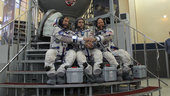
ESA astronaut Tim Peake, NASA astronaut Tim Kopra and cosmonaut commander Yuri Malenchenko will leave our planet for the International Space Station 15 December at 11:03 GMT, marking the start of Tim Peake’s Principia mission.
Talking climate
Discover more about the importance of ocean colour as an Essential Climate Variable to understand our changing world
Earth from Space
Join us Friday, 11 December, at 10:00 CET for the ‘Earth from Space’ video programme. This week features a Sentinel-2A image of Les Deux Alpes in France
Top space stories of 2015: Dark matter hints next door
Dark matter annihilation may be the cause of the gamma-ray glow emanating from nearby dwarf galaxy Reticulum II.
Top space stories of 2015: Europe’s visit to Comet 67P
The European Space Agency’s history making visit to Comet 67P/Churyumov-Gerasimenko revealed surprising science about this dirty snowball.
The salty truth about Ceres’ bright spots
Scientists say salt best explains the weird white spots that stand out against asphalt colored Ceres.
Top space stories of 2015: Pluto and its moons revealed
2015 was the “Year of Pluto,” revealing the icy world and its moons in stunning detail and upending much of what we thought we knew about this system.
Top space stories of 2015: Ceres takes center stage
NASA’s Dawn spacecraft entered orbit around Ceres March 6, revealing a pockmarked and ice-rich surface, as well as weird bright spots scientists now say is salt.
Top Space Stories of 2015: Deciphering a famous supernova
Several discoveries published in 2015 reveal changes to the blast site and uncover secrets of the explosion first seen 28 years ago.
Top Space Stories of 2015: Supernova hunters see quadruple
Astronomers used the Hubble Space Telescope to catch a faraway galaxy focusing the light of an even more distant supernova four times over.
Top space stories of 2015: A surprise glow at the galaxy’s center
NASA’s NuSTAR spacecraft spotted an X-ray glow at the Milky Way’s monstrous heart. Its origin remains a mystery.
Top space stories of 2015: Scientists spot youngest cluster of galaxies
Scientists spotted four distant quasars — bright centers of active galaxies — in close proximity to each other, making them the earliest galaxy cluster yet.
Top space stories of 2015: The Red Planet under water
An ocean the size of the Atlantic may have once covered Mars’ northern hemisphere.
The Very Large Telescope revisits a curious cosmic collision
Among the debris of a 360-million-year-old cosmic collision is a rare and mysterious young dwarf galaxy.
Top Space Stories of 2015: Water abounds in the outer solar system
Saturn’s moon Enceladus and Jupiter’s moon Ganymede offer oceans of possibilities under their icy surfaces.
New Clues to Ceres’ Bright Spots and Origins
Ceres reveals some of its well-kept secrets in two new studies in the journal Nature, thanks to data from NASA’s Dawn spacecraft.
No alien laser signals seen from strange star
The star has puzzled astronomers because it shows irregular dimming unlike anything seen for another star.
Venus climate orbiter Akatsuki inserted into Venus’ orbit
After missing on their first attempt in 2010, the Japan Aerospace Exploration Agency successfully inserted the Venus Climate Orbiter Akatsuki into orbit around Venus.
Talking climate
Discover more about the importance of aerosols as an Essential Climate Variable to understand our changing world
CubeSat calling
Technology image of the week: radio testing of the world’s first CubeSat designed for atmospheric reentry
EDRS-A and its laser are ready to fly
After a year-long wait in storage for a Proton rocket to become available, the EDRS-A laser communications payload and its Eutelsat host satellite are finally at the Baikonur cosmodrome and being prepared for launch in late January.
Talking climate
Discover more about the importance of soil moisture as an Essential Climate Variable to understand our changing world
Launch positions
Human spaceflight and operations image of the week: ESA astronaut Tim Peake tries out his pressure suit and seat for 15 December launch
How to watch the Geminid meteor shower
Enjoying a meteor shower requires only comfort and patience. In this brief video, Senior Editor Michael E. Bakich gives some tips on spending a night under “shooting stars.”
Hubble helps solve mystery of “born again” stars
The most popular explanation is that an aging star spills material onto a smaller companion star, and the small star bulks up on mass to become hotter and bluer, thus becoming a blue straggler.
Geminid meteor shower peaks under dark skies
Conditions are prime for this year’s Geminid meteor shower. Here are some helpful tips to enjoy the show.
How to watch the Geminid meteor shower
Enjoying a meteor shower requires only comfort and patience. In this brief video, Senior Editor Michael E. Bakich gives some tips on spending a night under “shooting stars.”
Robot arm simulates close approach of ESA’s asteroid mission

The final approach to an asteroid has been practised for ESA’s proposed Asteroid Impact Mission using a real spacecraft camera mounted on a robot arm.
Galileo taking shape
A new video shows Galileos 11 and 12 being readied for their 17 December launch, concluding a year when the number of satellites in orbit will have doubled
Talking climate
Discover more about the importance of sea level as an Essential Climate Variable to understand our changing world
NASA returns to Jupiter 20 years after Galileo
The Juno spacecraft meets the gas giant July 4, finally ending the decades-long hiatus of Jupiter missions.