Our week through the lens: 26-30 September 2016
Rosetta’s descent

Closer and closer: image highlights captured during Rosetta’s descent to the comet’s surface
Once upon a time…
On the last day of her mission, Rosetta slowly descends onto the comet, but there is one last surprise in store
Rosetta’s final hour
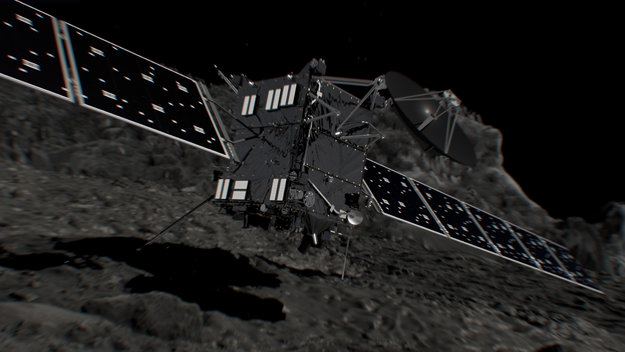
Watch how the final stages of Rosetta’s descent to the surface of the comet played out at ESA’s mission control
Mission complete: Rosetta’s journey ends in daring descent to comet

ESA’s historic Rosetta mission has concluded as planned, with the controlled impact onto the comet it had been investigating for more than two years.
Devon Island: The last stop before Mars
Talk of sending humans to Mars hit a fever pitch this week following SpaceX founder Elon Musk’s big announcement Tuesday.
He outlined an ambitious plan to begin sending cargo missions to Mars by 2018, with the first manned missions leaving by 20…
Deep mysteries lurk below (and even above) Mercury’s surface
How does Mercury exist? The more we learn, the more confusing this little world appears.
Ouarkziz crater
Earth observation image of the week: a Sentinel-2A image of the Anti-Atlas mountains in Western Algeria
Curiosity Finds Evidence of Mars Crust Contributing to Atmosphere
NASA’s Curiosity rover has found evidence that chemistry in the surface material on Mars contributed to the makeup of its atmosphere.
Farewell Rosetta: ESA Mission to End on Comet Surface
The European Space Agency Rosetta mission will end dramatically Friday, Sept. 30, by touching down on a region of a comet known for active pits that spew dust into space.
Farewell Rosetta: ESA Mission to End on Comet Surface
The European Space Agency Rosetta mission will end dramatically Friday, Sept. 30, by touching down on a region of a comet known for active pits that spew dust into space.
Curiosity Finds Evidence of Mars Crust Contributing to Atmosphere
NASA’s Curiosity rover has found evidence that chemistry in the surface material on Mars contributed to the makeup of its atmosphere.
Celebrate Rosetta science
Replay: Rosetta science experts present the key discoveries made at the comet
20 hours to go

Operations image of the week: Clock in ESA’s mission control counts down to Rosetta’s comet impact on Friday
Neurofilaments Function as Shock Absorbers: Compression Response Arising from Disordered Proteins
Author(s): Micha Kornreich, Eti Malka-Gibor, Ben Zuker, Adi Laser-Azogui, and Roy BeckProteins in nerve cells function like shock absorbers that protect the cells from mechanical stress.[Phys. Rev. Lett. 117, 148101] Published Thu Sep 29, 2016
Ortho-Para-Dependent Pressure Effects Observed in the Near Infrared Band of Acetylene by Dual-Comb Spectroscopy
Author(s): Kana Iwakuni, Sho Okubo, Koichi M. T. Yamada, Hajime Inaba, Atsushi Onae, Feng-Lei Hong, and Hiroyuki Sasada
The pressure broadening coefficient of the ν1+ν3 vibrational band of acetylene is experimentally observed to have a nuclear spin state dependence.
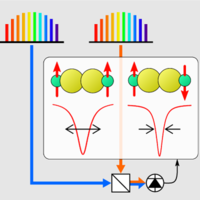
[Phys. Rev. Lett. 117, 143902] Published Thu Sep 29, 2016
Ortho-Para-Dependent Pressure Effects Observed in the Near Infrared Band of Acetylene by Dual-Comb Spectroscopy
Author(s): Kana Iwakuni, Sho Okubo, Koichi M. T. Yamada, Hajime Inaba, Atsushi Onae, Feng-Lei Hong, and Hiroyuki Sasada
The pressure broadening coefficient of the ν1+ν3 vibrational band of acetylene is experimentally observed to have a nuclear spin state dependence.
[Phys. Rev. Lett. 117, 143902] Published Thu Sep 29, 2016
Neurofilaments Function as Shock Absorbers: Compression Response Arising from Disordered Proteins
Author(s): Micha Kornreich, Eti Malka-Gibor, Ben Zuker, Adi Laser-Azogui, and Roy BeckProteins in nerve cells function like shock absorbers that protect the cells from mechanical stress.[Phys. Rev. Lett. 117, 148101] Published Thu Sep 29, 2016
How much would it cost to live on the Moon?
Wendover Productions calculates and explains how much it would cost to live on the Moon in nine minutes.
The comet probe Rosetta is set for its grand finale on Friday
After a historic mission, the craft will crash into Comet 67P gently and begin its eternal sleep.
Astronomers spy a “stellar cocoon” outside the Milky Way for the first time
Using ALMA data on a nearby galaxy, researchers find a treasure trove of information on star formation outside our own galaxy.
The Frontier Fields: Where Primordial Galaxies Lurk
NASA’s Spitzer Space Telescope has wrapped up its observations for the Frontier Fields project.
NASA TV Coverage of European Mission Comet Touchdown
NASA TV and the agency’s website will air the conclusion of ESA’s Rosetta mission early Friday morning, Sept. 30, with NASA commentary, interviews and analysis of the successful mission.
The Frontier Fields: Where Primordial Galaxies Lurk
NASA’s Spitzer Space Telescope has wrapped up its observations for the Frontier Fields project.
NASA TV Coverage of European Mission Comet Touchdown
NASA TV and the agency’s website will air the conclusion of ESA’s Rosetta mission early Friday morning, Sept. 30, with NASA commentary, interviews and analysis of the successful mission
Ultracompact Minihalos as Probes of Inflationary Cosmology
Author(s): Grigor Aslanyan, Layne C. Price, Jenni Adams, Torsten Bringmann, Hamish A. Clark, Richard Easther, Geraint F. Lewis, and Pat ScottSearches for ultracompact clumps of cold dark matter have come up empty, but these nondetections place new limi…
Ultracompact Minihalos as Probes of Inflationary Cosmology
Author(s): Grigor Aslanyan, Layne C. Price, Jenni Adams, Torsten Bringmann, Hamish A. Clark, Richard Easther, Geraint F. Lewis, and Pat ScottSearches for ultracompact clumps of cold dark matter have come up empty, but these nondetections place new limi…
The journey continues
Once again, the lines between science fiction and science fact blur in this epilogue to the short film, Ambition
Here comes the Black Moon
What’s a Black Moon and what should you expect to see? Not much.
Black hole tidal disruption flares write their signature in cosmic dust
The telltale signs of a voracious black hole may be hiding in plain sight.
Black hole Sunday
Technology image of the week: A simulated black hole appears at the location of Sunday’s ESA Open Day in the Netherlands
One-eyed robot learns to see in weightlessness
A small drone taught itself to judge distances using only one eye during trials aboard the International Space Station, ESA-backed researchers have reported.
Revisiting the fog bottle experiment
In this article we propose an irreversible adiabatic expansion model, modified from previous work,
to explain the fog bottle experiment. Our model divides the phenomenon into five thermodynamic
states, and we include in our calculation irreversible w…
Random walk with nonuniform angular distribution biased by an external periodic pulse
We studied the motion of a random walker in two dimensions with nonuniform angular distribution
biased by an external periodic pulse. Here, we analytically calculated the mean square displacement
(end-to-end distance of a walk after n time steps), wi…
Clean house
Human spaceflight and robotic exploration image of the week: Testing antibacterial smart materials on the International Space Station
Observation of Coupled Vortex Lattices in a Mass-Imbalance Bose and Fermi Superfluid Mixture
Author(s): Xing-Can Yao, Hao-Ze Chen, Yu-Ping Wu, Xiang-Pei Liu, Xiao-Qiong Wang, Xiao Jiang, Youjin Deng, Yu-Ao Chen, and Jian-Wei Pan
Researchers mixed two superfluids of different atoms together and observed that vortices in one affected those in the other—evidence of mutual interaction between the two species.
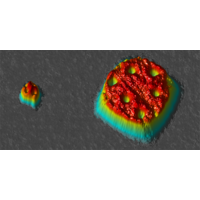
[Phys. Rev. Lett. 117, 145301] Published Tue Sep 27, 2016
Geometrical Destabilization of Inflation
Author(s): Sébastien Renaux-Petel and Krzysztof Turzyński
A general mechanism is proposed by which curvature effects can prematurely end inflation, excluding some otherwise viable models.
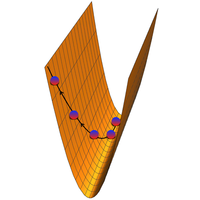
[Phys. Rev. Lett. 117, 141301] Published Tue Sep 27, 2016
High-Fidelity Trapped-Ion Quantum Logic Using Near-Field Microwaves
Author(s): T. P. Harty, M. A. Sepiol, D. T. C. Allcock, C. J. Ballance, J. E. Tarlton, and D. M. Lucas
A high-fidelity two-qubit quantum gate is implemented in a trapped-ion setup using microwaves, instead of standard laser fields.
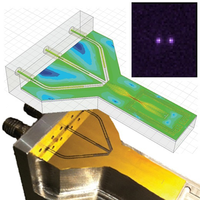
[Phys. Rev. Lett. 117, 140501] Published Tue Sep 27, 2016
Geometrical Destabilization of Inflation
Author(s): Sébastien Renaux-Petel and Krzysztof Turzyński
A general mechanism is proposed by which curvature effects can prematurely end inflation, excluding some otherwise viable models.
[Phys. Rev. Lett. 117, 141301] Published Tue Sep 27, 2016
High-Fidelity Trapped-Ion Quantum Logic Using Near-Field Microwaves
Author(s): T. P. Harty, M. A. Sepiol, D. T. C. Allcock, C. J. Ballance, J. E. Tarlton, and D. M. Lucas
A high-fidelity two-qubit quantum gate is implemented in a trapped-ion setup using microwaves, instead of standard laser fields.
[Phys. Rev. Lett. 117, 140501] Published Tue Sep 27, 2016
Observation of Coupled Vortex Lattices in a Mass-Imbalance Bose and Fermi Superfluid Mixture
Author(s): Xing-Can Yao, Hao-Ze Chen, Yu-Ping Wu, Xiang-Pei Liu, Xiao-Qiong Wang, Xiao Jiang, Youjin Deng, Yu-Ao Chen, and Jian-Wei Pan
Researchers mixed two superfluids of different atoms together and observed that vortices in one affected those in the other—evidence of mutual interaction between the two species.
[Phys. Rev. Lett. 117, 145301] Published Tue Sep 27, 2016
Once upon a time…
After more than two years at the comet, Rosetta is preparing for her final descent on 30 September
Follow Rosetta’s finale
How to follow Rosetta’s descent to the comet surface: times and livestream details
How to follow Rosetta’s grand finale
Rosetta is set to complete its historic mission in a controlled descent to the surface of its comet on 30 September, with the end of mission confirmation predicted to be within 20 minutes of 11:20 GMT (13:20 CEST).
This star was so massive it ate itself before it could go supernova
Some massive stars end, not with a bang but a whimper.
Sun spots may be tricking scientists
How solar activity could be interfering with exoplanet hunters data
Elon Musk announces ambitious solar system colonization plans
The SpaceX and Tesla founder is thinking beyond Earth.
Fourier transform infrared spectrometery: an undergraduate experiment
Simple apparatus is developed, providing undergraduate students with a solid understanding of
Fourier transform (FT) infrared (IR) spectroscopy in a hands on experiment. Apart from its
application to measuring the mid-IR spectra of organic molecules,…
Hubble expansion is not a velocity
In this paper, we clarify the difference between the Hubble expansion and the Doppler shift
pedagogically and illustrate both physically and mathematically why the Hubble expansion cannot be
regarded as a velocity. Therefore, we suggest to replace th…
An easy to compare tool for more readable (physics) textbooks
In this article, we show the easy way to compare the readability of two physics school texts written
in the same language. We show that the readability of scholar texts depends on the frequency of
terms. We compare the readability of texts from two p…
Measuring the RC time constant with Arduino
In this work we use the Arduino UNO R3 open source hardware platform to assemble an experimental
apparatus for the measurement of the time constant of an RC circuit. With adequate programming, the
Arduino is used as a signal generator, a data acquisi…
Natural units in physics, and the curious case of the radian
Sets of natural units, like ‘atomic units’, are sometimes used to simplify the equations of physics.
This choice of units can be seen as a way of showing the relationships between quantities in their
simplest form, in specialised situations, whil…
Models in physics teaching: an approach to highlight the nature of knowledge
In this work we show an approach based on models, for an usual subject in an introductory physics
course, in order to foster discussions on the nature of physical knowledge. The introduction of
elements of the nature of knowledge in physics lessons h…
Hubble: Possible Water Plumes on Jupiter’s Moon Europa
Astronomers using NASA’s Hubble Space Telescope have imaged what may be water vapor plumes erupting off the surface of Jupiter’s moon Europa.
Hubble: Possible Water Plumes on Jupiter’s Moon Europa
Astronomers using NASA’s Hubble Space Telescope have imaged what may be water vapor plumes erupting off the surface of Jupiter’s moon Europa.
e-Tutor: A Multilingual Open Educational Resource for Faculty Development to Teach Online
The situation in Ukraine poses severe problems to the higher education system and to students in Eastern Ukraine. Many students and academicians had been compelled to leave their university buildings and move westwards. Hence, they are forced to substi…
From Presences to Linked Influences Within Communities of Inquiry
Much research has identified and confirmed the core elements of the well-known Community of Inquiry Framework (CoIF): Social, Cognitive and Teaching Presence (Garrison, 2011). The overlap of these Presences, their definitions and roles, and their subsequent impact on the educational experience, has received less attention. This article is prompted by the acceptance of that omission (Garrison, Anderson, & Archer, 2010). It proposes enrichment to the Framework, by entitling the overlapping spaces uniting pairs of Presences as “Influences.” These three spaces, linking pairings of Social, Teaching, and Cognitive Presences, can be labelled as “trusting,” “meaning-making,” and “deepening understanding.” Their contribution to the educational experience is to address constructively some of the challenges of online learning, including learner isolation, limited learner experience of collaborative group work and underdeveloped higher-level abilities. For these purposes we also envisage “cognitive maps” as supporting learners to assess progress to date and identify pathways forward (Garrison & Akyol, 2013). Such maps, developed by a course team, describe the territory that learners may wish to explore, signpost possible activities, and encourage the development of cognitive and interpersonal abilities required for online learning. We hope that considering the Influences may also assist tutor conceptualisations of online community-based learning. Our proposals call on both learners and tutors to conceive of the Presences and Influences as working together, in unison, to enhance the educational experience whilst fostering deep learning. Our suggestions are presented to stimulate scholarly debate about the potential of these interwoven sections, constructively extending the Framework.
Supervision on Social Media: Use and Perception of Facebook as a Research Education Tool in Disadvantaged Areas
This exploratory study investigates how a typically disadvantaged user group of older, female learners from rural, low-tech settings used and perceived a Facebook group as a research supervision and distance learning tool over time. The within-stage mixed-model research was carried out in a module of a part-time, advanced midwifery education course in rural South Africa. To address the research questions, three quantitative and qualitative surveys were repeated, pre, post, and three months post evaluation. The findings indicate that using the social media space lowered learners’ threshold to accessing educational resources. The increased ease of communication was afforded in particular by using mobile phones to access the space. The analysis also suggests that the social networking site became a more integral part of students’ learning environments. The learners’ use of the site to discuss further course and work-related issues increased during the intervention and also remained significantly higher in the three-month, post evaluation survey, indicating the routinisation and habitualisation of this learning space. The practical implications and constraints of using social networking spaces to enhance disadvantaged groups of learners’ access to educational resources are discussed.
Online Learning in a South African Higher Education Institution: Determining the Right Connections for the Student
Online learning is a means of reaching marginalised and disadvantaged students within South Africa. Nevertheless, these students encounter obstacles in online learning. This research investigates South African students’ opinions regarding online learning, culminating in a model of important connections (facets that connect students to their learning and the institution). Most participants had no prior experience with online learning. Their perceptions and barriers to learning may apply to other developing countries as well.
A cross-sequential research design was employed using a survey among 58 fourth-year students who were studying a traditional paper-based module via open distance learning. The findings indicated certain essential connections: first, a strong social presence (through timely feedback, interaction with facilitators, peer-to-peer contact, discussion forums, and collaborative activities); second, technological aspects (technology access, online learning self-efficacy, and computer self-efficacy); and third, tools (web sites, video clips). The study revealed low levels of computer/internet access at home, which is of concern in an ODL milieu heading online. Institutions moving to online learning in developing countries should pay close attention to their students’ situations and perceptions, and develop a path that would accommodate both the disadvantaged and techno-savvy students without compromising quality of education and learning. The article culminates in practical recommendations that encompass the main findings to help guide institutions in developing countries as they move towards online teaching and learning.
From On-Campus to Online: A Trajectory of Innovation, Internationalization and Inclusion
This paper presents a study focused on a trajectory for developing an online operating mode on a campus-based university in the area of Massachusetts, USA. It addresses the innovation process and the changes and challenges faced by faculty and administ…
Development of Open Textbooks Learning Analytics System
Textbook costs have skyrocketed in recent years, putting them beyond the reach of many students, but there are options which can mitigate this problem. Open textbooks, an open educational resource, have proven capable of making textbooks affordable to students. There have been few educational development as promising as the development of open textbooks to lower costs for students. While the last five years have witnessed unparalleled interest and significant advances in the development and dissemination of open textbooks, one important aspect has, until now, remained unexplored: the praxis of learning analytics for extracting information regarding how learners interact and learn with open textbooks, which is crucial for their evaluation and iterative improvement process.
Learning analytics offers a faster and more objective means of data collection and processing than traditional counterparts, such as surveys and questionnaires, and—most importantly—with their capability to provide direct evidence of learning, they present the opportunity to enhance both learner performance and environment. With such benefits on offer, it is hardly surprising that the optimism surrounding learning analytics is mounting. However, in practice, it has been pointed out that the technology to deliver its potential is still very much in its infancy, which is true in the case of open textbooks. Against this background, the main aim of our study was to develop a prototype open textbook learning analytics system to track individual learners’ online and offline interactions with their open textbooks in electronic publication (EPUB) format, and to present its developmental work as building blocks for future development in this area. We conclude with a discussion of the practical implications of our work and present directions for future work.
Exploring Communication and Course Format: Conversation Frequency and Duration, Student Motives, and Perceived Teacher Approachability for Out-of-Class Contact
This study explored how course instructional format (i.e., online, face-to-face, or hybrid) is related to the frequency and duration of out-of-class communication (OCC) between college instructors and students, to student motives for communicating with…
The Effects of a Pedagogical Agent’s Smiling Expression on the Learner’s Emotions and Motivation in a Virtual Learning Environment
The present study aimed to test the hypothesis that a smiling expression on the face of a talking pedagogical agent could positively affect a learner’s emotions, motivation, and learning outcomes in a virtual learning environment. Contrary to the hypothesis, results from Experiment 1 demonstrated that the pedagogical agent’s smile induced negative emotional and motivational responses in learners. Experiment 2 showed that the social meaning of a pedagogical agent’s smile might be perceived by learners as polite or fake. In addition, qualitative data provided insights into factors that may cause negative perceptions of a pedagogical agent’s smile, which in turn lead to negative affective (emotional and motivational) states in learners. Theoretical and design implications for pedagogical agents in virtual learning environment are discussed in the concluding section of the paper.
Institutional Culture and OER Policy: How Structure, Culture, and Agency Mediate OER Policy Potential in South African Universities
Several scholars and organizations suggest that institutional policy is a key enabling factor for academics to contribute their teaching materials as open educational resources (OER). But given the diversity of institutions comprising the higher education sector—and the administrative and financial challenges facing many institutions in the Global South—it is not always clear which type of policy would work best in a given context. Some policies might act simply as a “hygienic” factor (a necessary but not sufficient variable in promoting OER activity) while others might act as a “motivating” factor (incentivizing OER activity either among individual academics or the institution as a whole).
In this paper, we argue that the key determination in whether a policy acts as a hygienic or motivating factor depends on the type of institutional culture into which it is embedded. This means that the success of a proposed OER-related policy intervention is mediated by an institution’s existing policy structure, its prevailing social culture and academics’ own agency (the three components of what we’re calling “institutional culture”). Thus, understanding how structure, culture, and agency interact at an institution offers insights into how OER policy development could proceed there, if at all. Based on our research at three South African universities, each with their distinct institutional cultures, we explore which type of interventions might actually work best for motivating OER activity in these differing institutional contexts.
Determinants of Teachers’ Attitudes Towards E-Learning in Tanzanian Higher Learning Institutions
This survey research study presents the findings on determinants of teachers’ attitudes towards e-learning in Tanzanian higher learning institutions. The study involved 258 teachers from 4 higher learning institutions obtained through stratified, simple random sampling. Questionnaires and documentary review were used in data collection. Data were analysed using statistical package for the social sciences (SPSS). Chi-square was performed to examine the association of variables.
It was found that teachers have positive attitudes towards e-learning where computer exposure played a statistically significant contribution to their attitudes. It is recommended that training in e-learning needs to be provided to teachers to widen their understanding of e-learning. There is also a need to strengthen factors associated with teachers’ positive attitudes towards e-learning. Results from this study are of particular importance to both teachers and the education stakeholders in Tanzania.
Barriers and Opportunities of E-Learning Implementation in Iraq: A Case of Public Universities
Although the implementation of e-learning initiatives has reached advanced stages in developed countries, it is still in its infancy in many developing nations and the Middle East in particular. Recently, few public universities in Iraq have initiated …
A Far Cry from School History: Massive Online Open Courses as a Generative Source for Historical Research
Current research into Massive Online Open Courses (MOOCs) has neglected the potential of using learner comments for discipline-specific analysis. This article explores how MOOCs, within the historical discipline, can be used to generate, investigate, and document personal narratives, and argues that they serve as a rich platform for historical resource generation. Through these narratives, this research explores changing perceptions of learning; from learning history at school to learning about history in a MOOC. This exploration uses a qualitative thematic analysis of learner comments related to personal narratives of learning history at school from the Trinity College Dublin/Futurelearn “Irish Lives in War and Revolution: 1912-1923” MOOC. These personal narratives were generated both directly and indirectly through four pedagogical tools; reflective questions, multimedia resources, external links, and inter-learner interaction. Broad themes emerged from the analysis of personal narratives including attitudes toward history at school, biased and inadequate teaching, and MOOC teaching compared with school experiences. The analysis demonstrated that MOOCs serve as a generative repository for personal and family historical narratives, and described how MOOCs can change perceptions of teaching and learning history. This paper contributes a novel understanding of MOOCs for discipline-specific analysis, provides a framework for MOOC historical resource generation, and describes changing perceptions of learning from the perspective of MOOC learners.
MOOCs, Graduate Skills Gaps, and Employability: A Qualitative Systematic Review of the Literature
The increasing costs of higher education (HE), growing numbers of flexible anytime, anywhere learners, and the prevalence of technology as a means to up-skill in a competitive job market, have brought to light a rising concern faced by graduate students and potential graduate employers. Specifically, there is a mismatch of useful skills obtained by students through HE institutions which is evident upon graduation. Faced with this dilemma, “graduate students,” or more specifically newly graduated students, with a with bachelor’s degree, and a growing number of employers are turning to Massive Open Online Courses, or MOOCs, as a complimentary mechanism through which this skills gap may be bridged.
It is found in the literature that MOOCs are often discussed within the capacity of their development, their retention rates, institutional policies regarding their implementation, and other such related areas. Examinations into their broader uses, benefits, and potential pitfalls have been limited to date. Therefore, this paper aims to analyse the literature highlighting the use of MOOCs as a means to reduce the mismatch in graduate skills. As such, this literature analysis reviews the following relevant areas: higher education and graduate skills gap, today’s graduates and employability, and MOOCs and graduate skills. Through analysing the literature in these areas, this paper identifies gaps in the existing literature.
Online Professional Skills Workshops: Perspectives from Distance Education Graduate Students
While many online graduate students are gaining academic and scholarly knowledge, the opportunities for students to develop and hone professional skills essential for the workplace are lacking. Given the virtual environment of distance learning, graduate students are often expected to glean professional skills such as analytical thinking, self-awareness, flexibility, team-building, and problem-solving inherently through informal means (Cleveland-Innes & Ally, 2012). The goal of this study was to evaluate the experiences of online graduate students participating in synchronous online professional skills workshops. Students attended the sessions from the various graduate programs at an online Canadian university. The discussions from the focus group held at the end of the project were used to achieve the research goals. This paper used a phenomenological lens to accomplish its research goals. The participants reported that they experienced a “sense of community” and learned skills that were not included in their academic programs.
Understanding Cognitive Engagement in Online Discussion: Use of a Scaffolded, Audio-based Argumentation Activity
The purpose of this paper is to explore how adult learners engage in asynchronous online discussion through the implementation of an audio-based argumentation activity. The study designed scaffolded audio-based argumentation activities to promote students’ cognitive engagement. The research was conducted in an online graduate course at a liberal arts university. Primary data sources were learners’ text-based discussions, audio-recorded argumentation postings, and semi-structured interviews. Findings indicate that the scaffolded, audio-based argumentation activity helped students achieve higher levels of thinking skills as well as exert greater cognitive efforts during discussions. In addition, most students expressed a positive perception of and satisfaction with their experience. Implications for practice and future research areas are discussed.
Digital Curation as a Core Competency in Current Learning and Literacy: A Higher Education Perspective
Digital curation may be regarded as a core competency in higher education since it contributes to establishing a sense of metaliteracy (an essential requirement for optimally functioning in a modern media environment) among students. Digital curation is gradually finding its way into higher education curricula aimed at fostering social media literacies. Teachers are urged to blend informal and formal learning and since most people informally use curation in their daily lives for compiling relevant information, it may be fairly easy to adopt digital curation in teaching and learning. Teachers, however, require considerable insight in incorporating various informal digital curation tools in educational practices. The SECTIONS model may assist in guiding decisions around the suitability of digital curation tools for a higher education environment. Including digital literacy training in the professional development of academic staff members may sensitize them to the possibilities that incorporating digital approaches in curricula offer. The Five Cs of Digital Curation framework may guide academic staff members in compiling suitable digital material. There as yet appears not to be a pedagogy that fully acknowledges the various digital curation processes. A pedagogy of abundance, acknowledging that content often is freely available and abundant, may eventually prove relevant in this regard.
Editorial – Volume 17, Issue Number 5
Moon and Mars on a plane

Who wouldn’t want to run an experiment in lunar or martian gravity? ESA is offering European researchers the chance to test their theories on aircraft flights that offer 20 seconds of reduced gravity.
Power Series Approximation for the Correlation Kernel Leading to Kohn-Sham Methods Combining Accuracy, Computational Efficiency, and General Applicability
Author(s): Jannis Erhard, Patrick Bleiziffer, and Andreas Görling
A new approach to calculating the properties of molecules and solids may offer higher accuracy at reasonable computational cost, accelerating the discovery of useful materials.
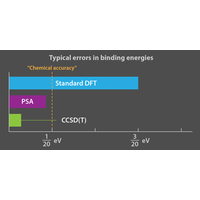
[Phys. Rev. Lett. 117, 143002] Published Mon Sep 26, 2016
Power Series Approximation for the Correlation Kernel Leading to Kohn-Sham Methods Combining Accuracy, Computational Efficiency, and General Applicability
Author(s): Jannis Erhard, Patrick Bleiziffer, and Andreas Görling
A new approach to calculating the properties of molecules and solids may offer higher accuracy at reasonable computational cost, accelerating the discovery of useful materials.
[Phys. Rev. Lett. 117, 143002] Published Mon Sep 26, 2016
A universe to explore

ESA is exploring Earth’s immediate surroundings, from low orbit with the International Space Station to the Moon, Mars and beyond
Sculpted by ancient water

Stunning bird’s eye view of Mawrth Vallis, a remarkable valley that could harbour hints of past life on Mars
Inside the historic mission
After decades of canceled missions and false starts, NASA is finally headed for Carl Sagan’s dream destination.
Hubble finds more evidence of plumes on Europa
Sorry, no aliens yet
The arrow of time? It’s all in our heads
Have you ever wondered why we age and grow old?
In the movie “The Curious Case of Benjamin Button,” Brad Pitt springs into being as an elderly man and ages in reverse.
To the bafflement of scientists, the fundamental laws of physics have…
Electrochemical cells: linking fields and currents with products and reactants
The interplay between the electromagnetism and chemistry within an electrochemical cell (a
‘battery’) is modelled in such a way so as to describe both open and closed circuit conditions. It
is found that a classical field theory coupled with a ge…
Quantum–classical correspondence for a particle in a homogeneous field
The correspondence principle provides a prescription to connect quantum physics to classical. It
asserts that the physical quantities evaluated quantum mechanically approach their respective
classical values for large quantum numbers. This has been s…
Ariane: quality boost

Ariane 5’s rocket booster is the largest in Europe. Test firings demonstrate the motor’s capabilities and qualify improvements in design to guarantee Europe’s access to space
Week In Images
Our week through the lens: 19-23 September 2016
Coherent Backscattering of Light Off One-Dimensional Atomic Strings
Author(s): H. L. Sørensen, J.-B. Béguin, K. W. Kluge, I. Iakoupov, A. S. Sørensen, J. H. Müller, E. S. Polzik, and J. Appel
Up to 75% of light reflects from just 2000 atoms aligned along an optical fiber, an arrangement that could be useful in photonic circuits.
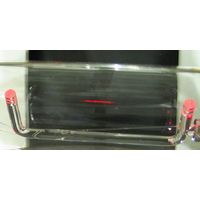
[Phys. Rev. Lett. 117, 133604] Published Fri Sep 23, 2016
Large Bragg Reflection from One-Dimensional Chains of Trapped Atoms Near a Nanoscale Waveguide
Author(s): Neil V. Corzo, Baptiste Gouraud, Aveek Chandra, Akihisa Goban, Alexandra S. Sheremet, Dmitriy V. Kupriyanov, and Julien LauratUp to 75% of light reflects from just 2000 atoms aligned along an optical fiber, an arrangement that could be usefu…
Large Bragg Reflection from One-Dimensional Chains of Trapped Atoms Near a Nanoscale Waveguide
Author(s): Neil V. Corzo, Baptiste Gouraud, Aveek Chandra, Akihisa Goban, Alexandra S. Sheremet, Dmitriy V. Kupriyanov, and Julien LauratUp to 75% of light reflects from just 2000 atoms aligned along an optical fiber, an arrangement that could be usefu…
Coherent Backscattering of Light Off One-Dimensional Atomic Strings
Author(s): H. L. Sørensen, J.-B. Béguin, K. W. Kluge, I. Iakoupov, A. S. Sørensen, J. H. Müller, E. S. Polzik, and J. Appel
Up to 75% of light reflects from just 2000 atoms aligned along an optical fiber, an arrangement that could be useful in photonic circuits.
[Phys. Rev. Lett. 117, 133604] Published Fri Sep 23, 2016
ESA at the 67th International Astronautical Congress

Starting on 26 September, Guadalajara in Mexico will host the 67th International Astronautical Congress, the annual global convention that covers all aspects of space activities.
ESA’s Director General Jan Woerner will join the heads of the Canadian, US, Japanese, Russian, Indian and Mexican space agencies for a plenary session in the afternoon of the first day at the Guadalajara Hall 4,5,6,9&10. They will discuss and present the latest advances and breakthroughs in space exploration and share their views on the benefits of international cooperation – this year’s theme is “Space exploration: the past, present and future”.
Summer fireworks on Rosetta’s comet
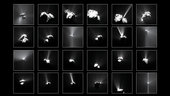
Brief but powerful outbursts seen from Comet 67P/Churyumov–Gerasimenko during its most active period last year have been traced back to their origins on the surface.
Symmetry breaking: a compact disc reflected in a mirror
If a compact disc (CD) is placed in front of a plane mirror, its image displays different colours
from the ones observed in the real CD. This fact occurs because a CD surface is a diffraction
grating which disperses the incident wavelengths. As the o…
Revealing Three-Dimensional Structure of an Individual Colloidal Crystal Grain by Coherent X-Ray Diffractive Imaging
Author(s): A. G. Shabalin, J.-M. Meijer, R. Dronyak, O. M. Yefanov, A. Singer, R. P. Kurta, U. Lorenz, O. Y. Gorobtsov, D. Dzhigaev, S. Kalbfleisch, J. Gulden, A. V. Zozulya, M. Sprung, A. V. Petukhov, and I. A. Vartanyants
Coherent x-ray diffraction imaging via an iterative phase retrieval approach allows for the visualization of the 3D positions of individual particles in a single colloidal crystal grain.
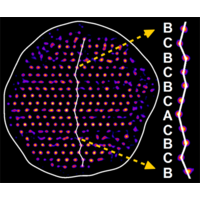
[Phys. Rev. Lett. 117, 138002] Published Thu Sep 22, 2016
Global Optimization, Local Adaptation, and the Role of Growth in Distribution Networks
Author(s): Henrik Ronellenfitsch and Eleni KatiforiA new model shows that tissue growth is crucial for explaining the formation of hierarchical and optimized vascular networks, such as those seen in plants and animals.[Phys. Rev. Lett. 117, 138301] Pub…
Revealing Three-Dimensional Structure of an Individual Colloidal Crystal Grain by Coherent X-Ray Diffractive Imaging
Author(s): A. G. Shabalin, J.-M. Meijer, R. Dronyak, O. M. Yefanov, A. Singer, R. P. Kurta, U. Lorenz, O. Y. Gorobtsov, D. Dzhigaev, S. Kalbfleisch, J. Gulden, A. V. Zozulya, M. Sprung, A. V. Petukhov, and I. A. Vartanyants
Coherent x-ray diffraction imaging via an iterative phase retrieval approach allows for the visualization of the 3D positions of individual particles in a single colloidal crystal grain.
[Phys. Rev. Lett. 117, 138002] Published Thu Sep 22, 2016
Global Optimization, Local Adaptation, and the Role of Growth in Distribution Networks
Author(s): Henrik Ronellenfitsch and Eleni KatiforiA new model shows that tissue growth is crucial for explaining the formation of hierarchical and optimized vascular networks, such as those seen in plants and animals.[Phys. Rev. Lett. 117, 138301] Pub…
Earth from Space

Join us Friday, 23 September, at 10:00 CEST for the ‘Earth from Space’ video programme. This week features Kazakhstan’s Alakol Lake
Drone inspection

Operations image of the week: A drone’s view of our deep-space dish in Spain
Door to the future

Technology image of the week: A vintage view of a pivotal element of ESA’s test centre in the Netherlands under construction
The strange chemistry that creates ‘impossible’ clouds on Titan
UV-driven reactions on Saturn’s largest moon parallel the ones that created the hole in Earth’s ozone layer.
Atwood and Poggendorff: an insightful analogy
Atwood’s treatise, in which the Atwood machine appears, was published in 1784. About 70 years later,
Poggendorff showed experimentally that the weight of an Atwood machine is reduced when it is brought
to motion. In the present paper, a twofold con…