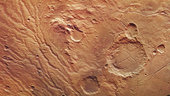
Water has left its mark in a variety of ways in this martian scene captured by ESA’s Mars Express.
Elu, loodus, teadus ja tehnoloogia
Water has left its mark in a variety of ways in this martian scene captured by ESA’s Mars Express.
Inner-city deliveries in Austria may soon be powered by pollution-free fuel cell technology that is also being explored by ESA for satellites and robotic missions to Mars.
Author(s): F. Zhao, L. Wang, D. Fan, B. X. Bie, X. M. Zhou, T. Suo, Y. L. Li, M. W. Chen, C. L. Liu, M. L. Qi, M. H. Zhu, and S. N. Luo
Aluminum crystals can respond to strain by twinning—a finding that challenges conventional conceptions of material deformation.
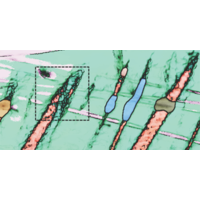
[Phys. Rev. Lett. 116, 075501] Published Wed Feb 17, 2016
Author(s): R. Agnese et al. (SuperCDMS Collaboration)The CDMS collaboration presents improved limits on the spin-independent cross section of low-mass weakly interacting particles with the nucleon.[Phys. Rev. Lett. 116, 071301] Published Wed Feb 17, 2016
Author(s): A. Jagannathan, N. Arunkumar, J. A. Joseph, and J. E. Thomas
Two-field optical control of scattering in two-body interactions is achieved, strongly shifting a magnetic Feshbach resonance and suppressing spontaneous scattering.
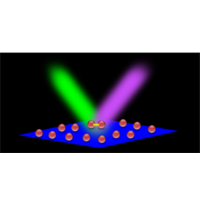
[Phys. Rev. Lett. 116, 075301] Published Wed Feb 17, 2016
Author(s): H. Gassert, O. Chuluunbaatar, M. Waitz, F. Trinter, H.-K. Kim, T. Bauer, A. Laucke, Ch. Müller, J. Voigtsberger, M. Weller, J. Rist, M. Pitzer, S. Zeller, T. Jahnke, L. Ph. H. Schmidt, J. B. Williams, S. A. Zaytsev, A. A. Bulychev, K. A. Kouzakov, H. Schmidt-Böcking, R. Dörner, Yu. V. Popov, and M. S. Schöffler
High resolution measurements of the electron emission pattern following the ionization of helium settles a decade old discrepancy between theory and experiment on the angular emission pattern.
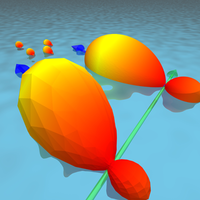
[Phys. Rev. Lett. 116, 073201] Published Wed Feb 17, 2016
Author(s): Daniel Schraft, Marcel Hain, Nikolaus Lorenz, and Thomas HalfmannA storage efficiency of 76% is demonstrated in a solid-state quantum memory device with a ring-type multi-pass configuration.[Phys. Rev. Lett. 116, 073602] Published Wed Feb 17…
A new study finds that most asteroids and comets are destroyed in a drawn out, long hot fizzle, much farther from the Sun than previously thought.
The BOSS survey scanned the sky and measured the redshifts of more than 1 million galaxies. Now, an international team of astronomers has reproduced the observed galaxy clustering by generating thousands of simulated galaxy catalogs.
How ExoMars 2016 will be launched on its seven-month cruise to the Red Planet
Technology image of the week: a close-up glimpse of a microchip designed to provide high-frequency radar for future space missions
How ESA is preparing astronauts for missions to the Moon

From ESA’s control centre, watch the replay of the 16 February event to celebrate the launch of the first satellite for the Sentinel-3

The third ESA-developed satellite carrying four Earth-observing instruments was launched today, ready to provide a ‘bigger picture’ for Europe’s Copernicus environment programme.
Watch the replay of the Sentinel-3A launch on a Rockot from the Plesetsk Cosmodrome in Russia
Author(s): B. C. Hiesmayr, M. J. A. de Dood, and W. Löffler
Four photons are shown to be entangled through their orbital angular momentum.
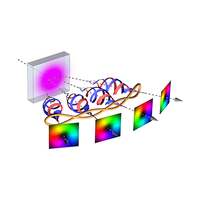
[Phys. Rev. Lett. 116, 073601] Published Tue Feb 16, 2016
Author(s): Evan Meyer-Scott, Daniel McCloskey, Klaudia Gołos, Jeff Z. Salvail, Kent A. G. Fisher, Deny R. Hamel, Adán Cabello, Kevin J. Resch, and Thomas Jennewein
A photonic qubit has been transmitted over a lossy 30-meter-long channel without destroying its state in a precertification scheme that does not require synchronization or indistinguishability.
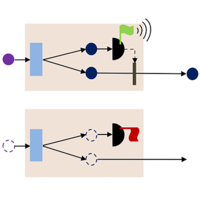
[Phys. Rev. Lett. 116, 070501] Published Tue Feb 16, 2016
The light detected from this jet was emitted when the universe was only 2.7 billion years old, a fifth of its present age.
For the first time, the two masses — a pair of identical gold-platinum cubes — in the heart of the LISA Pathfinder spacecraft are floating freely, linked only by laser beams.
ESA hopes its LISA Pathfinder mission will teach scientists how to observe the universe outside the electromagnetic spectrum.
The exoplanet 55 Cancri e has a dry atmosphere without any indications of water vapor.
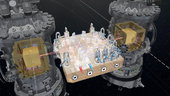
ESA’s LISA Pathfinder has released both of its gold–platinum cubes, and will shortly begin its demanding science mission, placing these test masses in the most precise freefall ever obtained to demonstrate technologies for observing gravitational waves from space.
Discover how Sentinel-3 will observe our oceans, helping us better understand the overall health of our planet
What promises to be one of the biggest Earth observation conferences in the world has opened its doors to registration
During this time, more than two hundred research papers related directly or indirectly to the 19-meter-wide Chelyabinsk superbolide have been published.

Yesterday, a ‘team of teams’ working at ESA’s control centre conducted a final rehearsal for tomorrow’s launch of Sentinel-3A.

Space Science Image of the Week: ESA’s SMART-1 orbited the Moon for 21 months , and sent back many striking views of the lunar surface
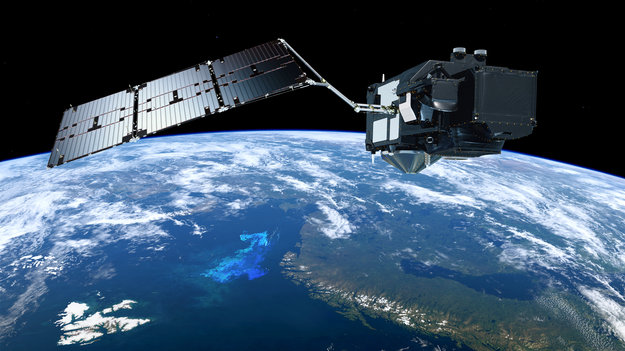
Live from ESA’s control centre in Germany: follow the events leading up to the launch of Sentinel-3A. Streaming begins at 17:00 GMT (18:00 CET) on 16 February
Teisipäeval, 16. veebruaril 2016, kell 16:15 TÜ Physicumis, Ravila 14c – A106 (suur auditoorium). Gravitatsioonilained esmakordselt registreeritud NB Üritusest on kavas ka otseülekanne UTTV-s (http://www.uttv.ee/) Gravitatsioonilainete olemasolu ennustas Einstein juba 1916. aastal, pool aastat peale üldrelatiivsusteooria postuleerimist. Gravitatsioonilainete otsest detekteerimist on füüsikud üritanud ligi pool sajandit. 11. veebruaril 2016 esitas LIGO eksperiment veenvad tõendid massiivsete […]
A special terahertz camera developed by ESA has been used by a UK company to develop an advanced scanner to spot even objects well hidden under clothes
In my article (Featonby 2015 Phys. Educ . 51 [http://dx.doi.org/10.1088/0031-9120/51/1/017002]
017002 ) I asked what happened when two rubber balls, one bouncy, one not, are rolled down a gentle
incline into a vertical block. Here I discuss the answers.
A chain suspended from a hand drill rotates in a similar manner to a conical pendulum. What happens
when the chain is rotated at an increasing speed?
In my article (Featonby 2015 Phys. Educ . 51 [http://dx.doi.org/10.1088/0031-9120/51/1/017002]
017002 ) I asked what happened when two rubber balls, one bouncy, one not, are rolled down a gentle
incline into a vertical block. Here I discuss the answers.
Description unavailable
The article focuses on the process of water warming from 0 °C in a glass. An experiment is performed
that analyses the temperature in the top and bottom layers of water during warming. The experimental
equipment is very simple and can be easily set …
Description unavailable
A chain suspended from a hand drill rotates in a similar manner to a conical pendulum. What happens
when the chain is rotated at an increasing speed?
For Valentine’s Day, a story about “entangled” particles, sensitive to each other no matter how far apart they may be.

ESA inaugurated a new tracking dish in Australia yesterday, marking a significant step in the Agency’s worldwide satcom network.

With four days to liftoff, the next Sentinel satellite for Copernicus is now on the launch pad at the Plesetsk cosmodrome in northern Russia.
The rocket will be fuelled the day before the launch – set for 16 February at 17:57 GMT (18:57 CET).
Author(s): Gautier Lefebvre, Aymeric Merceron, and Pierre JopExperiments with an eroding stream of grains reveals a step pattern that implies the erosion is governed by collisions rather than friction.[Phys. Rev. Lett. 116, 068002] Published Fri Feb 12…
Author(s): F. P. An et al. (Daya Bay Collaboration)
The antineutrino spectrum measured at Daya Bay corroborates the so-called reactor antineutrino anomaly — an excess of observed antineutrinos over theoretical expectations.
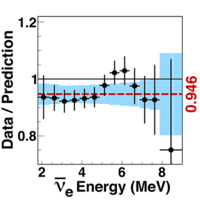
[Phys. Rev. Lett. 116, 061801] Published Fri Feb 12, 2016
Our week through the lens: 8-12 February 2016
This new video explains how the ESA-designed EGNOS satnav augmentation system is making European aircraft landings even safer
The Philae lander is facing conditions on Comet 67P from which it is unlikely to recover.
West Coast viewers can watch the Moon occult Aldebaran on February 15/16, but everyone can see our satellite posing with the Hyades Cluster.
The “Valentine Dome” is a gentle volcanic protrusion tucked against the western flank of Mare Serenitatis. It shows up only at the lowest of Sun angles, perfectly timed for viewing on the evening of Valentine’s Day (February 14).
A significant event happened at the Laser Interferometer Gravitational-wave Observatory on September 15 — a ripple in spacetime had occurred. But where?
The story of the Copernicus satellites, present and future

Silent since its last call to mothership Rosetta seven months ago, the Philae lander is facing conditions on Comet 67P/Churyumov–Gerasimenko from which it is unlikely to recover.
Gravitatsioonilained on nüüd avastatud ja sellega leidis tõestuse A.Einsteini üldrelatiivsusteooria üks olulisemaid ennustusi! Detekteerijaks oli LIGO (Laser Interferometer Gravitational-Wave Observatory) ja see toimus juba 14.septembril 2015.a. Nüüd on ilmunud ka vastav publikatsioon ja asjast anti ametlikult teada. TÜ füüsika instituudis toimub tuleval teisipäeval, 16.02 seminar, kus gravitatsioonilainetest ja nende avastamisest räägitakse. Seniks saab lugeda ametlikku […]
All high school students that wish to continue onto college are seeking opportunities to be
competitive in the college market. They participate in extra-curricular activities which are seen to
foster creativity and the skills necessary to do well in …
LIGO opens new window on the universe with observation of gravitational waves from colliding black holes.
New NASA satellite data have allowed researchers to identify and quantify, for the first time, how climate-driven increases of liquid water storage on land have affected sea level rise.
ESA is thrilled to learn that gravitational waves have been detected, and is looking forward to starting its mission to test technologies that could extend the study of these exotic waves to space.
Author(s): B. P. Abbott et al. (LIGO Scientific Collaboration and Virgo Collaboration)
Gravitational waves emitted by the merger of two black holes have been detected, setting the course for a new era of observational astrophysics.
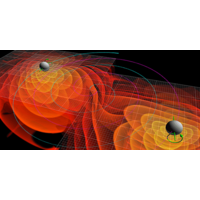
[Phys. Rev. Lett. 116, 061102] Published Thu Feb 11, 2016

Join us Friday, 12 February, at 10:00 CET for the ‘Earth from Space’ video programme. This week features a Sentinel-2A image of Madrid, Spain
Albert Einstein’s 1936 paper denouncing gravitational waves was rejected by the journal that just published proof of their existence.
Learn about gravitational waves in this interview with Joseph Taylor, who discovered gravitational radiation in 1978 and won physics’ top prize 15 years later.
Description unavailable
Under certain conditions a body of hot liquid may cool faster and freeze before a body of colder
liquid, a phenomenon known as the Mpemba Effect. An initial difference in temperature of 3.2 °C
enabled warmer water to reach 0 °C in 14% less time tha…
Fourteen space travel posters of colorful, exotic cosmic settings are now available free for downloading and printing.
Author(s): Ilya Belopolski, Su-Yang Xu, Daniel S. Sanchez, Guoqing Chang, Cheng Guo, Madhab Neupane, Hao Zheng, Chi-Cheng Lee, Shin-Ming Huang, Guang Bian, Nasser Alidoust, Tay-Rong Chang, BaoKai Wang, Xiao Zhang, Arun Bansil, Horng-Tay Jeng, Hsin Lin,…
Author(s): E. B. Norrgard, D. J. McCarron, M. H. Steinecker, M. R. Tarbutt, and D. DeMille
Researchers cooled trapped molecules well below 1 mK—a record temperature for molecules that have not been assembled from pre-cooled atoms.
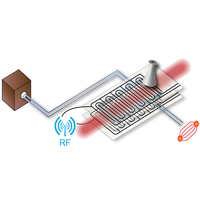
[Phys. Rev. Lett. 116, 063004] Published Wed Feb 10, 2016
Author(s): Alexander Prehn, Martin Ibrügger, Rosa Glöckner, Gerhard Rempe, and Martin Zeppenfeld
Researchers cooled trapped molecules well below 1 mK—a record temperature for molecules that have not been assembled from pre-cooled atoms.
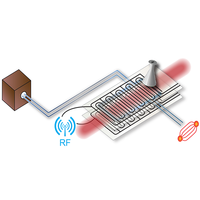
[Phys. Rev. Lett. 116, 063005] Published Wed Feb 10, 2016
Author(s): Yi Peng, Lipeng Lai, Yi-Shu Tai, Kechun Zhang, Xinliang Xu, and Xiang ChengAn ellipsoid immersed in a bacterial suspension diffuses slowest along its major axis and fastest along its minor axis, in contrast to predictions from Brownian motio…
Tune into an announcement from the LIGO collaboration about gravitational waves on Thursday at 10:30 a.m. EST.
ASTRO-H is expected to provide breakthroughs in a wide variety of high-energy phenomena in the cosmos.
These basins could have been episodically covered, perhaps during hundreds of millions of years, by lava and water lakes that were discharged from subsurface pressurized sources.
Technology image of the week: ESA’s proposed Asteroid Impact Mission would put down a micro-lander on its target body
Adam Steltzner, a JPL engineer who helped pioneer the breakthrough technique for landing a one-ton rover on Mars, has been elected into the National Academy of Engineering.

Asteroid Day, a global movement to increase knowledge and awareness of asteroids, announced its plans for 2016 from a press conference hosted at ESA’s technical heart in the Netherlands and livestreamed around the world.
Human spaceflight and robotic exploration image of the week: investigating proxy atoms on the International Space Station in a discharge plasma tube
Author(s): Péter Sándor, Vincent Tagliamonti, Arthur Zhao, Tamás Rozgonyi, Matthias Ruckenbauer, Philipp Marquetand, and Thomas Weinacht
Pulse duration can strongly affect the dynamics of molecular ionization. For pulses shorter than 10 fs vibrational dynamics are no longer seen to play an important role.
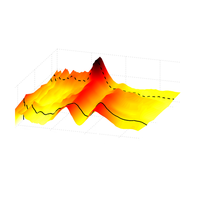
[Phys. Rev. Lett. 116, 063002] Published Tue Feb 09, 2016
Author(s): Weiqi Xue, Yi Yu, Luisa Ottaviano, Yaohui Chen, Elizaveta Semenova, Kresten Yvind, and Jesper MorkResearchers have studied a membrane laser containing nanometer-sized holes to demonstrate how photon losses can be minimized.[Phys. Rev. Lett. …
The discovery may help to explain the Great Attractor region, which appears to be drawing the Milky Way and hundreds of thousands of other galaxies towards it with a gravitational force equivalent to a million billion Suns.
Dwarf galaxies are considered building blocks of the giants, but the evidence for giants absorbing dwarfs has been largely circumstantial. Now we have caught a pair of galaxies in the act of a deadly embrace.
The ability to categorize problems based upon underlying principles, rather than contexts, is
considered a hallmark of expertise in physics problem solving. With inspiration from a classic study
by Chi, Feltovich, and Glaser, we compared the categori…
In the modern physics unit included in the course curriculum of grade 10 physics introduced in the
2007–2008 education year, the aim is that students at this grade level are aware of any developments
which constitute modern physics and may be consi…
New, detailed maps of the world’s natural landscapes created using NASA satellite data could help scientists better predict the impacts of future climate change.
A NASA/Duke University study provides new evidence why global temperatures remain stable in the long run unless pushed by outside forces, such as increased greenhouse gases.

Antarctica is surrounded by huge ice shelves. New research, using ice velocity data from satellites such as ESA’s heritage Envisat, has revealed that there is a critical point where these shelves act as a safety band, holding back the ice that flows towards the sea. If lost, it could be the point of no return.
Author(s): N. Huntemann, C. Sanner, B. Lipphardt, Chr. Tamm, and E. Peik
A twentyfold improvement in the accuracy of a single ytterbium ion atomic clock is achieved using the ion’s electric octupole transition.
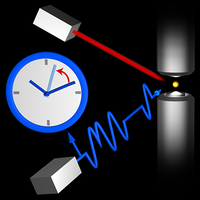
[Phys. Rev. Lett. 116, 063001] Published Mon Feb 08, 2016
Author(s): R. W. Peterson, T. P. Purdy, N. S. Kampel, R. W. Andrews, P.-L. Yu, K. W. Lehnert, and C. A. Regal
A 40-nanometer-thick membrane has been cooled to a low enough temperature that is has the minimum phonon occupation allowed by quantum backaction.
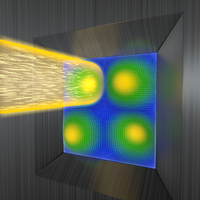
[Phys. Rev. Lett. 116, 063601] Published Mon Feb 08, 2016
Author(s): T. Gehrmann, J. M. Henn, and N. A. Lo Presti
The complete analytical computation of the amplitude for five-particle scattering at the second perturbative order in quantum chromodynamics is carried out for the first time.
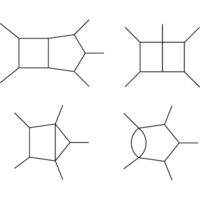
[Phys. Rev. Lett. 116, 062001] Published Mon Feb 08, 2016
Watch a replay of the press conference announcing Asteroid Day 2016
Watch the live press conference unveiling Asteroid Day 2016’s events and partners from 1500 CET (1400 UTC) on Tuesday, 9 February
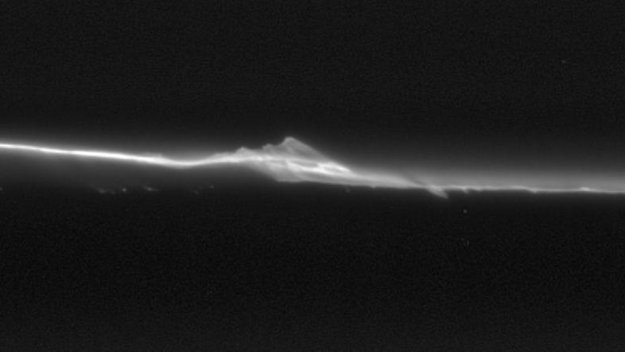
Space Science Image of the Week: Small moonlets within Saturn’s rings disrupt their surroundings and leave telltale trails, such as these spied by Cassini
Mitchell joined Apollo 14 commander Alan Shephard, Jr., in the lunar module Antares, which touched down February 5, 1971 in the Fra Mauro highlands.

ESA’s Sentinel-3 Mission Manager Susanne Mecklenburg and Mission Scientist Craig Donlon join the show to tell us more about the Sentinel-3A satellite and its mission

A start-up company from ESA’s business incubator in Flanders is helping to keep Belgian researchers safe in Antarctica
Description unavailable
Three different models of a magnetic dipole, viz., a uniformly magnetised sphere, a circular current
loop and a pair of fictitious magnetic charges, have been systematically analysed within the
formalism based on the vector potential of the magnetic …
Author(s): Boris Kozinsky, Sneha A. Akhade, Pierre Hirel, Adham Hashibon, Christian Elsässer, Prateek Mehta, Alan Logeat, and Ulrich Eisele
The ground state structural symmetry and ionic conductivity have been theoretically calculated for the entire garnet family of solid Li-ion electrolytes.
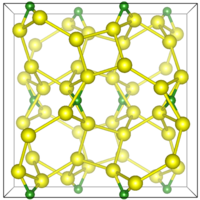
[Phys. Rev. Lett. 116, 055901] Published Fri Feb 05, 2016
Author(s): Nina V. Krainyukova and Evgeniy N. ZubarevCarbon honeycomb, a new carbon structure, could store large amounts of hydrogen gas, which may benefit fuel cell technology.[Phys. Rev. Lett. 116, 055501] Published Fri Feb 05, 2016
Moments after Sentinel-3A separates from its rocket, a team of European mission control specialists will assume control, shepherding the new spacecraft through its critical first days in space.

The 18th and final segment on James Webb Space Telescope’s primary mirror was installed on 3 February
Our week through the lens: 1-5 February 2016
The hills are likely miniature versions of the larger jumbled mountains on Sputnik Planum’s western border.
Author(s): Samuel K. Lee, Mariangela Lisanti, Benjamin R. Safdi, Tracy R. Slatyer, and Wei Xue
New models show that neutron stars—and not dark matter—could be responsible for an excess of gamma rays from the Milky Way’s center.
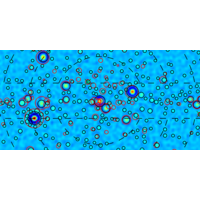
[Phys. Rev. Lett. 116, 051103] Published Thu Feb 04, 2016

