The CHIMERA instrument at the Palomar Observatory near San Diego is using hi-tech cameras to locate near-Earth asteroids and objects in the Kuiper Belt.
Encapsulating ExoMars
The ExoMars 2016 spacecraft are now sealed inside the rocket fairing ahead of launch on 14 March
Emergent Collective Chemotaxis without Single-Cell Gradient Sensing
Author(s): Brian A. Camley, Juliane Zimmermann, Herbert Levine, and Wouter-Jan RappelA simple model suggests a way in which clusters of cells could follow concentration gradients in cases where individual cells cannot.[Phys. Rev. Lett. 116, 098101] Pub…
Mars stack
Operations image of the week: After being offline for several months, the low-resolution webcam on Mars Express has delivered a new set of Red Planet images
Earth from Space

Join us Friday, 4 March, at 10:00 CET for the ‘Earth from Space’ video programme. This week features a Sentinel-2A image of Salt Lake City in the United States
Sentinel-3A timelapse
Relive the final stages of the launch campaign of the latest Copernicus Sentinel satellite with this three-minute timelapse video
Most distant galaxy: Hubble breaks cosmic distance record
This is the first time that the distance of an object so far away has been measured from its spectrum.
The realm of buried giants
Astronomers have been studying RCW 106 for some time, although it is not the crimson clouds that drew their attention, but rather the mysterious origin of the massive and powerful stars buried within.
Study: Atmospheric River Storms Can Reduce Sierra Snow
A new study finds atmospheric river storms are 2.5 times more likely than other types of winter storms to cause destructive rains that melt snow in California’s Sierra Nevada.
Sentinel-3A first images

Just two weeks after launch, the latest Sentinel has offered a taster of what it will provide for the EU’s Copernicus programme
Structures and Dynamics of Glass-Forming Colloidal Liquids under Spherical Confinement
Author(s): Bo Zhang and Xiang ChengCorrelated patterns of particles form in colloidal liquids as they approach the glass transition.[Phys. Rev. Lett. 116, 098302] Published Wed Mar 02, 2016
Let’s make some noise
Technology image of the week: a giant sound horn feeding into ESA’s acoustic test chamber
Mysterious cosmic radio bursts found to repeat
These “fast radio bursts” come from an extremely powerful object that occasionally produces multiple bursts in under a minute.
Why celestial bodies come in different sizes
Researchers find that a universe that contains some big objects and many small objects relieves gravitational tension faster than a uniform universe.
Jupiter dazzles all night in March
Now is the perfect time to observe the solar system’s largest planet, which reaches peak brightness March 8.
Images at lightspeed
The SpaceDataHighway precursor has helped raw data travel from space to ground and be processed into an image of the Brazilian coast in a record-breaking 13 minutes
Book Review – Online, Blended, and Distance Education: Building Successful Programs in Schools
E-learning in Mongolian Higher Education
This paper reviews the e-learning course development in selected universities of Mongolia and attempts to classify the e-learning programs that are in practice at the tertiary education level in the country. The given paper uses both secondary and prim…
A Systematic Analysis and Synthesis of the Empirical MOOC Literature Published in 2013–2015
A deluge of empirical research became available on MOOCs in 2013–2015 and this research is available in disparate sources. This paper addresses a number of gaps in the scholarly understanding of MOOCs and presents a comprehensive picture of the literature by examining the geographic distribution, publication outlets, citations, data collection and analysis methods, and research strands of empirical research focusing on MOOCs during this time period. Results demonstrate that (a) more than 80% of this literature is published by individuals whose home institutions are in North America and Europe, (b) a select few papers are widely cited while nearly half of the papers are cited zero times, and (c) researchers have favored a quantitative if not positivist approach to the conduct of MOOC research, preferring the collection of data via surveys and automated methods. While some interpretive research was conducted on MOOCs in this time period, it was often basic and it was the minority of studies that were informed by methods traditionally associated with qualitative research (e.g., interviews, observations, and focus groups). Analysis shows that there is limited research reported on instructor-related topics, and that even though researchers have attempted to identify and classify learners into various groupings, very little research examines the experiences of learner subpopulations.
Experience with a Massive Open Online Course in Rural Rwanda
The growing utilization of massive open online courses (MOOCs) is opening opportunities for students worldwide, but the completion rate for MOOCs is low (Liyanagunawardena, Adams, & Williams, 2013). Partners In Health (PIH) implemented a “flipped” MOOC in Rwanda that incorporated in-class sessions to facilitate participant completion.
In October 2013, PIH invited its employees, as well as those at the Ministry of Health, to participate in an online MOOC. Each site had at least one volunteer facilitator who accompanied participants throughout the course by providing course materials and facilitating the understanding of the online material during the weekly class sessions. Following the conclusion of the course, all participants were asked to complete an online survey.
A total of 38 out of 62 registered participants completed the survey and of these 38 participants, 20 (52.6%) successfully finished the course. The number of in-person sessions attended was significantly associated with course completion (p < 0.05), and 85% who successfully completed the course attended at least three of seven sessions. Sixteen (80%) participants believed that the completion of this course would help them with career advancement. Half of the participants (19 of 38, 50%) were employed with a position related to research. Other job titles included the following: nurses (4 of 38, 10.5%), a pharmacist (1 of 38, 2.6%), a clinical psychologist (1 of 38, 2.6%), a dentist (1 of 38, 2.6%), and others (10 of 38, 26.3%). The job title was not significantly related to course completion.
Our experience, with a completion rate of over 50%, yields several lessons for incorporating MOOCs into capacity-building programs to leverage the potential of online learning in resource-limited areas.
Culture and Online Learning: Global Perspectives and Research
Should Instructors Require Discussion in Online Courses? Effects of Online Discussion on Community of Inquiry, Learner Time, Satisfaction, and Achievement
Online discussion is a commonly used means to promote student understanding of a topic and to facilitate social interaction among students or between students and instructor; however, its effects on student learning in online learning environments have rarely been investigated. The purpose of this study was to examine the role of online discussion in student learning experiences measured with community of inquiry, learner time, satisfaction, and achievement. One instructor taught the same online course for three consecutive semesters using three different conditions. During one semester enrolled students engaged in no discussion, during another semester they engaged in discussion without instructor participation, and in the remaining semester they engaged in discussion with active instructor participation. No significant differences were found among conditions in cognitive presence and the instructor’s teaching presence, whereas significant difference was found in social presence among conditions. No significant differences among conditions were found time spent on Blackboard, course satisfaction, and student achievement. Implications for online teaching and learning as well as for designing an online course conclude the paper.
Dyads Versus Groups: Using Different Social Structures in Peer Review to Enhance Online Collaborative Learning Processes
The Peer Review (PR) is a very popular technique to support socio-constructivist and connectivist learning processes, online or face-to-face, at all educational levels, in both formal and informal contexts. The idea behind this technique is that sharin…
Learners’ Interpersonal Beliefs and Generated Feedback in an Online Role-Playing Peer- Feedback Activity: An Exploratory Study
Peer feedback affords interaction and critical thinking opportunities for learners in online courses. However, various factors prevent learners from taking advantage of these promising benefits. This study explored learners’ perceptions of the interpersonal factors in a role-playing peer-feedback activity, and examined the types of peer feedback that learners generated when playing a role. Participants were 16 graduate students engaged in an online role-playing peer-feedback activity. The results from survey responses revealed learners’ positive interpersonal beliefs, including psychological safety and trust, toward the role-playing peer-feedback activity. In addition, more than sixty percent of the participants reported being more comfortable critiquing peers’ work when playing a role. The content analysis of the peer-feedback entries indicated that learners were able to generate highly constructive feedback entries. In addition to adding supportive comments, those feedback entries identified problems, asked questions, and provided suggestions. The results show that role-play strategy has great potential to enhance learners’ interpersonal beliefs in peer-feedback activity and their feedback quality.
Issues and Challenges in Open and Distance e-Learning: Perspectives from the Philippines
Rapid advances in information and communications technology in the digital age have brought about significant changes in the practice of distance education (DE) worldwide. DE practitioners in the Philippines’ open university have coined the term ‘open and distance e-learning’ (ODeL) to refer to the new forms of DE, which are characterised by the convergence of an open learning philosophy, DE pedagogies, and e-learning technologies. This paper discusses the issues and challenges that ODeL poses for the Philippines’ open university from the point of view of the institution’s leading ODeL practitioners. The paper concludes with a discussion of the policy development and administrative changes required to support innovative teaching practice across the institution. The findings and conclusions are relevant for other institutions in the same stage of ODeL development.
Connectivism in Learning Activity Design: Implications for Pedagogically-Based Technology Adoption in African Higher Education Contexts
This paper examines the possible characteristics and the value of designing learning activities grounded in connectivism—an emerging learning theory. It is an exploratory attempt to connect the theory to the prevailing technology adoption archetypes used in African contexts with the aim of extracting influences that could shape pedagogical technology adoption in African higher education contexts. A reflection on the process of designing learning activities that employ blogging in an experimental training intervention provides a unique context in which to try and infuse connectivist principles while outlining the challenges that surface. The questions driving the argument in this paper include: What do connectivist perspectives offer learning activity design and practice? What can the prevailing technology adoption models used in African contexts offer to learning activity design? Can we combine connectivist perspectives and African-based technology adoption models to inform pedagogical technology adoption in African higher education contexts? These questions are exploratory and are based on one single subjective experience of the author. They are part of an argument put forward as a proposal which is yet to be tested in practice.
Preservice Teachers’ Perception and Use of Personal Learning Environments (PLEs)
Personal learning environments (PLEs) are Web 2.0 tools and services by which users’ access, construct, manage, and share educational contents in order to meet their learning needs. These environments enable users to manage their learning according to their own personal preferences. They further promote socialization and collaboration with their broad user networks and interaction facilities. In this study, with a case sample from a public university in Turkey, student teachers’ PLE use and their perceptions regarding these environments are examined. For data collection, the PLE Perception Scale and PLE Use Scale developed by the researchers were used. It was observed that all participants used various PLEs and found them easy and practical on the whole. However, it was found that this utilization mostly had the aim of access and sharing knowledge in learning, while use of constructing and managing it remained limited. Emailing, social networking, file sharing, video sharing, Internet searching, and social encyclopedias were found most commonly used PLEs. Our findings also show that gender and grade level do not have an effect on the perception and use of PLEs.
Evaluation of Intelligent Grouping Based on Learners’ Collaboration Competence Level in Online Collaborative Learning Environment
In this paper we explore the impact of an intelligent grouping algorithm based on learners’ collaborative competency when compared with (a) instructor based Grade Point Average (GPA) method level and (b) random method, on group outcomes and group collaboration problems in an online collaborative learning environment. An intelligent grouping algorithm has been added in a Learning Management System (LMS) which is capable of forming heterogeneous groups based on learners’ collaborative competency level. True experiment design methodology was deployed to examine whether there is any association between group formation method and group scores, learning experiences and group problems. From the findings, all groups had almost similar mean scores in all group tests, and shared many similar group collaboration problems and learning experiences. However, with the understanding that GPA group formation method involves the instructor, may not be dynamic, and the random method does not guarantee heterogeneity based on learner’s collaboration competence level, instructors are more likely to adopt our intelligent grouping method as the findings show that it has similar results. Furthermore, it provides an added advantage in supporting group formation due to its guarantee on heterogeneity, dynamism, and less instructor involvement.
Factors Influencing Teachers’ Use of Multimedia Enhanced Content in Secondary Schools in Tanzania
Tanzania is faced with a severe shortage of qualified in-service school science and mathematics teachers. While science and mathematics account for 46% of the curriculum, only 28% of teachers are qualified to teach these subjects. In order to overcome this challenge, the Ministry of Education and Vocational Training (MoEVT) implemented a project to use multimedia-enhanced content to upgrade subject content knowledge of science and mathematics teachers in secondary schools. A total of 70 topics and 147 subtopics were developed and enhanced with various multimedia elements. The content was used to train 2,000 in-service science and mathematics teachers from secondary schools in 19 selected centers countrywide. However, the presence and availability of this content does not automatically guarantee that teachers will use them. For this content to improve teachers’ subject content knowledge, they must be accepted and used by teachers in secondary schools. This study examines factors affecting teachers’ acceptance and prolonged use of developed multimedia-enhanced content using the extended Unified Theory of Acceptance and Use of Technology (UTAUT2) as a research framework. A sample of 1,137 teachers out of 2,000 was collected and tested against the research model using regression analysis. With exception of performance expectancy, all other factors had a statistically significant effect on teachers’ acceptance and use of the developed content. The government and other stakeholders can use these findings to develop strategies that will promote acceptance and use of the developed content in secondary schools in Tanzania.
Comparative Analysis of Pedagogical Strategies Across Disciplines in Open Distance Learning at UnisaODL at Unisa
Re-engineering technological strategies in teaching and learning in an open distance learning (ODL) environment is paramount as the demand for access to quality higher education escalates drastically on a year to year basis. The organisational framework requires change in order to accommodate the increasing number of students. In view of the changing higher education landscape and the increase in the number of students qualifying for higher education acceptance, open distance education has been opened to residential institutions. Despite the fact that demands is greater than supply in the higher education sector, the University of South Africa (Unisa), in reaction to the “competitive threat,” has embarked on the re-evaluation of ODL as a component of its teaching and learning methodology. Unisa focussed on its pedagogical approaches as a primary means of maintaining its competitive edge. The challenges in the higher education sector are also attributed to the basic education sector that does not prepare students sufficiently for higher education. ODL, if applied appropriately, could be a strategy to address the issues of access, equality, and equity in a democratic South Africa. Pedagogical strategies that are functional and appropriate need to be applied in the higher education sector. Hence the research question is to determine what ODL strategies can be implemented to ensure that students are on par with traditional universities. Therefore, this paper explores the pedagogical strategies that colleges may use with the intent to improve delivery of teaching and learning in an ODL environment.
Editorial – Volume 17, Issue Number 2
Welcome Back, Scott Kelly!
JPL congratulates NASA astronaut Scott Kelly on his safe return to terra firma after an American-record-breaking 340 days aboard the International Space Station.
Orion’s wings

Human spaceflight and robotic exploration image of the week: Spreading Orion’s wings – unfurling the solar array on the European Service Module
Check-in open
Media and social media representatives are invited to attend our ExoMars launch event at ESA in Darmstadt, Germany on 14 March
Observation of Thermoelectric Currents in High-Field Superconductor-Ferromagnet Tunnel Junctions
Author(s): S. Kolenda, M. J. Wolf, and D. Beckmann
Researchers have observed spin-dependent thermoelectric currents in superconductors—a finding that could lead to precise cryogenic thermometers.
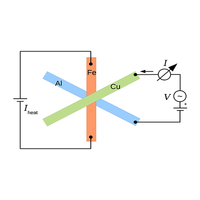
[Phys. Rev. Lett. 116, 097001] Published Tue Mar 01, 2016
Life or illusion? Avoiding “false positives” in the search for living worlds
Powerful future devices such as the James Webb Space Telescope may help astronomers look for life on a handful of faraway worlds by searching for, among other things, evidence of oxygen.
Searching for aliens who already know we’re here
Astronomers suggest that future searches focus on that part of the sky in which distant observers can notice the yearly transit of Earth in front of the Sun.
NASA Data Used to Track Groundwater in Pakistan
Pakistan water managers are using satellite data from NASA’s Gravity Recovery and Climate Experiment to more effectively monitor and manage the nation’s groundwater.
How Water Advances on Superhydrophobic Surfaces
Author(s): Frank Schellenberger, Noemí Encinas, Doris Vollmer, and Hans-Jürgen Butt
High-resolution imaging of a drop moving on an ultra-water-repellent surface spurs researchers to propose a new definition for superhydrophobicity.
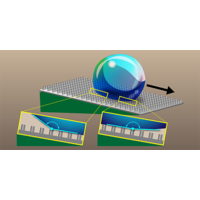
[Phys. Rev. Lett. 116, 096101] Published Mon Feb 29, 2016
Observation and Calculation of the Quasibound Rovibrational Levels of the Electronic Ground State of H_{2}^{+}
Author(s): Maximilian Beyer and Frédéric Merkt
Orbiting resonances (quasi-bound states) of H2+ have been experimentally observed.
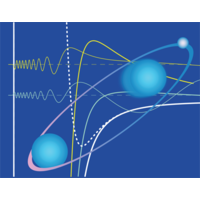
[Phys. Rev. Lett. 116, 093001] Published Mon Feb 29, 2016
Realization of the Contextuality-Nonlocality Tradeoff with a Qubit-Qutrit Photon Pair
Author(s): Xiang Zhan, Xin Zhang, Jian Li, Yongsheng Zhang, Barry C. Sanders, and Peng XueA quantum optics experiment verifies theoretical work showing that there is a trade-off between local contextual correlations and spatially separated correlations…
Valley Vortex States in Sonic Crystals
Author(s): Jiuyang Lu, Chunyin Qiu, Manzhu Ke, and Zhengyou LiuA sonic crystal consisting of a hexagonal array of triangular steel rods in water provides a new degree of freedom to manipulate acoustic waves.[Phys. Rev. Lett. 116, 093901] Published Mon …
Earth from Space
Anssi Pekkarinen from the UN Food and Agriculture Organization joins the Earth from Space video programme to discuss managing forests with satellite data
Scenery shapers
Space science image of the week: Tectonic activity and strong winds shape scenery on Mars
Astronomers spot gluttonous baby stars
Stars may not accumulate their mass steadily but in a series of violent events that manifest as sharp stellar brightening.
Why do we need a leap day?
If Earth let all its extra quarter days add up, we’d quickly be celebrating the 4th of July when it’s snowing.
Keeping transport systems on track
Operators of UK transport networks are the first who are set to benefit from Live Land, a satellite-based land monitoring system developed through ESA.
Revisit NASA’s Mars Pathfinder and Rover (360 View)
Use your mouse or mobile device to explore the site on the Red Planet where NASA’s first Mars rover mission, Pathfinder, landed in 1997.
JPL Director Charles Elachi to Receive Two Awards
JPL Director Charles Elachi will be honored with a pair of prestigious awards over the next two months.
Moon village
ESA Euronews talks to ESA DG Jan Woerner on building a Moon Village
Week In Images
Our week through the lens: 22-26 February 2016
Newly discovered planet in the Hyades cluster could shed light on planetary evolution
Once many planets are found orbiting in young star clusters, researchers can compare them to planets orbiting older stars and see how planets change with time.
Two more Galileo satellites poised for launch in May
Another pair of Galileo navigation satellites is scheduled for launch by Soyuz rocket in May, ahead of a quartet on an Ariane 5 in the autumn, bringing the Galileo system a step closer to operational use.
Quantum optical dipole radiation fields
We introduce quantum optical dipole radiation fields defined in terms of photon creation and
annihilation operators. These fields are identified through their spatial dependence, as the
components of the total fields that survive infinitely far from …
Scientists pinpoint distance to fast radio burst
For the first time a team of scientists has tracked down the location of a fast radio burst (FRB), confirming that these short but spectacular flashes of radio waves originate in the distant universe.
NASA, Partner Space Agencies Measure Forests In Gabon
NASA airborne instruments and scientists, including some from JPL, are studying tropical forests in Gabon, Africa, with colleagues from space agencies in Gabon and Europe.
Opportunity Mars Rover Goes Six-Wheeling up a Ridge
NASA’s senior Mars rover, Opportunity, is working adeptly in some of the most challenging terrain of the vehicle’s 12 years on Mars, on a slope of about 30 degrees.
NASA Demonstrates Airborne Water Quality Sensor
Scientists have demonstrated how a NASA-developed airborne instrument can help monitor water quality in San Francisco Bay and potentially other water bodies.
Colossal Seebeck Coefficient of Hopping Electrons in (TMTSF)_{2} PF_{6}
Author(s): Yo Machida, Xiao Lin, Woun Kang, Koichi Izawa, and Kamran BehniaElectrical and thermal transport measurements show a large Seebeck effect in an insulator cooled below the temperature corresponding to its Coulomb drag.[Phys. Rev. Lett. 116, 0…
X-ray Echo Spectroscopy
Author(s): Yuri Shvyd’ko
A new x-ray technique that uses echo signals has been theoretically proposed. The technique could improve both the spectral resolution and sensitivity of inelastic scattering measurements.
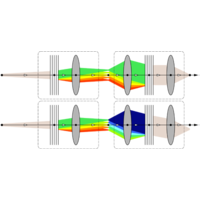
[Phys. Rev. Lett. 116, 080801] Published Thu Feb 25, 2016
Cluster’s Earth #selfie

Operations image of the week: After 16 years, a recommissioned, low-resolution ‘webcam’ on a Cluster satellite has snapped a #selfie with Earth
Earth from Space
Join us Friday, 26 February, at 10:00 CET for the ‘Earth from Space’ video programme. This week features a Sentinel-2A image of the Eastern Desert in Egypt
Sentinel-3 and the ocean carbon conundrum
Each year, about a quarter of the carbon dioxide we release into the atmosphere ends up in the ocean, but how it happens is still not fully understood. The Sentinel-3A satellite is poised to play an important role in shedding new light on …
The prolonged death of light from type Ia supernovae
The observations made with the Hubble Space Telescope suggest that the powerful explosions produce an abundance of a heavy form of cobalt that gives the heat from nuclear decay an extra energy boost.
A gamma-ray burst hints that LIGO’s double black holes started as one massive star
In order to power both the gravitational wave event and the gamma-ray burst, the twin black holes must have been born close together, with an initial separation of order the size of the Earth, and merged within minutes. – See more at: https://www.cfa.h…
Pulsar Web Could Detect Low-Frequency Gravitational Waves
Monitoring a vast network of rapidly spinning pulsars is key to finding very-low-frequency gravitational waves, researchers say.
NASA Contributes to Global Navigation Standard Update
Just as trail landmarks aid hikers, the International Terrestrial Reference Frame is a key navigation standard in science and daily life. NASA has key roles in updating it.
Parallel Transport Quantum Logic Gates with Trapped Ions
Author(s): Ludwig E. de Clercq, Hsiang-Yu Lo, Matteo Marinelli, David Nadlinger, Robin Oswald, Vlad Negnevitsky, Daniel Kienzler, Ben Keitch, and Jonathan P. HomeA new device performs quantum logic operations by directing trapped ions through a station…
World’s corals under threat

The current El Niño weather phenomenon is taking its toll on coral reefs, prompting a field campaign to the middle of the Pacific Ocean to explore how Europe’s Sentinel-2 satellite might be able to quantify the damage on a large scale.
New age of orbits
Technology image of the week: a new kind of orbit using a solar sail to take up position above Earth’s polar regions
Pulsar web could detect gravitational waves
Researchers are studying the best way to use pulsars to detect signals from low-frequency gravitational waves, like those from colliding supermassive black holes.
Freefall achieved on LISA Pathfinder

On Monday, the two cubes housed in the core of ESA’s LISA Pathfinder were left to move under the effect of gravity alone – another milestone towards demonstrating technologies to observe gravitational waves from space.
Introducing the LHC in the classroom: an overview of education resources available
In the context of the recent re-start of CERN’s Large Hadron Collider (LHC) and the challenge
presented by unidentified falling objects (UFOs), we seek to facilitate the introduction of high
energy physics in the classroom. Therefore, this paper pr…
How to study the Doppler effect with Audacity software
The Doppler effect is one of the recurring themes in college and high school classes. In order to
contextualize the topic and engage the students in their own learning process, we propose a simple
and easily accessible activity, i.e. the analysis of …
JPL Scientists Honored by California for Drought Work
The California Department of Water Resources has named three JPL scientists as recipients of its Remote Sensing and Drought Science Service award.
New CubeSats to Test Earth Science Tech in Space
Four CubeSat projects, including two from JPL, will be developed, built and launched into low-Earth orbit to test technologies that could enable improve our understanding of Earth.
Boarding soon
Save the date: media and social media accreditation details for our ExoMars 2016 launch event, to be held at ESA in Darmstadt, on 14 March are coming soon
Scientists pinpoint dates for multiple ancient Earth imapcts
By studying rock glasses, Heidelberg researchers concluded that there were multiple cosmic impacts approximately 790,000 years ago.
Titan’s temperature lag
A new sequence of maps shows varying surface temperatures on Saturn’s moon Titan at two-year intervals, from 2004 to 2016. The measurements were made by the Composite Infrared Spectrometer (CIRS) instrument on NASA’s Cassini spacecraft.
Fuelled for Mars
Space Science Image of the Week: The ExoMars 2016 Trace Gas Orbiter propellant tanks are filled for the launch in March
Subradiance in a Large Cloud of Cold Atoms
Author(s): William Guerin, Michelle O. Araújo, and Robin Kaiser
Subradiant states of many emitters have been created in a dilute cold-atom gas.
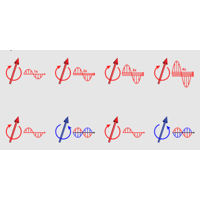
[Phys. Rev. Lett. 116, 083601] Published Mon Feb 22, 2016
Galaxy’s missing gas found in its tail
Scientists noticed long ago that galaxy NGC 4569 contained less gas than expected but they could not see where it had gone.
ESA in partnership with Europe’s railways

Europe’s railway network plays a vital role in keeping our continent on the move. A new ESA initiative is considering the ways that space can add value to the network as it enters its third century of operations.
Application of the Euler?Lagrange method in determination of the coordinate acceleration
In a recent comment published in this journal (2015 Eur. J. Phys. 36
[http://dx.doi.org/10.1088/0143-0807/36/3/038001] 038001 ), Khrapko derived the relationship between
coordinate acceleration and coordinate speed for the case of radial motion in Sc…
Application of the Euler–Lagrange method in determination of the coordinate acceleration
In a recent comment published in this journal (2015 Eur. J. Phys. 36
[http://dx.doi.org/10.1088/0143-0807/36/3/038001] 038001 ), Khrapko derived the relationship between
coordinate acceleration and coordinate speed for the case of radial motion in Sc…
Generating Soap Bubbles by Blowing on Soap Films
Author(s): Louis Salkin, Alexandre Schmit, Pascal Panizza, and Laurent CourbinUsing a bubble-blowing apparatus, researchers developed a model that explains the effects of several factors, such as the breath velocity, on the process of blowing a bubble….
Week In Images
Our week through the lens: 15-19 February 2016
Pluto’s largest moon may have once had an ocean
It’s possible that Charon once had a subsurface ocean that has long since frozen and expanded.
NASA introduces new wider set of eyes on the universe
With a view 100 times bigger than that of NASA’s Hubble Space Telescope, WFIRST will aid researchers in their efforts to unravel the secrets of dark energy and dark matter and explore the evolution of the cosmos.
Dancing with Aurora
A surprising view of Sentinel-3A darting through the aurora borealis on its way into orbit, captured from a hilltop in northern Finland
NASA Scientists, Engineers Receive Presidential Early Career Awards
President Obama Thursday named six NASA researchers, including one from JPL, as recipients of the 2016 Presidential Early Career Award for Scientists and Engineers.
NASA Introduces New, Wider Set of Eyes on the Universe
NASA is formally starting an astrophysics mission designed to help unlock the secrets of the universe — the Wide Field Infrared Survey Telescope (WFIRST).
On the hunt for bed bugs
Learn how Rosetta-inspired technology was deployed to detect bed bugs inside hotel rooms in this TEDxESA talk by researcher and entrepreneur Geraint ‘Taff’ Morgan
In bed for science
Human spaceflight and robotic exploration image of the week: a salute to the bedrest participants who volunteer to spend 60 days in bed for science
Strong Amplification of Coherent Acoustic Phonons by Intraminiband Currents in a Semiconductor Superlattice
Author(s): Keisuke Shinokita, Klaus Reimann, Michael Woerner, Thomas Elsaesser, Rudolf Hey, and Christos FlytzanisAn optical amplification scheme for sound can double the intensity of phonons traveling through a solid.[Phys. Rev. Lett. 116, 075504] Pub…
Search for Narrow Resonances Decaying to Dijets in Proton-Proton Collisions at sqrt[s] =13 TeV
Author(s): V. Khachatryan et al. (CMS Collaboration)No signal of new particles has been found by the CMS collaboration from Run 2 of the LHC at 13 TeV. This null result tightens constraints on a variety of models that predict the existence of heavy res…
End Point of Black Ring Instabilities and the Weak Cosmic Censorship Conjecture
Author(s): Pau Figueras, Markus Kunesch, and Saran TunyasuvunakoolA numerical study of asymptotically flat spaces in five dimensions shows that singularities may not necessarily be hidden inside event horizons violating the so-called weak cosmic censor…
Sentinel’s team of teams

Operations image of the week: The men and women now flying Sentinel-3A comprise a ‘team of teams’ who specialise in areas such as mission operations, flight dynamics and ground stations
Earth from Space
Join us Friday, 19 February, at 10:00 CET for the ‘Earth from Space’ video programme. This week features a Sentinel-2A image of La Rochelle, France
LIGO-India gets the green light
The latest ground-based gravitational-wave detector will allow scientists to figure out where these ripples in space-time are coming from.