
The second Sentinel-1 satellite, Sentinel-1B, is set for launch on 22 April. Discover more about the constellation and ‘radar vision’ for Copernicus
Tiny ancient galaxy preserves record of catastrophic event
New observations of Reticulum II show that heavy elements are likely left over from rare collisions between two neutron stars.
Astronomers glimpse supernova shockwave
Astronomers have captured the earliest minutes of two exploding stars and for the first time have seen a shockwave generated by a star’s collapsing core.
New Gravity Map Gives Best View Yet Inside Mars
A new map of Mars’ gravity made with three NASA spacecraft is the most detailed to date, providing a revealing glimpse into the hidden interior of the Red Planet.
NASA’s Kepler Catches Early Flash of an Exploding Star
The planet-hunting telescope Kepler has set its eyes on a new target: exploding stars.
The future, etched in sand
This remarkable sand-based art show from artist Didi Rodan took place at a recent conference on ESA’s Asteroid Impact Mission, sponsored by GMV in Madrid
Intricate solar structure
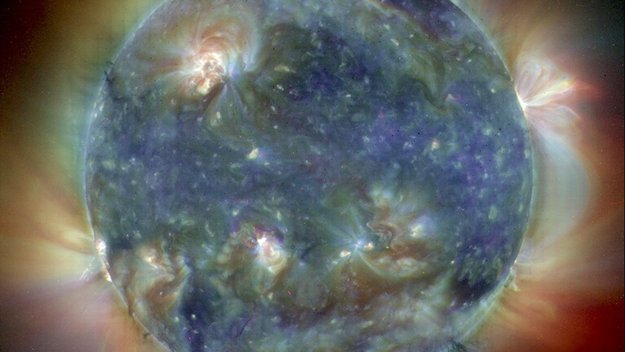
Space science image of the week: Superheated iron atoms show what human eyes cannot see in the Sun’s atmosphere
New gravity map gives best view yet inside Mars
The map will be helpful for future Mars exploration because better knowledge of the planet’s gravity anomalies helps mission controllers insert spacecraft more precisely into orbit about Mars.
A “tail” of two comets
Two comets that will safely fly past Earth later this month may have more in common than their intriguingly similar orbits. They may be twins of a sort.
A ‘Tail’ of Two Comets
Two comets that will safely fly past Earth later this month may have more in common than their intriguingly similar orbits.
Shoulders of giants
Stunning ultra high-definition video of ESA astronaut Tim Peake’s Principia mission
Week In Images
Our week through the lens: 14-18 March 2016
Making the case for an ice giants mission
By year’s end, we should know what NASA’s proposed mission to Neptune and/or Uranus could look like.
Cold Atom Laboratory Doing Cool Research
The Cold Atom Laboratory will forge “fluffy molecules” and probe the wonders of quantum physics when it launches to the International Space Station next year.
Astronomers Discover Colossal ‘Super Spiral’ Galaxies
A new class of behemoth spiral galaxies has been uncovered using NASA archival data.
ExoMars spotted in space
Operations image of the week: Asteroid hunters in three countries spotted ExoMars en route to the Red Planet
Space Station 360: Unity

Explore the Space Station’s second module on your mobile phone or virtual reality headset
Direct Evidence of Octupole Deformation in Neutron-Rich ^{144} Ba
Author(s): B. Bucher et al.Experiments confirm that the barium-144 nucleus is pear shaped and hint that this asymmetry is more pronounced than previously thought.[Phys. Rev. Lett. 116, 112503] Published Thu Mar 17, 2016
Earth from Space

Join us Friday, 18 March, at 10:00 CET for the ‘Earth from Space’ video programme. This week features a Sentinel-2A image of Yuma in the US
Astronomers find source of most powerful cosmic rays
Astronomers have traced the source of the most energetic cosmic radiation to the center of the Milky Way.
News and Features – NASA's Jet Propulsion Laboratory 2016-03-16 22:03:00

Jason-3, a new U.S.-European satellite with NASA participation, has produced its first complete science map of global sea surface height, capturing the current El Niño.
Noise Suppression Using Symmetric Exchange Gates in Spin Qubits
Author(s): Frederico Martins, Filip K. Malinowski, Peter D. Nissen, Edwin Barnes, Saeed Fallahi, Geoffrey C. Gardner, Michael J. Manfra, Charles M. Marcus, and Ferdinand KuemmethA new way to control the coupling of spins between adjacent quantum dots p…
Reduced Sensitivity to Charge Noise in Semiconductor Spin Qubits via Symmetric Operation
Author(s): M. D. Reed, B. M. Maune, R. W. Andrews, M. G. Borselli, K. Eng, M. P. Jura, A. A. Kiselev, T. D. Ladd, S. T. Merkel, I. Milosavljevic, E. J. Pritchett, M. T. Rakher, R. S. Ross, A. E. Schmitz, A. Smith, J. A. Wright, M. F. Gyure, and A. T. Hunter
A new way to control the coupling of spins between adjacent quantum dots produces qubits that are less susceptible to electronic noise.
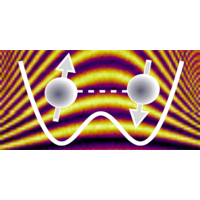
[Phys. Rev. Lett. 116, 110402] Published Wed Mar 16, 2016
All-in-one space antenna
Technology image of the week; ESA’s first 3D-printed dual-reflector antenna undergoes radio-frequency testing
Ceres’ bright spots show unexpected changes
Observations suggest that the material of the spots is volatile and evaporates in the warm glow of sunlight.
Burning like the Sun
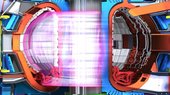
Engineers building parts of a new type of power plant for generating green energy with nuclear fusion are using their expertise from building rockets like Europe’s Ariane 5 to create the super-strong structures to cope with conditions similar to those inside the Sun.
Astronomers see black hole raging red
A black hole called V404 Cygni underwent dramatic brightening for about two weeks as it devoured material that it had stripped off an orbiting companion star.
The driven spinning top
This driven top is quite a novelty and can, with some trials, be made using the principles outlined
here. This new top has many applications in developing both understanding and skills and these are
detailed in the article. Depending on reader’s av…
Tungsten filament fire
We safely remove the outer glass bulb from an incandescent lamp and burn up the tungsten filament
after the glass is removed. This demonstration dramatically illustrates the necessity of a vacuum or
inert gas for the environment surrounding the tungs…
Erratum: Modelling the magnetic dipole (2016 Eur. J. Phys. 37 025203 [http://dx.doi.org/10.1088/0143-0807/37/2/025203] )
Description unavailable
Inspiring the future

ESRIN’s Open Days 2016 gave 2000 schoolchildren an opportunity to learn more about ESA’s Centre for Earth Observation
Soft docking

Human spaceflight and robotic operations image of the week: ESA’s new docking ring
ExoMars sets off to solve the Red Planet’s mysteries
The spacecraft has begun a seven-month journey to Mars, where it will address unsolved mysteries of the planet’s atmosphere.
Monte Carlo simulation of photonic state tomography: a virtual Hanbury Brown and Twiss correlator
This paper provides a theoretical background for the simulations of particular quantum optics
experiments, namely, photon intensity correlation measurements. A practical example, adapted to
polarisation-entangled photon pairs emitted from a quantum d…
Signal received
Relive key moments as ExoMars 2016 separates from the Breeze upper stage and sends its first signals back to Earth
ExoMars on its way to solve the Red Planet’s mysteries
The first of two joint ESA-Roscosmos missions to Mars has begun a seven-month journey to the Red Planet, where it will address unsolved mysteries of the planet’s atmosphere that could indicate present-day geological – or even biological – activity.
NASA Selects Proposals to Build Better Solar Technologies for Deep Space Missions
NASA’s Game Changing Development (GCD) program has selected four proposals to develop solar array technologies that will aid spacecraft in exploring destinations well beyond low-Earth orbit, including Mars.
Local High Schools Win Robotics Competition
Proving their robots have what it takes to storm a castle, an alliance of three high schools won the Los Angeles regional FIRST Robotics Competition on March 12.
Dueling Climate Cycles May Increase Sea Level Swings
A new study explores the relationship between climate cycles and sea level variations, and could lead to better predictions of sea level changes.
Dawn Mission Wins Two Awards
The Dawn project team has earned two prestigious awards, honoring its mission to Vesta and Ceres.
Europe’s New Mars Mission Bringing NASA Radios Along
Two NASA radios aboard the European Space Agency’s Mars mission that launched today are engineered to provide communication relay service for rovers and landers on Mars.
Giotto mission at 30
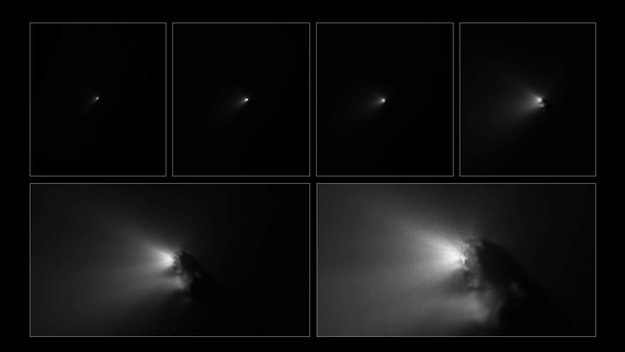
Space Science Image of the Week: ESA’s Giotto made its historic flyby of Comet Halley 30 years ago
Launch event replay
Watch ExoMars 2016 lift off into space, with launch build-up and commentary from mission experts
What’s eating at Pluto?
Scientists have discovered a giant “bite mark” on Pluto’s surface that may have been caused by a process known as sublimation.
Liftoff replay
Watch ExoMars 2016 liftoff from Baikonur, Kazakhstan on a Proton rocket
Mission control ready for Mars launch

ESA’s mission control conducted the dress rehearsal for the ExoMars launch today, an important final step in preparing the ground teams and systems for the 14 March departure to the Red Planet.
NASA Selects Scientists for Mars Rover Research Projects
NASA has selected 28 researchers as participating scientists for the Curiosity Mars rover mission, including six newcomers to the rover’s science team.
Rocket rollout
Video showing the rocket carrying the ExoMars 2016 spacecraft being rolled out to the launch pad
Optical Conductivity of Topological Surface States with Emergent Supersymmetry
Author(s): William Witczak-Krempa and Joseph MaciejkoTheoretical predictions suggest that experiments on topological insulators could provide the first evidence of supersymmetry.[Phys. Rev. Lett. 116, 100402] Published Fri Mar 11, 2016
Sudden Viscous Dissipation of Compressing Turbulence
Author(s): Seth Davidovits and Nathaniel J. FischTurbulent kinetic energy, amplified by compression, can be rapidly converted to thermal energy enabling fast plasma ignition, according to theoretical predictions.[Phys. Rev. Lett. 116, 105004] Published…
Spatial Search by Quantum Walk is Optimal for Almost all Graphs
Author(s): Shantanav Chakraborty, Leonardo Novo, Andris Ambainis, and Yasser OmarThe continuous time quantum walk algorithm for searching a network is optimal for nearly all graphs.[Phys. Rev. Lett. 116, 100501] Published Fri Mar 11, 2016
Week In Images
Our week through the lens: 7-11 March 2016
Clocking the rotation rate of a supermassive black hole
A recent observational campaign allowed a team of astronomers to measure accurately the rotational rate of one of the most massive black holes in the universe.
Telescopes combine to push frontier on galaxy clusters
These cosmic giants are not merely novelties of size or girth, rather they represent pathways to understanding how our entire universe evolved in the past and where it may be heading in the future.
Giotto 30
Thirty years ago, Giotto met Comet Halley, inspiring an art competition for children
ExoMars updates
Follow updates as we count down to the launch of ExoMars on Monday
Cyprus
Earth observation image of the week: a Sentinel-2A image of Cyprus, also featured on the Earth from Space video programme
ExoMars launch updates
Updates from the Baikonur cosmodrome in Kazakhstan for the launch of ExoMars 2016 today.
New NASA Instruments to Study Air Pollution, Cyclones
NASA has selected two new Earth science investigations, including one from JPL, that will put instruments in orbit to track harmful air pollutants and study tropical cyclones.
Space Station 360: Zarya

Explore the Space Station’s first module with your mobile phone or virtual-reality headset
Congestion Induced by the Structure of Multiplex Networks
Author(s): Albert Solé-Ribalta, Sergio Gómez, and Alex Arenas<br/>Multiplex networks are representations of multilayer interconnected complex networks where the nodes are the same at every layer. They turn out to be good abstractions of the intricate connectivity of multimodal transportation networks, among other types of complex systems. One of the most important…<br/>[Phys. Rev. Lett. 116, 108701] Published Thu Mar 10, 2016
The ESA Academy is born!
Space science and engineering education gets a new boost
Planckian Interacting Massive Particles as Dark Matter
Author(s): Mathias Garny, McCullen Sandora, and Martin S. SlothA theoretical investigation of super-heavy dark matter particles finds that their existence might be discerned in the cosmic microwave background.[Phys. Rev. Lett. 116, 101302] Published Th…
Spectroscopic Evidence of the Aharonov-Casher Effect in a Cooper Pair Box
Author(s): M. T. Bell, W. Zhang, L. B. Ioffe, and M. E. Gershenson
Direct evidence of the Aharonov–Casher effect, in which a magnetic dipole acquires a phase in an electric field, has been observed in a superconducting circuit.
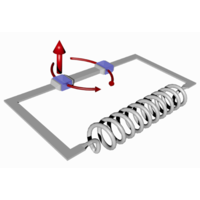
[Phys. Rev. Lett. 116, 107002] Published Thu Mar 10, 2016
First contact

Operations image of the week: In its first operational usage, ESA’s new tracking antenna in Australia followed Ariane’s launch yesterday, providing perfect contact
Earth from Space
Join us Friday, 11 March, at 10:00 CET for the ‘Earth from Space’ video programme. This week features a Sentinel-2A image of Cyprus
Close comet flyby threw Mars’ magnetic field into chaos
Scientists think the encounter blew away part of Mars’ upper atmosphere, much like a strong solar storm would.
Follow ExoMars launch
Watch live launch coverage on 14 March from 08:30 GMT. Launch is scheduled for 09:31 GMT and acquisition of signal is expected at 21:29 GMT
Close Comet Flyby Threw Mars’ Magnetic Field Into Chaos
Just weeks before the historic encounter of comet C/2013 A1 (Siding Spring) with Mars in October 2014, NASA’s Mars Atmosphere and Volatile Evolution (MAVEN) spacecraft entered orbit around the Red Planet.
Ten Years of Discovery by Mars Reconnaissance Orbiter
True to its purpose, the big NASA spacecraft that began orbiting Mars a decade ago this week has delivered huge advances in knowledge about the Red Planet.
NASA’s K2 mission: The Kepler Space Telescope’s Second Chance to Shine
How engineers devised a clever solution to give NASA’s Kepler spacecraft a new mission.
NASA Targets May 2018 Launch of Mars InSight Mission
NASA’s InSight mission to study the deep interior of Mars is targeting a new launch window that begins May 5, 2018.
Spooky lightning
Human spaceflight and robotic exploration image of the week: Lightning captured by ESA astronaut Tim Peake
Shape-Shifting Droplet Networks
Author(s): T. Zhang, Duanduan Wan, J. M. Schwarz, and M. J. Bowick
Sheets of liquid droplets can spontaneously and reversibly change their shape.
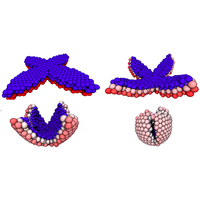
[Phys. Rev. Lett. 116, 108301] Published Wed Mar 09, 2016
Integrable Turbulence and Rogue Waves: Breathers or Solitons?
Author(s): J. M. Soto-Crespo, N. Devine, and N. Akhmediev
Numerical simulations of the nonlinear Schrödinger equation demonstrate how rogue waves form for different levels of initial random noise.
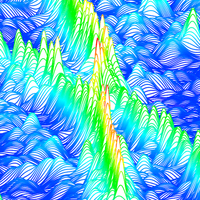
[Phys. Rev. Lett. 116, 103901] Published Wed Mar 09, 2016
NASA targets new May 2018 launch for Mars InSight mission
The mission’s primary goal is to help us understand how rocky planets — including Earth — formed and evolved.
Sharpest view ever of dusty disk around aging star
The Very Large Telescope Interferometer found disks around aging stars are similar to those around young ones.
Data hub
Technology image of the week: Tenerife, as imaged by ESA’s Proba-V minisatellite, is set to host the Big Data from Space conference
Ariane 5 launch contributes to Ariane 6 development

An Ariane 5 lifted off this morning to deliver telecom satellite Eutelsat-65 West A into its planned transfer orbit. Liftoff of flight VA229 occurred at 05:20 GMT (02:20 local time, 06:20 CET) from Europe’s Spaceport in Kourou, French Guiana.
Isospin Mixing Reveals ^{30} P(p,γ) ^{31} S Resonance Influencing Nova Nucleosynthesis
Author(s): M. B. Bennett, C. Wrede, B. A. Brown, S. N. Liddick, D. Pérez-Loureiro, D. W. Bardayan, A. A. Chen, K. A. Chipps, C. Fry, B. E. Glassman, C. Langer, N. R. Larson, E. I. McNeice, Z. Meisel, W. Ong, P. D. O’Malley, S. D. Pain, C. J. Prokop, H. Schatz, S. B. Schwartz, S. Suchyta, P. Thompson, M. Walters, and X. Xu
A short-lived nuclear state that boosts the destruction rate of phosphorus-30 via proton capture has been discovered. This nuclear reaction is critical to determining the origins of microscopic rocks found inside of meteorites that predate our solar system.
[Phys. Rev. Lett. 116, 102502] Published Tue Mar 08, 2016
Sentinel-3A continues to impress

The three instruments on the Sentinel-3A satellite are now offering a tantalising glimpse of what’s in store for Europe’s Copernicus environmental monitoring effort. The latest images, which feature Europe and Antarctica, come from the sensor that records Earth’s radiant energy.
Intensive training for Mars voyage
With just days to go before the departure of ExoMars, mission teams are in the final stages of their months-long training that ensures everyone knows their job the moment the mission comes alive.
Solar eclipse travelogue: On the eve of totality
Astronomy Senior Editor Richard Talcott shares his journey across Indonesia with Astronomy magazine readers ahead of the March 9 total solar eclipse.
A perfectly still laboratory in space
A future observatory in space, sensitive to gravitational waves with longer wavelengths than those detected on the ground, would be an essential tool to exploit gravitational astronomy.
A perfectly still laboratory in space

Following a long series of tests, ESA’s LISA Pathfinder has started its science mission to prove key technologies and techniques needed to observe gravitational waves from space.
Space spin-off fosters 400 new companies
ESA business incubation has passed the milestone of 400 new companies. The initiative to profit from space technology and expertise to create new businesses and jobs in Europe also boosts local economies and Europe’s competitiveness.
Space keeps us safe as air travel rises

ESA and UK satellite operator Inmarsat are forging ahead with the development of air–ground communications via satellite as part of Europe’s plan to keep our skies safe as air traffic increases.
XLVI Eesti füüsikapäevad ja XXXVIII füüsikaõpetajate päevad: kava

2016.a. füüsikapäevade kava on nüüd uurimiseks aadressil http://www.fyysika.ee/?page_id=189305. Füüsikapäevad toimuvad 18.-19. märtsil Tartus, TÜ füüsikumis. Loodame rohket huvi!
Dawn’s First Year at Ceres: A Mountain Emerges
NASA’s Dawn mission commemorates the spacecraft’s first year at Ceres with new images of a mysterious mountain.
Modeling Repeatedly Flaring δ Sunspots
Author(s): Piyali Chatterjee, Viggo Hansteen, and Mats CarlssonSimulations show for the first time how the magnetic fields that produce solar flares can extend out of the Sun by acquiring a twist.[Phys. Rev. Lett. 116, 101101] Published Mon Mar 07, 2016
Earth from Space
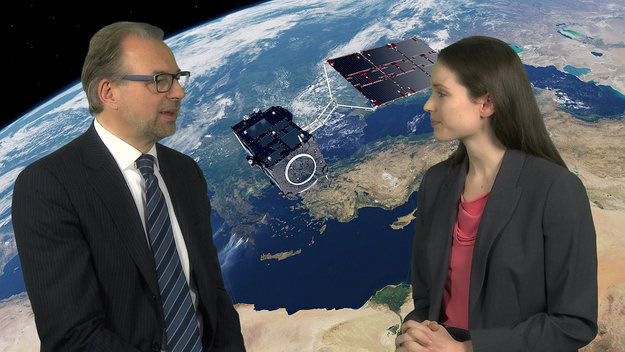
ESA’s Josef Aschbacher joins the Earth from Space video programme to discuss the past, present and future of the Copernicus programme and the Sentinel satellites
Deciphering compact galaxies in the young universe
Researchers have discovered about 80 young galaxies that existed in the early universe about 1.2 billion years after the Big Bang.
Dawn’s first year at Ceres: A mountain emerges
Among Ceres’ most enigmatic features is a tall mountain the Dawn team named Ahuna Mons.
A glimpse of the future
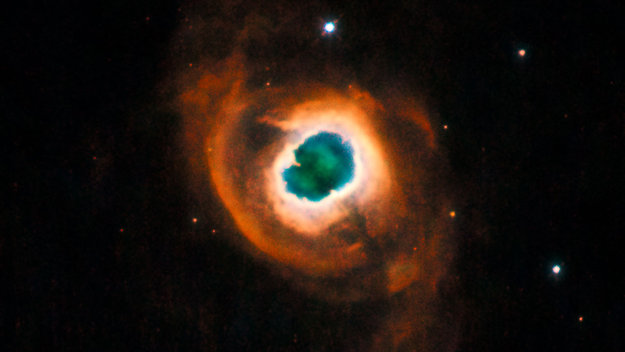
Space science image of the week: Intricate swirls of gas show us a glimpse of the Sun’s future
9. märtsil 2016 toimub esmakordselt veebipõhine astronoomiaviktoriin “Pulsar”!

Astronoomiaviktoriin „Pulsar“ viiakse läbi 9. märtsil 2016 ajavahemikus kl 8:00 – 20:00 Füüsika e-õpiku veebikeskkonnashttp://opik.fyysika.ee/. Viktoriinist saab osa võtta internetiühendusega arvuti, nutitelefoni või tahvelarvuti vahendusel. Viktoriiniküsimused on eesti ja vene keeles. Astronoomiaviktoriinist oodatakse osa võtma 8.-12. klasside õpilasi, aga ka kõiki teisi huvilisi, kes soovivad oma astronoomia ja loodusteaduste võimekust proovile panna. Viktoriinist osavõtt on […]
Automated Search for new Quantum Experiments
Author(s): Mario Krenn, Mehul Malik, Robert Fickler, Radek Lapkiewicz, and Anton ZeilingerQuantum weirdness is hard for humans to grasp, so researchers wrote a program to suggest experimental setups.[Phys. Rev. Lett. 116, 090405] Published Fri Mar 04, …
Week In Images
Our week through the lens: 29 February – 4 March 2016
Sentinel-3A rides the waves
Following the first impressive images from Sentinel-3A, this latest Copernicus satellite is now showing us how another of its instruments, an altimeter, will track sea-level change.
Mystery feature evolves in Titan’s Ligeia Mare
Cassini images show bright features that change over time.
Puzzle of Utah
Earth observation image of the week: a Sentinel-2A image of Utah in the US, also featured on the Earth from Space video programme