The images revealed a rare wave just north of the planet’s equator and a unique filamentary feature in the core of the Great Red Spot not seen previously.
Cassini begins series of flybys with close-up of Saturn moon Enceladus
Images are expected to begin arriving one to two days after the flyby, which will provide the first opportunity for a close-up look at the north polar region.
Cassini begins series of flybys with close-up of Saturn moon Enceladus
Images are expected to begin arriving one to two days after the flyby, which will provide the first opportunity for a close-up look at the north polar region.
Video motion analysis with automated tracking: an insight
The article describes the use of elementary techniques in computer vision and motion photography for
the analysis of well known experiments in interactive instructional physics laboratories. We
describe a method for the automated tracking of the kine…
Introduction to statistical field theory: from a toy model to a one-component plasma
Working with a toy model whose partition function consists of a discrete summation, we introduce the
statistical field theory methodology by transforming a partition function via a formal Gaussian
integral relation (the Hubbard–Stratonovich transfo…
An introduction to polymer nanocomposites
This review presents an overview of the formulation, characterization and range of applications for
polymer nanocomposites. After explaining how material properties at the nanometre scale can vary
compared to those observed at longer length scales, t…
Cassini Begins Series of Flybys with Close-up of Saturn Moon Enceladus
NASA’s Cassini spacecraft will wrap up its time in the region of Saturn’s large, icy moons with a series of three close encounters with Enceladus starting Wednesday, Oct. 14.
Propulsion and Instability of a Flexible Helical Rod Rotating in a Viscous Fluid
Author(s): M. K. Jawed, N. K. Khouri, F. Da, E. Grinspun, and P. M. Reis
Experiments with rotating elastic rods mimic the behavior of swimming bacteria, showing how their tails buckle above a certain rotation speed.
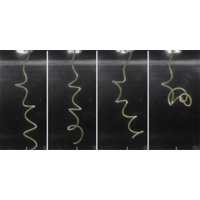
[Phys. Rev. Lett. 115, 168101] Published Tue Oct 13, 2015
AIMing a light across millions of kilometres

Imagine beaming a light across millions of kilometres of empty space, all the way back to Earth. ESA’s proposed Asteroid Impact Mission is intended to do just that: demonstrate laser communications across an unprecedented void.
Blast waves in the Sun’s atmosphere
A unique observational geometry of two solar probes uncovers a new solar phenomenon: large-scale waves accompanied by particles emissions rich in helium-3.
VLA reveals spectacular “halos” of spiral galaxies
A study of spiral galaxies seen edge-on has revealed that “halos” of cosmic rays and magnetic fields above and below the galaxies’ disks are much more common than previously thought.
Nalla, the persuader
Human spaceflight and operations image of the week: Nalla, a female peregrine falcon, persuades other birds to nest away from our beautiful deep-space tracking dish
Path integrals, matter waves, and the double slit
Basic explanations of the double slit diffraction phenomenon include a description of waves that
emanate from two slits and interfere. The locations of the interference minima and maxima are
determined by the phase difference of the waves. An optical…
Transport Spectroscopy of a Spin-Coherent Dot-Cavity System
Author(s): C. Rössler, D. Oehri, O. Zilberberg, G. Blatter, M. Karalic, J. Pijnenburg, A. Hofmann, T. Ihn, K. Ensslin, C. Reichl, and W. Wegscheider
A quantum dot can form a mesoscopic quantum state together with the electrons of a cavity in which the dot is embedded.
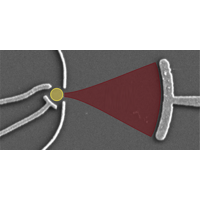
[Phys. Rev. Lett. 115, 166603] Published Mon Oct 12, 2015
Spotlight on BepiColombo
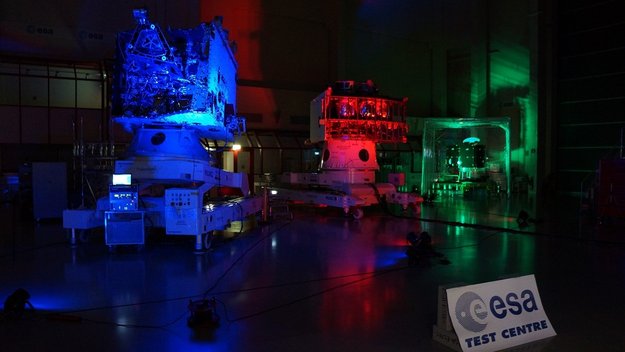
Space Science Image of the Week: ESA’s BepiColombo, a mission to explore planet Mercury, seen in a different light
New Horizons finds blue skies and water ice on Pluto
The first color images of Pluto’s atmospheric hazes, returned by NASA’s New Horizons spacecraft last week, reveal that the hazes are blue.
Sporting Italy uses satellites to share more goals
Satcoms are enabling smaller football clubs in Italy to broadcast their matches in high quality from 60 stadiums, via the Internet.
Week In Images
Our week through the lens: 5-9 October 2015
Stochastic Independence as a Resource in Small-Scale Thermodynamics
Author(s): Matteo Lostaglio, Markus P. Müller, and Michele Pastena
Microscopic engines, even if operated far from equilibrium, could negate thermal fluctuations by creating correlations between initially uncorrelated systems. This would allow the engines to extract as much work as their reversible macroscopic counterparts and do so reliably.
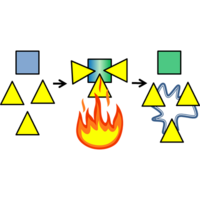
[Phys. Rev. Lett. 115, 150402] Published Fri Oct 09, 2015
Banking X-ray data for the future
Saving information from today that people will want to access and study in the future is a critical function of all archives, but it is especially important when it comes to storing data from today’s telescopes.
Wet paleoclimate of Mars revealed by ancient lakes at Gale Crater
Mars appears to have had a more massive atmosphere billions of years ago than it does today, with an active hydrosphere capable of storing water in long-lived lakes.
Rolling to a stop down an inclined plane
Experimental and theoretical results are presented showing that a ball with a high coefficient of
rolling friction can roll to a stop when it rolls without slipping down an inclined plane. The rate
at which energy is dissipated is directly proportion…
NASA Eyes on Earth Aid Response to Carolina Flooding
NASA is using data from Earth-observing satellites in space to aid in the response to the devastating flooding affecting the Carolinas.
NASA’s Curiosity Rover Team Confirms Ancient Lakes on Mars
A new study from NASA’s Mars Science Laboratory/Curiosity team confirms that Mars was, billions of years ago, capable of storing water in lakes over an extended period.
Geometric Phase Appears in the Ultracold Hydrogen Exchange Reaction
Author(s): B. K. Kendrick, Jisha Hazra, and N. Balakrishnan
Hydrogen exchange reactions can be turned on and off by geometric phase effects at temperatures well below one Kelvin.
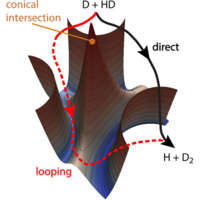
[Phys. Rev. Lett. 115, 153201] Published Thu Oct 08, 2015
Noise-Induced Mechanism for Biological Homochirality of Early Life Self-Replicators
Author(s): Farshid Jafarpour, Tommaso Biancalani, and Nigel GoldenfeldThe preferred handedness of biomolecules may be the result of noisy chemical fluctuations, according to a new theory.[Phys. Rev. Lett. 115, 158101] Published Thu Oct 08, 2015
Astronaut brains as beacons for researchers

How astronauts adapt to the stresses of living in space is helping researchers to pinpoint the causes of common disorders on Earth.
From the brain’s point of view, living in space is very stressful. The signals from an astronaut’s body in space go haywire as they float in weightlessness. The inner ear reports that it is falling, but the eyes show that nothing is moving.
Earth from Space

Join us Friday, 9 October, at 10:00 CEST for the ‘Earth from Space’ video programme. This week features a Sentinel-1A image of the Azore Islands in Portugal
How did you do that?

Human spaceflight and operations image of the week: NASA astronaut Terry Virst demonstrates how he took ESA astronaut Samantha Cristoforetti’s picture in space
Mars Science Laboratory team confirms a wet ancient Mars
These results have led to the conclusion that the ancient climate on Mars was warmer and wetter than previously assumed.
Arizona State University’s Mars images star in “The Martian”
THEMIS images and mosaics appear briefly in a few scenes.
Galileo and the equivalence principle: a faulty argument with the correct conclusion
Galileo asserted that the fall of bodies is independent of their weight. Whether or not he relied on
actual experiments, he explicitly argued in his writings that this fact could be proved by purely
logical reasoning. However, there is an important f…
Capillary viscometer with a pressure sensor: a subject for student projects
We describe a vacuum-based pressure-detecting capillary viscometer for the viscosity determination
of Newtonian fluids without known density. The viscometer operates on the principle that the
variation in air pressure of the vacuum vessel ##IMG##
[h…
Investigating students’ mental models about the nature of light in different contexts
In this study, we investigated pre-service physics teachers’ mental models of light in different
contexts, such as blackbody radiation, the photoelectric effect and the Compton effect. The data
collected through the paper-and-pencil questionnaire (…
Evaluation of the physical forces exerted on a spherical bubble inside the nozzle in a cavitating flow with an Eulerian/Lagrangian approach
An Eulerian/Lagrangian approach is used to calculate the physical forces acting on a spherical
bubble. Reynolds average Navier–Stokes (RANS) equations for the Eulerian approach are solved with a
finite volume scheme. The SIMPLE algorithm is utilize…
Calculating the magnetic field of the infinite solenoid and understanding the Ampere circuital law from the magnetic field of moving charges
The magnetic field of the infinite solenoid is calculated using a new method. An infinitely long
charged line moving along a closed curve on the plane perpendicular to the infinite line will
generate an electric current and so the magnetic field of t…
A novel experimental setup to study the Hagen–Poiseuille and Bernoulli equations for a gas and determination of the viscosity of air
We have performed an experiment in which we have determined the viscosity of air using the
Hagen–Poiseuille equation in the proper range of the Reynolds number (Re). The experiment is novel
and simple which students even at high school level can pe…
Tracer Shape and Local Media Structure Determine the Trend of Translation-Rotation Decoupling in Two-Dimensional Colloids
Author(s): Jeongmin Kim and Bong June SungThe diffusion of a particle-laden fluid around a tracer particle strongly depends on how closely matched the tracer and fluid particles are in shape.[Phys. Rev. Lett. 115, 158302] Published Wed Oct 07, 2015
Why Hexagonal Basalt Columns?
Author(s): Martin Hofmann, Robert Anderssohn, Hans-Achim Bahr, Hans-Jürgen Weiß, and Jens Nellesen
A new model explains why cracks in cooling lava tend to form hexagonal patterns.
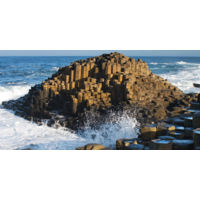
[Phys. Rev. Lett. 115, 154301] Published Wed Oct 07, 2015
Why Hexagonal Basalt Columns?
Author(s): Martin Hofmann, Robert Anderssohn, Hans-Achim Bahr, Hans-Jürgen Weiß, and Jens Nellesen
A new model explains why cracks in cooling lava tend to form hexagonal patterns.
[Phys. Rev. Lett. 115, 154301] Published Wed Oct 07, 2015
Testing asteroid camera
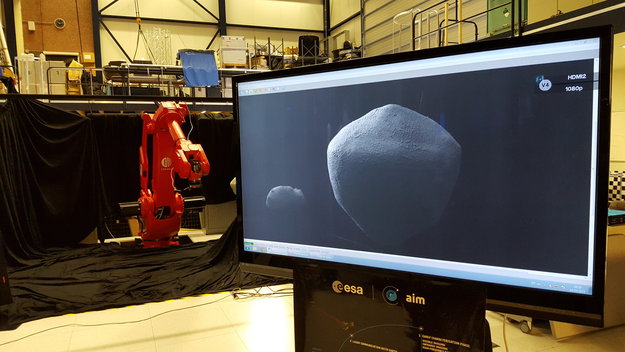
Technology image of the week: practical testing of the navigation camera planned to guide ESA’s proposed Asteroid Impact Mission around its double-asteroid target
Mysterious ripples found racing through planet-forming disk
The fast moving, wave-like structures are unlike anything ever observed in a circumstellar disk.
Nobel Prizes in physics awarded for neutrino discoveries
The discovery has changed our understanding of the innermost workings of matter and can prove crucial to our view of the universe.
Exoplanet Anniversary: From Zero to Thousands in 20 Years
October 6 marks the 20th anniversary of the first discovery of a planet orbiting a normal star.
Geology Award Going to Mars Landing Site Expert at JPL
A prestigious geology award will be presented in early November to a leader in selecting landing sites on Mars: Matt Golombek of JPL.
Polarization Engineering in Photonic Crystal Waveguides for Spin-Photon Entanglers
Author(s): A. B. Young, A. C. T. Thijssen, D. M. Beggs, P. Androvitsaneas, L. Kuipers, J. G. Rarity, S. Hughes, and R. Oulton
Entangled states of spin orientation and directional photons could be created by carefully placing of a quantum dot in a photonic crystal waveguide.
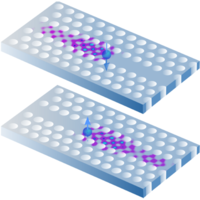
[Phys. Rev. Lett. 115, 153901] Published Tue Oct 06, 2015
Polarization Engineering in Photonic Crystal Waveguides for Spin-Photon Entanglers
Author(s): A. B. Young, A. C. T. Thijssen, D. M. Beggs, P. Androvitsaneas, L. Kuipers, J. G. Rarity, S. Hughes, and R. Oulton
Entangled states of spin orientation and directional photons could be created by carefully placing of a quantum dot in a photonic crystal waveguide.
[Phys. Rev. Lett. 115, 153901] Published Tue Oct 06, 2015
Aliens observed
Space Invader art has arrived at ESA’s Earth observation centre in Italy
Commuting operators for the helium atom
We show that for the helium atom with electrostatic repulsion between electrons, the operators for
the z component and the square of the total angular momentum commute with the Hamiltonian, and
therefore quantum numbers M and L can be used to label t…
Optical behavior of surface bubbles
The observation of diamond-like light spots produced by surface bubbles obliquely illuminated is
reported. The phenomenon is discussed in terms of geometrical optics, and an explanation is provided
attributing the effect to the astigmatism introduced…
The kinematic advantage of electric cars
Acceleration of a common car with with a turbocharged diesel engine is compared to the same type
with an electric motor in terms of kinematics. Starting from a state of rest, the electric car
reaches a distant spot earlier than the diesel car, even t…
A semiclassical approach to the matte black-body
In this paper, a semiclassical approach is used to describe a kind of black-body which we will call
a matte black-body. Although the frequency energy density of a black-body is deduced using a
semiclassical method which includes the electromagnetic r…
The daylight sky and Avogadro’s number
Two methods for estimating Avogadro’s number from the observation of the daylight sky are presented,
both suitable for undergraduate students. One is very simple and based on simple naked-eye
observation, and the other exploits a common digital cam…
JPL’s Role in Making ‘The Martian’ a Reality
NASA’s Jet Propulsion Laboratory plays an important role in the novel and film “The Martian.”
NASA Orbiter Views Sites of Fiction Film’s Mars Landings
Images from a NASA Mars orbiter’s telescopic camera reveal details of regions on Mars that serve as the setting for the new Hollywood movie, “The Martian.”
ESTEC’s Open Day
Snapshots from the Sunday 4 October 2015 Open Day at ESA’s technical heart, the most popular one yet
Quantum Dynamics with Spatiotemporal Control of Interactions in a Stable Bose-Einstein Condensate
Author(s): Logan W. Clark, Li-Chung Ha, Chen-Yu Xu, and Cheng Chin
Optical pulses—tuned to a magic wavelength—provide both spatial and temporal control over the interactions between atoms in an ultracold gas.
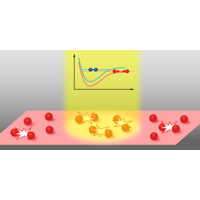
[Phys. Rev. Lett. 115, 155301] Published Mon Oct 05, 2015
Quantum Dynamics with Spatiotemporal Control of Interactions in a Stable Bose-Einstein Condensate
Author(s): Logan W. Clark, Li-Chung Ha, Chen-Yu Xu, and Cheng Chin
Optical pulses—tuned to a magic wavelength—provide both spatial and temporal control over the interactions between atoms in an ultracold gas.
[Phys. Rev. Lett. 115, 155301] Published Mon Oct 05, 2015
Squaring the Circle: Geometric Skewness and Symmetry Breaking for Passive Scalar Transport in Ducts and Pipes
Author(s): Manuchehr Aminian, Francesca Bernardi, Roberto Camassa, and Richard M. McLaughlin
Calculations of the motion of particles carried by a fluid flowing through a pipe find a surprising effect of the pipe’s shape.
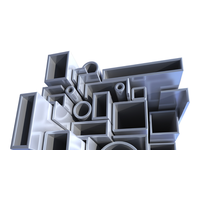
[Phys. Rev. Lett. 115, 154503] Published Mon Oct 05, 2015
Squaring the Circle: Geometric Skewness and Symmetry Breaking for Passive Scalar Transport in Ducts and Pipes
Author(s): Manuchehr Aminian, Francesca Bernardi, Roberto Camassa, and Richard M. McLaughlin
Calculations of the motion of particles carried by a fluid flowing through a pipe find a surprising effect of the pipe’s shape.
[Phys. Rev. Lett. 115, 154503] Published Mon Oct 05, 2015
A Lunar Pox

Space Science Image of the Week: ESA’s SMART-1 captures Moon’s pockmarked pole with stunning clarity
New way to weigh a star
Researchers have developed a new method for measuring the mass of pulsars, even if a star exists on its own in space.
Curiosity’s Drill Hole and Location are Picture Perfect
NASA’s Curiosity Mars rover drilled its eighth hole on Mars this week.
Week In Images
Our week through the lens: 28 September – 2 October 2015
Theory of the Sea Ice Thickness Distribution
Author(s): Srikanth Toppaladoddi and J. S. Wettlaufer
A new solution to an old equation will make it easier to model the evolution of sea-ice thickness.
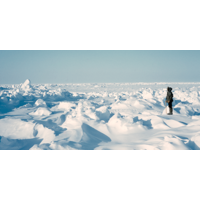
[Phys. Rev. Lett. 115, 148501] Published Fri Oct 02, 2015
Precessional Instability in Binary Black Holes with Aligned Spins
Author(s): Davide Gerosa, Michael Kesden, Richard O’Shaughnessy, Antoine Klein, Emanuele Berti, Ulrich Sperhake, and Daniele Trifirò
Black hole binaries with oppositely aligned spins can be unstable. This instability allows significant spin precession prior to the merger producing detectable gravitational-wave signatures.
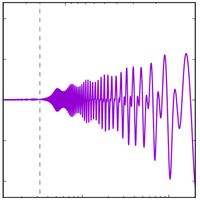
[Phys. Rev. Lett. 115, 141102] Published Fri Oct 02, 2015
Rosetta’s first peek at the comet’s dark side
As formerly dark southern polar regions receive more sunlight, Rosetta starts to resolve their curious composition.
Rosetta’s First Peek at the Comet’s Dark Side
Using the Microwave for Rosetta Orbiter (MIRO) instrument aboard Rosetta, scientists have studied the southern polar regions of its target comet at the end of their long winter season.
Earth from Space
Join us Friday, 2 October, at 10:00 CEST for the ‘Earth from Space’ video programme. This week features a Sentinel-2A image of the city of Berlin, in Germany
Pluto’s big moon Charon reveals a colorful and violent history
The New Horizons spacecraft has returned the best color and the highest resolution images yet of Pluto’s largest moon, Charon.
NASA narrows the field for future key planetary missions
The selected proposals would study Venus, near-Earth objects, and a variety of asteroids.
Fifth mission for Ariane 5 this year

This evening an Ariane 5 delivered two telecom satellites into their planned orbits after lifting off from Europe’s Spaceport in Kourou, French Guiana.
NASA Selects Investigations for Future Key Planetary Mission
Three proposed science investigations with JPL project management have been chosen by NASA for further investigation.
Dawn Team Shares New Maps and Insights about Ceres
Mysteries and insights about Ceres are being discussed this week at the European Planetary Science Conference in Nantes, France.
Raman-Free, Noble-Gas-Filled Photonic-Crystal Fiber Source for Ultrafast, Very Bright Twin-Beam Squeezed Vacuum
Author(s): Martin A. Finger, Timur Sh. Iskhakov, Nicolas Y. Joly, Maria V. Chekhova, and Philip St. J. Russell
An optical-fiber scheme generates a bright “twin beam”—a pair of quantum-correlated beams that could be used in high-precision metrology.
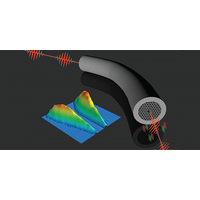
[Phys. Rev. Lett. 115, 143602] Published Wed Sep 30, 2015
A fresh perspective on an extraordinary cluster of galaxies
New observations of the Phoenix Cluster at X-ray, ultraviolet, and optical wavelengths are helping astronomers better understand this remarkable object.
Dawn team shares colorful new maps and surprising observations
Ceres continues to amaze, yet puzzle scientists, as they examine the multitude of images, spectra, and now energetic particle bursts.
SMOS meets ocean monsters

ESA’s SMOS and two other satellites are together providing insight into how surface winds evolve under tropical storm clouds in the Pacific Ocean. This new information could to help predict extreme weather at sea.
Space for visitors
Technology image of the week: Visitor centre Space Expo will be participating in Sunday’s ESTEC Open Day with a bargain admission offer
Comet Feature Named After Late NASA Scientist Claudia Alexander
Scientists from the European Space Agency’s Rosetta mission honor their deceased colleague, Claudia Alexander of JPL, by naming a feature after her on the mission’s target comet.
NASA: Background Ozone a Major Issue in U.S. West
New technique more accurately determines the sources of ozone in a given area.
Effectiveness of Integrating MOOCs in Traditional Classrooms for Undergraduate Students
The idea of a Massive Open Online Course (MOOC) has attracted a lot of media attention in the last couple of years. MOOCs have been used mostly as stand-alone online courses without credits. However, some researchers, teachers, colleges, and universiti…
Public Response to “the MOOC Movement” in China: Examining the Time Series of Microblogging
In China, microblogging is an extremely popular activity and is proving to be an effective mechanism to gauge perceptions about social phenomena. Between 2010 and 2015 Sina Weibo, China’s largest microblogging website, generated 95,015 postings from 62,074 users referencing the term massive open online courses (MOOCs), a method of online course delivery popularized in North America that has spread globally. Time series analyses revealed distinct patterns in the volume of postings during a four-year period, and subsequently by month, by week, and by the time of day. The volume of postings during the week, for example, peaked on Monday and declined daily to a low point on Saturday. Relative to maximizing learner engagement, the findings may provide insight to parties who deliver MOOCs to employ or test strategies on timing (i.e., time of year to offer/not offer a MOOC, time of week to release/not release new material, time of day to schedule/not schedule chat sessions). The paper also serves to demonstrate a mechanism to retrieve big data from social media sources, otherwise underutilized in educational research.
Examining Value Change in MOOCs in the Scope of Connectivism and Open Educational Resources Movement
Massive Open Online Courses (MOOCs) came to prominence with Open Educational Resources Movement (OERM). It was based upon the idea of libre in removal of some permission barriers and gratis in removing the price barrier (Suber, 2008) in learning resour…
OER Quality and Adaptation in K-12: Comparing Teacher Evaluations of Copyright-Restricted, Open, and Open/Adapted Textbooks
Conducted in conjunction with an institute on open textbook adaptation, this study compares textbook evaluations from practicing K-12 classroom teachers (n = 30) on three different types of textbooks utilized in their contexts: copyright-restricted, op…
Open Educational Resources in Canada 2015
Canada’s important areas of expertise in open educational resources (OER) are beginning to be built upon or replicated more broadly in all education and training sectors. This paper provides an overview of the state of the art in OER initiatives and open higher education in general in Canada, providing insights into what is happening nationally and provincially. There are growing examples of OER initiatives from several Canadian institutions offering free courses to Canadians and international learners. National open education initiatives include the federal government’s Open Data pilot project and the Council of Ministers of Education of Canada (CMEC) support for the Open Educational Resource Paris Declaration, as well as Creative Commons Canada. Regionally, the western provinces of British Columbia and Alberta are supporting OER as part of major open education initiatives.
In Search of Quality: Using Quality Matters to Analyze the Quality of Massive, Open, Online Courses (MOOCs)
The concept of the massive, open, online course (MOOC) is not new, but high-profile initiatives have moved MOOCs into the forefront of higher education news over the past few years. Members of institutions of higher education have mixed feelings about …
Evaluation Criteria for Interactive E-Books for Open and Distance Learning
The aim of this mixed method study is to identify evaluation criteria for interactive e-books. To find answers for the research questions of the study, both quantitative and qualitative data were collected through a four-round Delphi study with a panel…
Developing a Sustainable Financial Model in Higher Education for Open Educational Resources
Financial issues regarding the sustainable production, dissemination, and use of Open Educational Resources (OER) in higher education are reviewed and proposed solutions critiqued. Use of OER produce demonstrable cost savings for students. Yet OER deve…
Not All Rubrics Are Equal: A Review of Rubrics for Evaluating the Quality of Open Educational Resources
The rapid growth in Internet technologies has led to a proliferation in the number of Open Educational Resources (OER), making the evaluation of OER quality a pressing need. In response, a number of rubrics have been developed to help guide the evaluat…
Editorial: Volume 16, Number 5
Space portrait
A unique portrait of ESA astronaut Andreas Mogensen made for the Cupola observatory on the International Space Station by visual artist Vhils
Searching for orphan stars amid starbirth fireworks
The Herbig-Haro 24 complex contains no less than six jets streaming from a small cluster of young stars embedded in a molecular cloud in the direction of the constellation Orion.
How Rosetta’s rubber ducky comet got its shape
Scientists have shown that the shape arose from a low-speed collision between two fully fledged, separately formed comets.
NASA Confirms Evidence That Liquid Water Flows on Today’s Mars
New findings from NASA’s Mars Reconnaissance Orbiter (MRO) provide the strongest evidence yet that liquid water flows intermittently on present-day Mars.
Topological Magnon Bands in a Kagome Lattice Ferromagnet
Author(s): R. Chisnell, J. S. Helton, D. E. Freedman, D. K. Singh, R. I. Bewley, D. G. Nocera, and Y. S. Lee
Experimental evidence is presented for a topological magnon insulator, a material where magnetic excitations (magnons) are protected from scattering by the properties of the material.
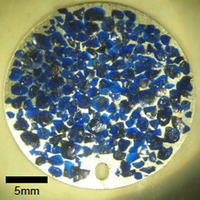
[Phys. Rev. Lett. 115, 147201] Published Mon Sep 28, 2015
Telecom-Wavelength Atomic Quantum Memory in Optical Fiber for Heralded Polarization Qubits
Author(s): Jeongwan Jin, Erhan Saglamyurek, Marcel. lí Grimau Puigibert, Varun Verma, Francesco Marsili, Sae Woo Nam, Daniel Oblak, and Wolfgang Tittel
The storage and retrieval of polarization qubits encoded into photons is demonstrated using erbium-doped fiber optics.
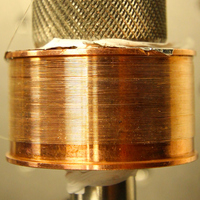
[Phys. Rev. Lett. 115, 140501] Published Mon Sep 28, 2015
Anomalous Diffraction in Cold Magnetized Plasma
Author(s): Z. Abelson, R. Gad, S. Bar-Ad, and A. FisherMicrowaves can propogate in a cold magnetized plasma without being diffracted for certain magnetic field strengths and electron densities.[Phys. Rev. Lett. 115, 143901] Published Mon Sep 28, 2015
Quantum Oscillations without a Fermi Surface and the Anomalous de Haas–van Alphen Effect
Author(s): Johannes Knolle and Nigel R. CooperThe Fermi surface of a metal is typically detected via quantum oscillations of its thermodynamic properties in response to a changing applied magnetic field. A microscopic model shows that these oscillation…
Measurements of Elliptic and Triangular Flow in High-Multiplicity ^{3} He+Au Collisions at sqrt[s_{NN} ] =200 GeV
Author(s): A. Adare et al. (PHENIX Collaboration)Particle correlations in 3He+Au collisions suggest that a low-viscosity quark-gluon plasma forms in collisions using light projectiles.[Phys. Rev. Lett. 115, 142301] Published Mon Sep 28, 2015