
With rigorous training complete, satellite operations teams are ready to assume control of Sentinel-1B – and for any problems that might come along.
Elu, loodus, teadus ja tehnoloogia
With rigorous training complete, satellite operations teams are ready to assume control of Sentinel-1B – and for any problems that might come along.
Venus may be boiling hot, but its poles are very, very cold.
MARINER 2 FACT SHEET
MARINER SCIENTIFIC EXPERIMENTS
The Mariner spacecraft contains six scientific experiments representing the efforts of scientists at nine institutions: The Army Ordnance Missile Command, the California Institute of Technology, the Goddard Space Flight Center, Harvard C…
Mariner 1, the first of the series of spacecraft designed for planetary exploration will be launched within a few days (no earlier than July 21) from the Atlantic Missile Range, Cape Canaveral, Florida, by the National Aeronautics and Sp…
The boost portion of the Mariner mission consists of three phases: ascent into a circular parking orbit of approximately 115 miles, coast in the parking orbit to a pre-determined point in space, and burning out of the parking orbit to gr…
MARINER SCIENTIFIC EXPERIMENTS
MARINER FACT SHEET
National Aeronautics and Space administration officials are preparing the Mariner D spacecraft for launch on a Mars trajectory within the current launch opportunity. The launch of Mariner D, now undergoing final checkout at Cape Kennedy,…
Man’s first chance to obtain information from another planet will come on December 14 when the Mariner II spacecraft passes approximately 21,000 miles from Venus.
Mariner II’s fly-by of Venus on December 14 has produced the most accurate estimate yet of the mass of our sister planet, two scientists from the California Institute of Technology Jet Propulsion Laboratory reported today. This informati…
Mariner II carried two experiments designed to measure the charged-particle radiation in space, including galactic cosmic rays and streams of high-energy particles which are released intermittently from the sun. Virtually continuous meas…
Telemetry from the Mariner IV spacecraft, now en route across interplanetary space to the planet Mars, indicates that one of its eight experiments has ceased to function.
The Mariner IV spacecraft, which made the first close-up photographs of Mars last July 14, took more television pictures late yesterday–this time of black space–the National Aeronautics and Space Administration reported today.
Appointment of project managers for the two forthcoming Mariner-series deep space exploration mission to Venus and Mars has been announced by Gen. A. R. Luedecke, Deputy Director of the Jet Propulsion Laboratory of the California Institu…
A series of commands were radioed 16-1/2 million miles to NASA’s Mariner IV spacecraft early today by JPL engineers from the Mariner spaceflight operations center to check out spacecraft equipment that will be used if Mariner is still op…
The areas on Mars that are expected to be photographed by the single television camera aboard Mariner IV have been determined by the National Aeronautics and Space Administration.
Changes in the performance of two scientific instruments aboard NASA’s Mars-bound Mariner IV spacecraft were reported here today by a Jet Propulsion Laboratory engineer.
The Mariner IV spacecraft, during the past week, reached a number of milestones along its 228-day scientific mission to the planet Mars, the National Aeronautics and Space Administration reported today.
The Mars-bound Mariner IV spacecraft early today established a new United States and world communications distance record when it reached a point in space more than 66 million miles from Earth, the Jet Propulsion Laboratory reported.
…
For 204 days the Mariner IV spacecraft has been charting the vast expanse between the planets Earth and Mars on the longest deep space mission in history.
The National Aeronautics and Space Administration is making final plans for processing the pictures Mariner IV will take of Mars as it flys within 5600 miles of the planet on July 14.
An attempt to take pictures of empty, black space with Mariner IV’s television camera was scrubbed today after the transmission of the first of a series of commands from Earth, the National Aeronautics and Space Administration and the Je…
The Mariner IV spacecraft, having achieved its mission objectives and now in its 300th day of flight, will receive a command from Earth next week, concluding–but possibly only temporarily–the National Aeronautics and Space Administrati…
The Mariner IV spacecraft, which took the world’s first closeup pictures of Mars last year, is once again in contact with Earth reporting on the space environment and its own operating performance after 18 months of flight.
The target area for Surveyor A is a circle 62 miles in diameter in Oceanus Procellarium. The center of the circle is 3 degrees South latitude, 44 degrees West longitude. The area is a potential landing site for Apollo.
The National Aeronautics and Space Administration’s Surveyor I spacecraft made a perfect low-speed, three-point landing on the moon on June 1, 1966, after a 63-hour, 36-minute flight from Cape Kennedy.
The National Aeronautics and Space Administration’s Surveyor I spacecraft made a perfect low-speed, three-point landing on the Moon on June 1, 1966, after a 63-hour, 36-minute flight from Cape Kennedy.
The sparkling success of Surveyor I in taking television pictures of the Moon’s surface has been further enhanced by a computer process developed at Caltech’s Jet Propulsion Laboratory.
The second of a series of Surveyor spacecraft, designed to soft land on the moon, will be launched from Cape Kennedy during a launch period beginning Tuesday, September 20, and ending Friday, September 23.
The Surveyor II spacecraft, which was to soft-land on the moon tonight, lost communications with Earth tracking stations at 2:35 a.m. PDT today–45 hours and three minutes after it was launched from Cape Kennedy.
Surveyor II will impact southeast of the crater Copernicus at 8:18 p.m. PDT tonight. The landing time and zone is based on analysis of the flight path prior to loss of contact.
The National Aeronautics and Space Administration’s Surveyor II spacecraft impacted the moon near the crater Copernicus on September 22, 1966.
Mariner IV, launched two years ago today on its historic Mars photo mission, has flown more than one billion miles in space and continues to operate properly, reporting its condition to Earth three times each week.
The National Aeronautics and Space Administration has eliminated three Surveyor soft lunar landing spacecraft from current budget planning.
Surveyor I, on its 220th day on the moon since it landed in the Ocean of Storms June 1, 1966, was turned on last Friday and communicated with Earth stations for approximately twelve hours. The objective for activating the transmitters ab…
Mariner V, now in the tenth day of its four-month flight to Venus, will fly by the planet at an altitude of about 2500 miles, project officials of the National Aeronautics and Space Administration and the Jet Propulsion Laboratory report…
The fourth of a series of Surveyor spacecraft, designed to soft land on the moon, will be launched from Cape Kennedy during a launch period beginning Thursday, July 13, and ending Monday, July 17.
The Mariner Venus spacecraft of 1967 may combine with the Mariner Mars spacecraft, vintage 1964, in a novel experiment planned for this summer and fall by Caltech Jet Propulsion Laboratory scientists for the National Aeronautics and Spac…
The fifth of a series of Surveyor spacecraft, designed to soft land on the moon, will be launched from Cape Kennedy during a launch period beginning Friday, September 8, and ending Wednesday, September 13.
The Mariner IV spacecraft last night was buffeted about in interplanetary space between the orbits of Earth and Mars when it apparently crossed the path of a stream of micrometeoroids.
Venus, the cloud-shrouded mystery planet, may yield some of her secrets in mid-October to Mariner V experimenters at Caltech’s Jet Propulsion Laboratory and several allied installations.
Commands were transmitted from Earth yesterday to two Mariner interplanetary spacecraft operating at widely-separated points in the solar system, the National Aeronautics and Space Administration reported today.
Surveyor VII will both dig and analyze the Moon’s surface if all goes well next month in the last and probably most difficult of the United States’ series of lunar surface probes.
The surface air pressure on the planet Venus may be 75 or 100 times that on Earth–or four to five times greater than the Venus pressure reported recently by Soviet scientists–Jet Propulsion Laboratory researchers have revealed.
The National Aeronautics and Space Administration will launch two Mariner spacecraft, F & G, on fly-by missions to Mars in 1969. Project responsibility is assigned to the Jet Propulsion Laboratory of the California Institute of Technology. NASA’s Lewis Research Center, Cleveland, is responsible for the launch vehicle. Tracking and communication will be provided by the Deep Space Net stations operated by JPL for NASA.
Correction to Mariner Mars 1969 Press Kit (Released February 14, 1969).
The second Mariner ’69 spacecraft, Mariners VII, will be launched on fly-by missions to Mars on Monday, March 24, at about 2 p.m. The first spacecraft Mariner VI, was launched February 24.
The launch of Mariner G toward Mars, originally scheduled for 1:58 p.m. PST Monday, March 24, has been postponed for at least 3 days because of problems with the spacecraft’s on-board computer and one of its science instruments. Project …
Commands were transmitted from Earth to the Mars-bound Mariner 7 today to complete the star acquisition sequence begun shortly after the spacecraft was launched on March 27.
Formation of the Viking Orbiter Office at the California Institute of Technology Jet Propulsion Laboratory was announced today by JPL Director Dr. William H. Pickering.
Some aeons-old secrets of Mars could be unveiled by spectrometers, television cameras and radiometers aboard Mariner VI and VII in the next week or so when the space- craft fly by the red planet at a distance of only 2,000 miles. Scienti…
Author(s): B. Graner, Y. Chen ((陳宜)), E. G. Lindahl, and B. R. Heckel
A factor of four improvement on the maximum value for the permanent electric dipole moment of mercury atoms places new limits on a number of CP-violating observables.
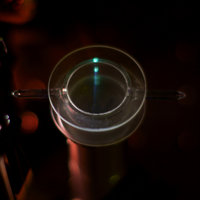
[Phys. Rev. Lett. 116, 161601] Published Mon Apr 18, 2016

Join us Tuesday, 19 April, at 14:00 CEST as ESA’s Sentinel-1 Mission Manager Pierre Potin joins the show to discuss the radar vision mission for Copernicus
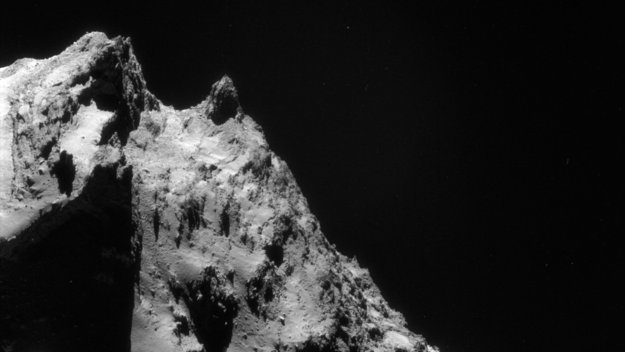
Space Science Image of the Week: Suggestive of a face immersed in deep thoughts, this view reveals the complex terrains around Anuket on Rosetta’s comet

Europe’s Sentinel-1A satellite has shown that the Mekong River Delta – one of the world’s major rice-growing areas – saw a significant drop in productivity over the past year, illustrating the effect of El Niño on food security.
Scientists have determined that comets produce X-ray emission when particles in the solar wind strike the atmosphere of the comet.
NASA’s Cassini spacecraft has detected the faint but distinct signature of dust coming from beyond our solar system.
Our week through the lens: 11-15 April 2016
Earth observation image of the week: a Sentinel-1A image of Ireland, also featured on the Earth from Space video programme
NASA’s Cassini spacecraft has detected the faint but distinct signature of dust coming from beyond our solar system.
A nebula known as “the Spider” glows fluorescent green in an infrared image from NASA’s Spitzer Space Telescope and the Two Micron All Sky Survey (2MASS).
The international Cassini spacecraft has detected the faint but distinct signature of dust coming from outside our Solar System.
Author(s): M. Ackermann et al.Researchers estimate that blazars produce 86% of the extragalactic gamma-ray background.[Phys. Rev. Lett. 116, 151105] Published Thu Apr 14, 2016

Operations image of the week: ESA’s deep-space tracking station in Argentina seen while relaying signals from Philae in 2014

Multiple satellites, including Europe’s Sentinels, have captured images of two large icebergs that broke away from Antarctica’s Nansen ice shelf on 7 April.
Join us Friday, 15 April, at 10:00 CEST for the ‘Earth from Space’ video programme. This week features a Sentinel-1A image of Ireland
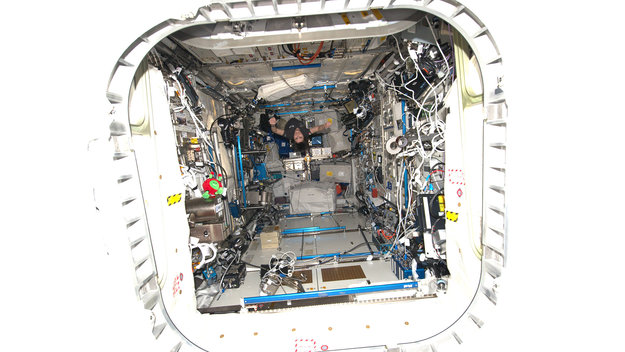
Explore Europe’s Columbus space laboratory with your mobile phone or VR headset in this panorama
This discovery paves the way for ALMA to find many more such objects and could help astronomers address important questions on the nature of dark matter.
Technology image of the week: Clean Space’s new board game helps educate engineers about the environmental impacts of space missions

The ESA–Roscosmos ExoMars spacecraft are in excellent health following launch last month, with the orbiter sending back its first test image of a starry view taken en route to the Red Planet.
Author(s): A. K. Mitchell, L. A. Landau, L. Fritz, and E. Sela
A two-channel Kondo model solved using the numerical renormalization group reproduces the temperature dependence of the conductance measured in recent experiments on Kondo nanostructures. This suggests that charge-Kondo devices constitute perfect quantum simulations of models exhibiting quantum criticality.
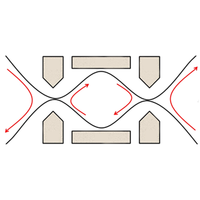
[Phys. Rev. Lett. 116, 157202] Published Wed Apr 13, 2016
Author(s): P. Adamson et al. (NOvA Collaboration)The first results from the NOvA experiment set new constraints on charge-parity violation in neutrinos and on the ordering of neutrino masses.[Phys. Rev. Lett. 116, 151806] Published Wed Apr 13, 2016
Watch ESA education in-flight call with astronaut Tim Peake on 14 April, streaming starts at 14:00 CEST, with Tim live at 14:40 CEST
While all previous hypervelocity stars are single, PB 3877 is the first wide binary star found to travel at such a high speed.
NASA has selected 13 proposals, including four from JPL, for a program that invests in transformative architectures through the development of pioneering technologies.
Veebipõhine füüsikaviktoriin toimub 13. aprillil 2016 ajavahemikus kl 8:00 kuni 20:00. Viktoriinile ootame osalema kõiki 8.-12. klasside õpilasi, ka täiskasvanute gümnaasiumide ja kutsekoolide õpilasi, kes tahavad oma füüsikateadmisi proovile panna! Viktoriinist osavõtt on tasuta. Viktoriini korraldab TÜ teaduskool koostöös TÜ koolifüüsika keskuse ja Eesti Füüsika Seltsiga. Füüsikaviktoriini läbiviimist rahastab Hasartmängumaksu Nõukogu. Viktoriini juhend 2016 Poster […]

Human spaceflight and robotic exploration image of the week: ESA astronaut Tim Peake reading Yuri Gagarin’s biography in space for Cosmonaut day
Based on the signals seen so far and the sensitivity of LIGO’s detectors, scientists estimate that they’ll see between 10 and 100 black hole mergers during the instrument’s next observing run, which begins in late summer.
Mission operations engineers have successfully recovered the Kepler spacecraft from Emergency Mode.
The Sentinel-1 mission is allowing institutes to provide a better service to users needing reliable information on sea ice, which is key to living and working safely in Arctic regions
JPL has a new approach to its annual public weekend. To ensure a safe, enjoyable experience, the event formerly called “Open House” will require tickets in 2016.
11. aprillil kell 17.00 avatakse TÜ raamatukogu 2. korruse suures saalis akadeemik Karl Rebase 90. sünniaastapäevale pühendatud näitus. K. Rebase pikaajalise, väga sihikindla ning eduka teadustöö peateema oli teoreetiline füüsika rakendatuna optikas ja tahke keha füüsikas. 1968. aastal avaldatud venekeelne monograafia, mis käsitles lisanditega kristallide optiliste spektrite teooriat, tõlgiti USA-s inglise keelde ja kujunes füüsikamaailmas […]
Keeping you posted on new developments in space applications that help tackle migration issues
@esa has reached half a million followers on Twitter, thank you for connecting with us
Deep radio imaging has revealed that supermassive black holes in a region of the distant universe are all spinning out radio jets in the same direction.
While the proposed planet’s existence may eventually be confirmed by other means, mission navigators have observed no unexplained deviations in the spacecraft’s orbit.

Space science image of the week: Did Saturn’s rings form from a moon that broke apart?
NASA’s Kepler mission will begin a search for planets orbiting far from their stars by using gravitational lensing.
Contrary to recent reports, NASA’s Cassini spacecraft is not experiencing unexplained deviations in its orbit around Saturn, according to mission managers and orbit determination experts at NASA’s Jet Propulsion Laboratory in Pasadena, C…
New data on how water moves around Earth answer old questions about the planet’s rotation.
With less than two months left aboard the International Space Station, ESA astronaut Tim Peake has been exceptionally busy with experiments and arriving spacecraft. Tonight, the third supply vessel for the space laboratory in three weeks w…
Our week through the lens: 4-8 April 2016
ESA astronaut Tim Peake shares the views from space and highlights of his Principia mission so far
A slideshow of ESA astronaut Tim Peake’s views of Europe at night from the International Space Station

On 22 April, Sentinel-1B is set to join its identical twin, Sentinel-1A, in orbit to provide more radar views of Earth for Copernicus – hear all about it
By simulating the evolution of the interstellar ice making up comets, French research teams have successfully obtained ribose, a key step in understanding the origin of RNA — and therefore of life.
Earth observation image of the week: a Sentinel-1A image of the Bernese Alps, also featured on the Earth from Space video programme
NASA’s K2 mission is on the hunt for planets floating alone without stars.


