• Arhiiv
    • Eesti füüsikapäevad ja füüsikaõpetajate päevad
      • 2017.a. füüsikapäevad
      • 2016.a. füüsikapäevad
      • 2015. a. füüsikapäevad
      • 2003.a. füüsikaõpetajate päev
    • EFS Täppisteaduste Suve- ja Sügiskoolid
      • 2017.a. sügiskool
      • 2016.a. sügiskool
      • 2015.a. sügiskool
      • 2014.a. sügiskool
      • 2013.a. suvekool
      • 2013.a. sügiskool
      • 2012.a. suvekool
      • 2012.a. sügiskool
      • 2011. a. suvekool
      • 2010. a. suvekool
      • 2010.a. sügiskool
      • 2009.a. sügiskool
      • 2008.a. suvekool
      • 2008.a. sügiskool
      • 2007. a. suvekool
      • 2007.a. sügiskool
      • 2006.a. suvekool
      • 2005.a. suvekool
      • 2005.a. sügiskool
      • 2004.a. suvekool
      • 2004.a. sügiskool
    • Füüsika õpetajate sügisseminarid Voorel
      • Voore 2017
      • Voore 2015
      • Voore 2011
      • Voore 2009
    • EFS aastaraamatud
    • Teaduslaagrid
    • Akadeemiline füüsikaolümpiaad
    • Tähe perepäevad TÄPE

FYYSIKA.EE

Elu, loodus, teadus ja tehnoloogia

  • Eestist endast
    • Arvamus
    • Teated
    • Persoon
    • Eesti füüsikaolümpiaadid
  • Teadusuudised
    • Eesti teadusuudised
      • Tartu Ülikool
      • KBFI
      • Tallinna Tehnikaülikool
      • Tõravere Observatoorium
    • FYYSIKA.EE hoiab silma peal – Teemad
    • Referaadinurgake
    • Päevapilt
  • Eesti Füüsika Selts
    • Teadusbuss
    • Füüsika, keemia ja bioloogia õpikojad
    • Füüsika e-õpikud
    • Eesti Füüsika Seltsi põhikiri
  • Füüsikaõpetajate osakond
    • Füüsikaõpetajate võrgustik
  • Füüsikaüliõpilaste Selts
  • Kontakt

Evidence for Unresolved γ-Ray Point Sources in the Inner Galaxy

4.02.2016 by Kaido Reivelt

Author(s): Samuel K. Lee, Mariangela Lisanti, Benjamin R. Safdi, Tracy R. Slatyer, and Wei Xue

New models show that neutron stars—and not dark matter—could be responsible for an excess of gamma rays from the Milky Way’s center.
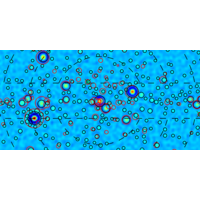

[Phys. Rev. Lett. 116, 051103] Published Thu Feb 04, 2016
Filed Under: RSS Teadus

Strong Support for the Millisecond Pulsar Origin of the Galactic Center GeV Excess

4.02.2016 by Kaido Reivelt

Author(s): Richard Bartels, Suraj Krishnamurthy, and Christoph Weniger

New models show that neutron stars—and not dark matter—could be responsible for an excess of gamma rays from the Milky Way’s center.


[Phys. Rev. Lett. 116, 051102] Published Thu Feb 04, 2016

Filed Under: RSS Teadus

Polar Memorandum

4.02.2016 by Kaido Reivelt

ESA and the European Polar Board sign a Memorandum of Understanding

Filed Under: RSS Kosmos

Looking up down under

4.02.2016 by Kaido Reivelt


Operations image of the week: #SocialSpaceWA – ESA’s first-ever social media event down under – happens at the New Norcia deep-space tracking station, Western Australia, next week

Filed Under: RSS Kosmos

Earth from Space

4.02.2016 by Kaido Reivelt


Join us Friday, 5 February, at 10:00 CET for the ‘Earth from Space’ video programme. This week features a Sentinel-1A image of the Siljan crater in Sweden

Filed Under: RSS Kosmos

Rapidly spinning stars explain dark matter signal from galactic center

4.02.2016 by Kaido Reivelt

The excess of gamma rays from the center of the Milky Way probably originates from rapidly rotating neutron stars and not from dark matter annihilation as previously claimed.

Filed Under: RSS Kosmos

Inside Rosetta’s comet

4.02.2016 by Kaido Reivelt

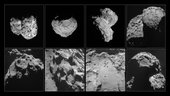
There are no large caverns inside Comet 67P/Churyumov-Gerasimenko. ESA’s Rosetta mission has made measurements that clearly demonstrate this, solving a long-standing mystery.

Filed Under: RSS Kosmos

NASA’s Juno Spacecraft Burns for Jupiter

3.02.2016 by Kaido Reivelt

NASA’s Juno spacecraft performs maneuver. Jupiter is five months away.

Filed Under: RSS Kosmos

Russian spacewalk marks end of ESA’s exposed space chemistry

3.02.2016 by Kaido Reivelt

Filed Under: RSS Kosmos

Sentinel-3A fully tanked

3.02.2016 by Kaido Reivelt

With the launch of Sentinel-3A confirmed for 16 February, preparations for liftoff are charging full speed ahead. The tricky task of fuelling the satellite has now been ticked off the ‘to do list’ and the propulsion team is already decontaminating their equipment before returning home.

Filed Under: RSS Kosmos

Candidate Resonant Tetraneutron State Populated by the ^{4} He( ^{8} He, ^{8} Be) Reaction

3.02.2016 by Kaido Reivelt

Author(s): K. Kisamori et al.Evidence that the four-neutron system known as the tetraneutron exists as a resonance has been uncovered in an experiment at the RIKEN Radioactive Ion Beam Factory.[Phys. Rev. Lett. 116, 052501] Published Wed Feb 03, 2016

Filed Under: RSS Teadus

Saturn’s rings: less than meets the eye?

3.02.2016 by Kaido Reivelt

Results confirm that more opaque areas in Saturn’s rings do not necessarily contain more material.

Filed Under: RSS Kosmos

Seeing wood for the trees

3.02.2016 by Kaido Reivelt


Technology image of the week: a commercial forest seen through the ‘eyes’ of a 3D laser scanning system

Filed Under: RSS Kosmos

‘Leading clocks lag’ and the de Broglie wavelength

3.02.2016 by Kaido Reivelt

The forgotten history of de Broglie waves as themselves artifacts of a Lorentz transform, not
physical lengths and frequencies to be transformed, causes confusion for students and others. In
this paper the de Broglie wavelength is derived and depende…

Filed Under: RSS Füüsikaharidus

A computer simulation using spreadsheets for learning concept of steady-state equilibrium

3.02.2016 by Kaido Reivelt

In this paper, we present a simple spreadsheet based simulation activity that can be performed by
students at the undergraduate level. This simulation is implemented in free open source software
(FOSS) LibreOffice Calc, which is available for both Wi…

Filed Under: RSS Füüsikaharidus

Hearing the music in the spectrum of hydrogen

3.02.2016 by Kaido Reivelt

Throughout a general education course on sound and light aimed at music and art students, analogies
between subjective perceptions of objective properties of sound and light waves are a recurring
theme. Demonstrating that the pitch and loudness of mu…

Filed Under: RSS Füüsikaharidus

Understanding the damped SHM without ODEs

3.02.2016 by Kaido Reivelt

Instead of solving ordinary differential equations (ODEs), the damped simple harmonic motion (SHM)
is surveyed qualitatively from basic mechanics and quantitatively by the instrumentality of a graph
of velocity against displacement. In this way, the …

Filed Under: RSS Füüsikaharidus

Construction of a simple low-cost teslameter and its use with Arduino and MakerPlot software

3.02.2016 by Kaido Reivelt

This paper shows how it is possible to construct a very simple device for the measurement of
magnetic flux densities in an educational context. It is also shown how such a device can be
interfaced to a microcontroller with plotting-software to facili…

Filed Under: RSS Füüsikaharidus

An Empirical Study of Factors Affecting Mobile Wireless Technology Adoption for Promoting Interactive Lectures in Higher Education

3.02.2016 by Kaido Reivelt

Use of mobile technology are widespread, particularly among the younger generation. There is a huge potential for utilizing such technology, particularly in lecture sessions with large number of students, serving as an interaction tool between the students and lecturer. The challenge is to identify adoption factors to ensure effective adoption of the technology to promote interactivity between students and lecturer in the classroom. This paper aims to examine factors supporting use of mobile wireless technology during lectures to promote interactivity between students and lecturers in Malaysia’s higher education institutions. Survey involving higher education students in Malaysia was conducted with a sample size of 302. Factor analysis results identified five factors: independent variables System Usefulness (SU), User System Perception (USP), User Uncertainty Avoidance (UUA), System and Information Quality (SIQ), and dependent variable Mobile Wireless Technology Adoption for Interactive Lectures (MWT_AIL). All independent variables are positively associated to MWT_AIL, with UUA and SIQ having higher level of significance compared to SU and USP. Respondents were selected from higher learning institutions from urban areas in Malaysia. Therefore results obtained are not representative of the entire higher education landscape in Malaysia and future studies are warranted to include higher learning institutions located in rural areas. It is hoped that findings from this study will serve as a catalyst for future researches to be conducted in this area, particularly among higher education researchers seeking ways to utilize technology effectively to enhance the learning experiences of the students in the classroom.

Filed Under: RSS Füüsikaharidus

Evaluation of Online Log Variables that Estimate Learners’ Time Management in a Korean Online Learning Context

3.02.2016 by Kaido Reivelt

The purpose of this study was to identify the relationship between the psychological variables and online behavioral patterns of students, collected through a Learning Management System (LMS). Test was attempted of a structural equation model representing the relationships among Time and Study Environment Management (TSEM), one of the sub-constructs of MSLQ, influencing a set of time-related online log variables: login frequency, login regularity, and total login time. Data were collected from 188 college students in a Korean university. Employing structural equation modeling, a hypothesized model was tested for measuring the model fit. The results presented a criterion validity of online log variables to estimate their time management.  The structural model including TSEM, online variable, and final score with a moderate fit indicated that learners’ time related online behavior mediates their psychological functions and their learning outcome. Based on the results, the final discussion includes the recommendations for further study and the meaningfulness in regard to the expantion of  Learning Analtyics for Performance and Action (LAPA) model.

Filed Under: RSS Füüsikaharidus

Factors of Participants and Blogs that Predict Blogging Activeness During Teaching Practice and Induction Year

3.02.2016 by Kaido Reivelt

The blog as a type of social software has been used in education for several years, and its positive effect in the field has been asserted in many studies. This study presents the factors of participants and blogs that predict blogging activeness durin…

Filed Under: RSS Füüsikaharidus

Emotional Intelligence as a Determinant of Readiness for Online Learning

3.02.2016 by Kaido Reivelt

Students’ performance and behavior in online learning environment is associated with their readiness to opt digital learning approach. We in this research investigated distance learners’ emotional intelligence as a determinant of their readiness for online learning. 432 learners enrolled in correspondence based distance learning programs participated in the study. Wong and Law emotional intelligence scale (WLEIS) and online learning readiness scale (OLRS) were adapted with some modifications to collected the required data. Pearson correlation and multiple regression analysis were done to achieve the research objectives. The findings illustrate that emotional intelligence has a large size effect on sampled students’ readiness for online learning.

Filed Under: RSS Füüsikaharidus

The Relationship between Successful Completion and Sequential Movement in Self-Paced Distance Courses

3.02.2016 by Kaido Reivelt

A course design question for self-paced courses includes whether or not technological measures should be used in course design to force students to follow the sequence intended by the course author. This study examined learner behavior to understand wh…

Filed Under: RSS Füüsikaharidus

Challenges of Transitioning to e-learning System with Learning Objects Capabilities

3.02.2016 by Kaido Reivelt

In order for higher education institutions, which implements blended and/or online learning to remain competitive and innovative it needs to keep up with the cutting edge technological and educational advances. This task is usually very difficult, keeping in mind the budget constraints that many institutions have. This usually implies that existing open source solutions have to be used and adapted to individual needs of each institution. Keeping up with the current technological advances often brings not only financial challenges, but also transitional challenges that may put at risk learning quality and reputation of the institution, as well as performance of students. This work describes the features of the system, results and challenges of transitioning to e-learning system that displays learning materials through sequence of reusable learning objects (LOs) from the system that does not have these capabilities. The goal of such system is to increase reusability of learning content, and moreover, to increase online interactivity and communication between the instructor and students. Findings of this work reveal advantages, disadvantages and potential obstacle of implementation e-learning system with LOs and give an overview of suggestions for implementation improvements. These suggestions are given based on evaluation of implementation of new e-learning system with LOs, after the transition from the traditional e-learning system. Furthermore, based on the research of existing methodologies in the field of information systems, and the results of this research, this work proposes methodology for transferring into e-learning system with LOs. 

Filed Under: RSS Füüsikaharidus

An Experimental Study of Satisfaction Response: Evaluation of Online Collaborative Learning

3.02.2016 by Kaido Reivelt


On the one hand, a growing amount of research discusses support for improving online collaborative learning quality, and many indicators are focused to assess its success. On the other hand, thinkLets for designing reputable and valuable collaborative processes have been developed for more than ten years. However, few studies try to apply thinkLets to online collaborative learning. This paper introduces thinkLets to online collaborative learning and experimentally tests its effectiveness with participants responces on their satisfaction. Yield Shift Theory (YST), a causal theory explaining inner satisfaction, is adopted. In the experiment, 113 students from Universities in Beijing, China are chosen as a sample. They were divided into two groups, collaborating online in a simulated class. Then, YST in student groups under online collaborative learning is validated, comparison study of online collaborative learning with and without thinkLets is implemented and satisfaction response of participants are analyzed. As a result of this comparison, YST is proved applicable in this context, and satisfaction is higher in online collaborative learning with thinkLets.


Filed Under: RSS Füüsikaharidus

Analysis of Learning Achievement and Teacher–Student Interactions in Flipped and Conventional Classrooms

3.02.2016 by Kaido Reivelt

This study aimed to investigate the effectiveness of two different teaching methods on learning effectiveness. OpenCourseWare was integrated into the flipped classroom model (experimental group) and distance learning (control group). Learning effectiveness encompassed learning achievement, teacher-student interactions, and learning satisfaction. The experimental method was supplemented with qualitative interviews. Overall, 181 freshmen taking a course on physics were allowed to choose their own class based on their preferred teaching method (experimental or control group). The findings indicated that learners in the experimental group scored higher for learning achievement. When selecting a teaching method, if sufficient resources are available, it is suggested that teachers provide learners with the combination of OCW and flipped classroom. Although there was no significant between-group difference in terms of teacher-student interactions and learning satisfaction, the interactions in the flipped classroom had positive effect on students’ learning achievement. The use of the flipped classroom model allows for adequate teacher-student interactions, as teachers can provide guidance and assistance to students in person, while there are greater opportunities for collaborative learning among learners. In addition, since the flipped classroom model emphasizes the process of learning rather than its outcomes, information technology tools should be used to keep detailed records and follow the learning process in order to assess various aspects of the learners’ growth. The results of this study can serve as a reference for future studies on the flipped classroom model and OpenCourseWare, as well as for teachers and researchers in related fields.

Filed Under: RSS Füüsikaharidus

If You Build It, Will They Come? Predictors of Teachers’ Participation in and Satisfaction with the Effective Classroom Interactions Online Courses

3.02.2016 by Kaido Reivelt

The Effective Classroom Interactions (ECI) online courses were designed to provide an engaging, effective and scalable approach to enhancing early childhood teachers’ use of classroom practices that impact children’s school readiness. The created courses included several versions aimed at testing whether or not certain design aspects could increase participation and subsequent learning outcomes. The purpose of this study was to examine the extent to which early childhood teachers accessed the courses and varied in their a) participation in the core course content and b) optional discussion board as a result of the course experience they were assigned to as well as individual characteristics that may be associated with participation. Findings indicated that early childhood teachers accessed the course often on nights and weekends and reported high levels of satisfaction with their experience. Both persistence in the ECI courses and overall completion of activities were higher than those reported in other studies of online learning. Whether or not the participant was in the course that had regular interactions with the instructor, comfort with technology and took the course for credit consistently predicted participation, but not always in expected ways. Implications for exploring online learning as a feasible option for early childhood educators are discussed.

Filed Under: RSS Füüsikaharidus

A Cognitive Style Perspective to Handheld Devices: Customization vs. Personalization

3.02.2016 by Kaido Reivelt

Handheld devices are widely applied to support open and distributed learning, where students are diverse. On the other hand, customization and personalization can be applied to accommodate students’ diversities. However, paucity of research compares the effects of customization and personalization in the context of handheld devices. To this end, we developed a customized digital learning system (CDLS) and personalized digital learning system (PDLS), which were implemented on the handheld devices and tailored to the needs of students with diverse cognitive styles. Furthermore, we conducted two empirical studies to examine the effects of cognitive styles on the use of the CDLS and PDLS. More specifically, Study 1 identified the preferences of each cognitive style group, which were employed to develop the PDLS in Study 2, which investigated how students with different cognitive styles react to the CDLS and the PDLS.  The results from these two studies showed that student in the CDLS and those in the PDLS obtained similar task scores and post-test scores. However, Serialists with the PDLS could more efficiently complete the tasks than those with CDLS. Additionally, Holists more positively perceived the PDLS than Serialists.

Filed Under: RSS Füüsikaharidus

Research Papers in Online Learning Performance and Behaviour

3.02.2016 by Kaido Reivelt

Filed Under: RSS Füüsikaharidus

Does Navigation Always Predict Performance? Effects of Navigation on Digital Reading are Moderated by Comprehension Skills

3.02.2016 by Kaido Reivelt

This study investigated interactive effects of navigation and offline comprehension skill on digital reading performance. As indicators of navigation relevant page selection and irrelevant page selection were considered. In 533 Spanish high school stud…

Filed Under: RSS Füüsikaharidus

Using Positive Visual Stimuli to Lighten The Online Learning Experience through In Class Questioning

3.02.2016 by Kaido Reivelt

Using in-class questions is an efficient instructional strategy to keep abreast of the state of student learning in a class. Some studies have found that discussing in-class questions in synchronous learning is helpful. These studies demonstrated that …

Filed Under: RSS Füüsikaharidus

Saturn’s Rings: Less than Meets the Eye?

2.02.2016 by Kaido Reivelt

A recent study from NASA’s Cassini mission proves that, in the mysterious and beautiful rings of Saturn, appearances can be deceiving.

Filed Under: RSS Kosmos

Six CubeSats with JPL Contributions Chosen for SLS Flight

2.02.2016 by Kaido Reivelt

The first flight of NASA’s new rocket, the Space Launch System (SLS), will carry 13 low-cost CubeSats to test innovative ideas along with an uncrewed Orion spacecraft in 2018.

Filed Under: RSS Kosmos

Small Asteroid to Pass Close to Earth March 5

2.02.2016 by Kaido Reivelt

A small asteroid that two years ago flew past Earth at a comfortable distance of about 1.3 million miles (2 million kilometers) will safely fly by our planet again in a few weeks, though this time it may be much closer.

Filed Under: RSS Kosmos

London nightlife

2.02.2016 by Kaido Reivelt

Human spaceflight and robotic operations image of the week: the capital of the United Kingdom at midnight on a Saturday seen from 400 km above

Filed Under: RSS Kosmos

Blast from black hole in a galaxy far, far away

2.02.2016 by Kaido Reivelt

The Pictor A Galaxy contains a supermassive black hole at its center, and a huge amount of gravitational energy is released as material swirls toward the event horizon.

Filed Under: RSS Kosmos

How much wood would a woodchuck chuck?

2.02.2016 by Kaido Reivelt

Groundhog Day is one of the four so-called cross-quarter days, which mark the midpoints between the solstices and equinoxes.

Filed Under: RSS Kosmos

Galileo signals covering more of the sky

2.02.2016 by Kaido Reivelt

Europe’s ninth and tenth Galileo satellites have started broadcasting working navigation messages.

Filed Under: RSS Kosmos

World Wetlands Day

2.02.2016 by Kaido Reivelt


2 February marks World Wetlands Day. Discover some of Earth’s most important wetlands seen from 800 km high

Filed Under: RSS Kosmos

Interactive tutorial to improve student understanding of single photon experiments involving a Mach?Zehnder interferometer

2.02.2016 by Kaido Reivelt

We have developed and evaluated a quantum interactive learning tutorial (QuILT) on a Mach?Zehnder
interferometer with single photons to expose upper-level students in quantum mechanics courses to
contemporary quantum optics applications. The QuILT st…

Filed Under: RSS Füüsikaharidus

A new look at the Feynman ?hodograph? approach to the Kepler first law

2.02.2016 by Kaido Reivelt

Hodographs for the Kepler problem are circles. This fact, known for almost two centuries, still
provides the simplest path to derive the Kepler first law. Through Feynman?s ?lost lecture?, this
derivation has now reached a wider audience. Here we loo…

Filed Under: RSS Füüsikaharidus

Planetarium software in the classroom

2.02.2016 by Kaido Reivelt

Students often find astronomy and astrophysics to be most interesting and exciting, but the Universe
is difficult to access using only one’s eyes or simple equipment available at different educational
settings. To open up the Universe and enhance l…

Filed Under: RSS Füüsikaharidus

Electrical and optical measurements of the bandgap energy of a light-emitting diode

2.02.2016 by Kaido Reivelt

Semiconductor materials are at the core of electronics. Most electronic devices are made of
semiconductors. The operation of these components is well described by quantum physics which is
often a difficult concept for students to understand. One of t…

Filed Under: RSS Füüsikaharidus

Interactive tutorial to improve student understanding of single photon experiments involving a Mach–Zehnder interferometer

2.02.2016 by Kaido Reivelt

We have developed and evaluated a quantum interactive learning tutorial (QuILT) on a Mach–Zehnder
interferometer with single photons to expose upper-level students in quantum mechanics courses to
contemporary quantum optics applications. The QuILT …

Filed Under: RSS Füüsikaharidus

A new look at the Feynman ‘hodograph’ approach to the Kepler first law

2.02.2016 by Kaido Reivelt

Hodographs for the Kepler problem are circles. This fact, known for almost two centuries, still
provides the simplest path to derive the Kepler first law. Through Feynman’s ‘lost lecture’, this
derivation has now reached a wider audience. Here …

Filed Under: RSS Füüsikaharidus

Troy High School Takes First Place at Regional Science Bowl

1.02.2016 by Kaido Reivelt

Troy High School triumphed over 23 other teams at the National Science Bowl regional competition held at JPL on Jan. 30.

Filed Under: RSS Kosmos

Constraints on Fluctuations in Sparsely Characterized Biological Systems

1.02.2016 by Kaido Reivelt

Author(s): Andreas Hilfinger, Thomas M. Norman, Glenn Vinnicombe, and Johan PaulssonBiochemical networks are often poorly characterized, but researchers can still derive limits on the level of the random variations or noise in different network compone…

Filed Under: RSS Teadus

Extracting Information about the Initial State from the Black Hole Radiation

1.02.2016 by Kaido Reivelt

Author(s): Kinjalk Lochan and T. PadmanabhanQuantum matter falling into a semiclassical black hole leaves an imprint on future Hawking radiation. The resulting black hole entropy will be much smaller than the area of the event horizon.[Phys. Rev. Lett….

Filed Under: RSS Teadus

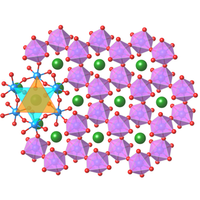
Mott Electrons in an Artificial Graphenelike Crystal of Rare-Earth Nickelate

1.02.2016 by Kaido Reivelt

Author(s): S. Middey, D. Meyers, D. Doennig, M. Kareev, X. Liu, Y. Cao, Zhenzhong Yang, Jinan Shi, Lin Gu, P. J. Ryan, R. Pentcheva, J. W. Freeland, and J. Chakhalian

Geometrical engineering of nickelate-based heterostructures can result in artificial graphene-like Mott crystals with antiferromagnetic correlations, structures that are not seen in bulk nickelates.


[Phys. Rev. Lett. 116, 056801] Published Mon Feb 01, 2016

Filed Under: RSS Teadus

Gravitational Waves from Isolated Systems: Surprising Consequences of a Positive Cosmological Constant

1.02.2016 by Kaido Reivelt

Author(s): Abhay Ashtekar, Béatrice Bonga, and Aruna Kesavan

The mathematical framework used to describe gravitational waves is extended to incorporate the effect of a positive cosmological constant for the first time.


[Phys. Rev. Lett. 116, 051101] Published Mon Feb 01, 2016

Filed Under: RSS Teadus

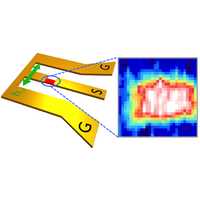
Large Spin-Wave Bullet in a Ferrimagnetic Insulator Driven by the Spin Hall Effect

1.02.2016 by Kaido Reivelt

Author(s): M. B. Jungfleisch, W. Zhang, J. Sklenar, J. Ding, W. Jiang, H. Chang, F. Y. Fradin, J. E. Pearson, J. B. Ketterson, V. Novosad, M. Wu, and A. Hoffmann

A spin-torque-driven ferromagnetic resonance in magnetic insulators is spatially mapped showing a localized spin-wave structure.


[Phys. Rev. Lett. 116, 057601] Published Mon Feb 01, 2016

Filed Under: RSS Teadus

Photonic Maxwell’s Demon

1.02.2016 by Kaido Reivelt

Author(s): Mihai D. Vidrighin, Oscar Dahlsten, Marco Barbieri, M. S. Kim, Vlatko Vedral, and Ian A. Walmsley

Information derived from microscopic measurements of thermal states made using a few photons is used to extract macroscopic work.


[Phys. Rev. Lett. 116, 050401] Published Mon Feb 01, 2016

Filed Under: RSS Teadus

Heads up for Asteroid Day

1.02.2016 by Kaido Reivelt

ESA is teaming up with the organisers of Asteroid Day 2016, scheduled for 30 June

Filed Under: RSS Kosmos

Antarctic fungi survive martian conditions on ISS

1.02.2016 by Kaido Reivelt

Lifeforms taken from the most Mars-like place on Earth managed to survive the harsh conditions of space.

Filed Under: RSS Kosmos

Unearthly Beauty

1.02.2016 by Kaido Reivelt

Space science image of the week: A fragile-looking rectangular shape is revealed to be a dying star

Filed Under: RSS Kosmos

The GUM revision: the Bayesian view toward the expression of measurement uncertainty

1.02.2016 by Kaido Reivelt

The ‘ Guide to the Expression of Uncertainty in Measurement ’ (GUM) has been in use for more than 20
years, serving its purposes worldwide at all levels of metrology, from scientific to industrial and
commercial applications. However, the GUM pre…

Filed Under: RSS Füüsikaharidus

EDRS launch in short

30.01.2016 by Kaido Reivelt

Watch the replay of the launch of the European Data Relay System’s first laser node from Baikonur, Kazakhstan on 29 January at 22:20 GMT

Filed Under: RSS Kosmos

EDRS launch in short

30.01.2016 by Kaido Reivelt

Watch the replay of the launch of the European Data Relay System’s first laser node from Baikonur, Kazakhstan on 29 January at 22:20 GMT

Filed Under: RSS Kosmos

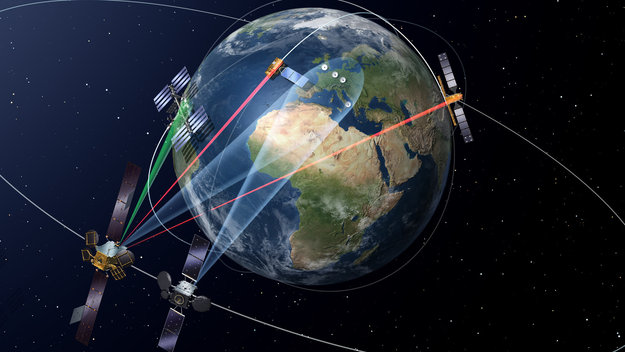
Lasers in space

30.01.2016 by Kaido Reivelt


The European Data Relay System’s first laser terminal has reached space aboard its host satellite and is now under way to its final operating position

Filed Under: RSS Kosmos

Laser liftoff

30.01.2016 by Kaido Reivelt

The first laser node of the European Data Relay System lifted off from Baikonur, Kazakhstan atop a Proton rocket on 29 January at 22:20 GMT

Filed Under: RSS Kosmos

NASA Damage Maps May Help in Future Quakes

29.01.2016 by Kaido Reivelt

Researchers have developed a way to make maps of natural disaster damage using remote sensing technology.

Filed Under: RSS Kosmos

Sandy Selfie Sent from NASA Mars Rover

29.01.2016 by Kaido Reivelt

The latest self-portrait from NASA’s Curiosity Mars rover shows the car-size mobile laboratory beside a dark dune where it has been scooping and sieving samples of sand.

Filed Under: RSS Kosmos

New Animation Takes a Colorful Flight Over Ceres

29.01.2016 by Kaido Reivelt

A colorful new animation shows a simulated flight over the surface of dwarf planet Ceres, based on images from NASA’s Dawn spacecraft.

Filed Under: RSS Kosmos

Week In Images

29.01.2016 by Kaido Reivelt

Our week through the lens: 25-29 January 2016

Filed Under: RSS Kosmos

Probing the Role of Mobility in the Collective Motion of Nonequilibrium Systems

29.01.2016 by Kaido Reivelt

Author(s): Hongchuan Shen, Peng Tan, and Lei XuSteel spheres placed on a square grid, connected by springs, and individually driven by motors are used to investigate the vibrational modes of a nonequilibrium system.[Phys. Rev. Lett. 116, 048302] Publis…

Filed Under: RSS Teadus

Pluto’s widespread water ice

29.01.2016 by Kaido Reivelt

A new map shows exposed water ice to be considerably more widespread across Pluto’s surface than was previously known.

Filed Under: RSS Kosmos

Moon was produced by head-on collision

29.01.2016 by Kaido Reivelt

The key to reconstructing the giant impact was a chemical signature revealed in the rocks’ oxygen atoms.

Filed Under: RSS Kosmos

Sierra Leone Estuary

29.01.2016 by Kaido Reivelt

Earth observation image of the week: a Sentinel-2A image of Sierra Leone, also featured on the Earth from Space video programme

Filed Under: RSS Kosmos

Earth?s gravity and the cosmological constant: a worked example

29.01.2016 by Kaido Reivelt

The cosmological constant regained the attention of the scientific community following the recent
discovery of the accelerated expansion of the Universe. Consequently, interest in the subject
increased amongst the public such that it now often appear…

Filed Under: RSS Füüsikaharidus

A simple determination of Hubble?s constant

29.01.2016 by Kaido Reivelt

The aim of this paper is to make a determination of Hubble?s constant from the experimental data on
the magnitude and redshift of supernovae. We proposed a very simple approach that could also be very
useful from a didactic point of view.

Filed Under: RSS Füüsikaharidus

Lorentz transformations and the wave equation

29.01.2016 by Kaido Reivelt

In this note we explicitly show how the Lorentz transformations can be derived by demanding form
invariance of the d’Alembert operator in inertial reference frames.

Filed Under: RSS Füüsikaharidus

Is n sin θ conserved along the light path?

29.01.2016 by Kaido Reivelt

Snell’s law states that the quantity ##IMG##
[http://ej.iop.org/images/0143-0807/37/2/025301/ejpaa12c8ieqn3.gif] {$nmathrm{sin}theta $} is
unchanged in refraction of light passing from one medium to another. We inquire whether this is true
in th…

Filed Under: RSS Füüsikaharidus

Earth’s gravity and the cosmological constant: a worked example

29.01.2016 by Kaido Reivelt

The cosmological constant regained the attention of the scientific community following the recent
discovery of the accelerated expansion of the Universe. Consequently, interest in the subject
increased amongst the public such that it now often appear…

Filed Under: RSS Füüsikaharidus

Kinematic measurements using an infrared sensor

29.01.2016 by Kaido Reivelt

The use of an infrared sensor as a new alternative to measure position as a function of time in
kinematic experiments was investigated using a microcontroller as the data acquisition and control
device. These are versatile sensors that offer advantag…

Filed Under: RSS Füüsikaharidus

Classical and quantum distinctions between weak and strong coupling

29.01.2016 by Kaido Reivelt

Coupled systems subject to dissipation exhibit two different regimes known as weak coupling and
strong coupling. Two damped coupled harmonic oscillators (CHOs) constitute a model system where the
key features of weak and strong coupling can be identi…

Filed Under: RSS Füüsikaharidus

A simple determination of Hubble’s constant

29.01.2016 by Kaido Reivelt

The aim of this paper is to make a determination of Hubble’s constant from the experimental data on
the magnitude and redshift of supernovae. We proposed a very simple approach that could also be very
useful from a didactic point of view.

Filed Under: RSS Füüsikaharidus

Discussion on the measurement of the surface tension coefficient by the pull-off method

29.01.2016 by Kaido Reivelt

A simple experiment for measuring the surface tension coefficient is proposed, which is well suited
for teaching and learning the behavior of liquids in typical student laboratories. It is based on
the pull-off method and the dynamometer used is the …

Filed Under: RSS Füüsikaharidus

Dark Matter Halos as Particle Colliders: Unified Solution to Small-Scale Structure Puzzles from Dwarfs to Clusters

28.01.2016 by Kaido Reivelt

Author(s): Manoj Kaplinghat, Sean Tulin, and Hai-Bo YuA new model has allowed researchers to test a theory for why the centers of dark matter halos are less dense than expected.[Phys. Rev. Lett. 116, 041302] Published Thu Jan 28, 2016

Filed Under: RSS Teadus

Going to space

28.01.2016 by Kaido Reivelt


Operations image of the week: Mission control teams begin intensive simulation training for the launch of Sentinel-1B, part of Europe’s Copernicus programme

Filed Under: RSS Kosmos

Earth from Space

28.01.2016 by Kaido Reivelt


Join us Friday, 29 January, at 10:00 CET for the ‘Earth from Space’ video programme. Ahead of World Wetlands Day this week’s video features the Sierra Leone River Estuary

Filed Under: RSS Kosmos

Monstrous cloud boomerangs back to our galaxy

28.01.2016 by Kaido Reivelt

Though hundreds of enormous high-velocity gas clouds whiz around the outskirts of our galaxy, this so-called “Smith Cloud” is unique because its trajectory is well known.

Filed Under: RSS Kosmos

Giant star clusters make new stars by “adopting” stray cosmic gases

28.01.2016 by Kaido Reivelt

Globular clusters can somehow bear second or even third sets of thousands of sibling stars.

Filed Under: RSS Kosmos

Watch EDRS launch

28.01.2016 by Kaido Reivelt


Watch the launch of ESA’s first European Data Relay System (EDRS) laser node live on 29 January. Streaming starts 20 minutes before liftoff, with launch expected at 22:20 GMT

Filed Under: RSS Kosmos

Martian labyrinth

28.01.2016 by Kaido Reivelt

This block of martian terrain, etched with an intricate pattern of landslides and wind-blown dunes, is a small segment of a vast labyrinth of valleys, fractures and plateaus.

Filed Under: RSS Kosmos

Ariane 5’s first launch of 2016

28.01.2016 by Kaido Reivelt

An Ariane 5 last night delivered telecom satellite Intelsat-29e into its planned orbit. Liftoff of Ariane flight VA228 occurred on 27 January at 23:20 GMT (20:20 local time, 00:20 CET on 28 January) from Europe’s Spaceport in Kourou, French Guiana.

Filed Under: RSS Kosmos

NASA Radar Brings a New View of World Heritage Site

27.01.2016 by Kaido Reivelt

In just two 10-minute overflights, an airborne NASA synthetic aperture radar proved it could pinpoint areas of disturbance in Peru’s Nasca lines World Heritage Site.

Filed Under: RSS Kosmos

Companies Selected to Provide Early Design Work for Asteroid Redirect Robotic Mission Spacecraft

27.01.2016 by Kaido Reivelt

NASA’s Jet Propulsion Laboratory in Pasadena, Calif., has selected four companies to conduct design studies for a solar-electric-propulsion-based spacecraft for the agency’s Asteroid Redirect Robotic Mission (ARRM).

Filed Under: RSS Kosmos

Equation of State of Ultracold Fermions in the 2D BEC-BCS Crossover Region

27.01.2016 by Kaido Reivelt

Author(s): I. Boettcher, L. Bayha, D. Kedar, P. A. Murthy, M. Neidig, M. G. Ries, A. N. Wenz, G. Zürn, S. Jochim, and T. Enss

Two separate groups have extracted the thermodynamic equation of state for a two-dimensional gas of fermionic atoms, revealing its peculiar quantum features.


[Phys. Rev. Lett. 116, 045303] Published Wed Jan 27, 2016

Filed Under: RSS Teadus

Thermodynamics of an Attractive 2D Fermi Gas

27.01.2016 by Kaido Reivelt

Author(s): K. Fenech, P. Dyke, T. Peppler, M. G. Lingham, S. Hoinka, H. Hu, and C. J. Vale

Two separate groups have extracted the thermodynamic equation of state for a two-dimensional gas of fermionic atoms, revealing its peculiar quantum features.


[Phys. Rev. Lett. 116, 045302] Published Wed Jan 27, 2016

Filed Under: RSS Teadus

Electron Elevator: Excitations across the Band Gap via a Dynamical Gap State

27.01.2016 by Kaido Reivelt

Author(s): A. Lim, W. M. C. Foulkes, A. P. Horsfield, D. R. Mason, A. Schleife, E. W. Draeger, and A. A. Correa

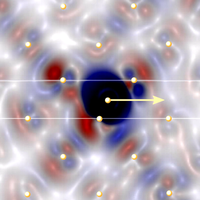
Ab initio simulations of electronic excitations produced when a semiconductor experiences a large perturbation show a new regime in electron-ion energy exchange whereby a defect state carries electrons across the band gap.


[Phys. Rev. Lett. 116, 043201] Published Wed Jan 27, 2016

Filed Under: RSS Teadus

Telescopes team up to produce highest-resolution astronomical image

27.01.2016 by Kaido Reivelt

Sixteen telescopes from space and the ground revealed a gorging black hole in a galaxy 900 million light-years from Earth.

Filed Under: RSS Kosmos

Mercury orbiter test

27.01.2016 by Kaido Reivelt

Technology image of the week: the Mercury Planetary Orbiter of the BepiColombo mission standing high above the floor of its test chamber

Filed Under: RSS Kosmos

NASA Takes Part in Airborne Study of Southern Ocean

26.01.2016 by Kaido Reivelt

NASA’s PRISM instrument is part of a flying lab that is studying the Southern Ocean’s appetite for carbon dioxide.

Filed Under: RSS Kosmos

Ceres: Keeping Well-Guarded Secrets for 215 Years

26.01.2016 by Kaido Reivelt

In 1801, when an astronomer pointed his telescope at a seemingly star-like point of light, he probably had no idea a robotic emissary from Earth would one day be sent there.

Filed Under: RSS Kosmos

Coherent Population Trapping of a Single Nuclear Spin Under Ambient Conditions

26.01.2016 by Kaido Reivelt

Author(s): P. Jamonneau, G. Hétet, A. Dréau, J.-F. Roch, and V. Jacques

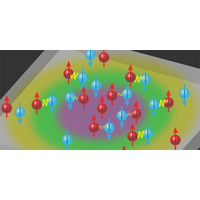
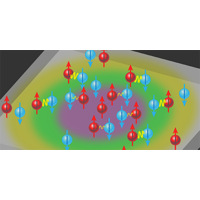
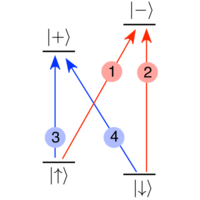
A dark state – a state that cannot emit or absorb photons – can be created by the hyperfine coupling of the electron spin of a single nitrogen-vacancy defect to a nearby 13C nuclear spin.


[Phys. Rev. Lett. 116, 043603] Published Tue Jan 26, 2016

Filed Under: RSS Teadus

Permutation Symmetry Determines the Discrete Wigner Function

26.01.2016 by Kaido Reivelt

Author(s): Huangjun ZhuUnderlying symmetries can be used to elucidate the structure and properties of the discrete version of the Wigner quasi-probability distribution function in phase space.[Phys. Rev. Lett. 116, 040501] Published Tue Jan 26, 2016

Filed Under: RSS Teadus

Mechanically Mediated Microwave Frequency Conversion in the Quantum Regime

26.01.2016 by Kaido Reivelt

Author(s): F. Lecocq, J. B. Clark, R. W. Simmonds, J. Aumentado, and J. D. Teufel

A new device converts the frequency of a photon using the vibrations in a mechanical oscillator.


[Phys. Rev. Lett. 116, 043601] Published Tue Jan 26, 2016

Filed Under: RSS Teadus

Quantum Dephasing in a Gated GaAs Triple Quantum Dot due to Nonergodic Noise

26.01.2016 by Kaido Reivelt

Author(s): M. R. Delbecq, T. Nakajima, P. Stano, T. Otsuka, S. Amaha, J. Yoneda, K. Takeda, G. Allison, A. Ludwig, A. D. Wieck, and S. Tarucha<br/>We extract the phase coherence of a qubit defined by singlet and triplet electronic states in a gated GaAs triple quantum dot, measuring on time scales much shorter than the decorrelation time of the environmental noise. In this nonergodic regime, we observe that the coherence is boosted and several…<br/><img src="//d22izw7byeupn1.cloudfront.net/journals/PRL/key_images/10.1103/PhysRevLett.116.046802.png" width="200" height="100"><br/>[Phys. Rev. Lett. 116, 046802] Published Tue Jan 26, 2016

Filed Under: RSS Teadus

Dark matter affects architecture of galaxy clusters

26.01.2016 by Kaido Reivelt

A new study suggests that the internal structure of a cluster is linked to the dark matter environment surrounding it.

Filed Under: RSS Kosmos

Lonely planet has a parent star after all

26.01.2016 by Kaido Reivelt

Once thought to be a free-floating planet, astronomers have now discovered it orbits its star only once every 900,000 years.

Filed Under: RSS Kosmos

« Previous Page
Next Page »

Copyright © 2026 · Eesti Füüsika Selts · Log in