A balloon carrying a test vehicle for NASA’s Low-Density Supersonic Decelerator (LDSD) project is scheduled to lift off no earlier than 10:30 a.m. PDT (1:30 p.m. EDT/ 7:30 a.m. HST) Monday, June 8, from Kauai, Hawaii.
Watch: Climate Symposium

Revisit last week’s International Symposium on Climate Change in Rome, which reviewed the links between climate change and world development
Cassini sends final close views of odd moon Hyperion
Hyperion is the largest of Saturn’s irregular moons and may be the remnant of a violent collision that shattered a larger object into pieces.
Astronomers discover a young solar system around a nearby star
This work provides a valuable key to understanding the early formation of the Sun and planets.
A new mix
Human spaceflight and operations image of the week: Vibrating mixtures in microgravity has revealed an unknown effect in liquids
NASA Instrument on Rosetta Makes Comet Atmosphere Discovery
NASA’s Alice instrument on Rosetta finds that electrons near its target comet cause rapid breakup of water and carbon dioxide molecules released from the comet’s nucleus.
Cassini Sends Final Close Views of Odd Moon Hyperion
NASA’s Cassini spacecraft has returned images from its final close approach to Saturn’s oddball moon Hyperion, upholding the moon’s reputation as one of the most bizarre objects in the solar system.
Topological Crystalline Insulator Phase in Graphene Multilayers
Author(s): M. KindermannInterlayer coupling in graphene multilayers with certain commensurate twists is predicted to form a 2D topological insulator.[Phys. Rev. Lett. 114, 226802] Published Tue Jun 02, 2015
Ultraviolet study reveals surprises in comet coma
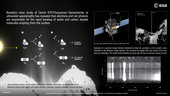
Rosetta’s continued close study of Comet 67P/Churyumov–Gerasimenko has revealed an unexpected process at work, causing the rapid breakup of water and carbon dioxide molecules spewing from the comet’s surface.
ESA heading towards removing space debris

ESA’s goal of removing a derelict satellite from orbit is picking up pace, as a mission design is assembled to be put before European ministers next year for approval.
Handshake from space
Technology image of the week: this deceptively modest joystick is about to make space history
Ultraviolet study reveals surprises in Rosetta comet coma
The Rosetta spacecraft has discovered that electrons are responsible for the rapid breakup of water and carbon dioxide molecule’s erupting from the surface of Comet 67P/Churyumov-Gerasimenko.
You Get to Watch It Live — NASA’s Flying Saucer Test
NASA’s LDSD project will beam back live imagery from a supersonic, edge-of-atmosphere test of braking technology for Mars.
A paradigm shift: Adoption of disruptive learning innovations in an ODL environment: The case of the University of South Africa
The aim of this article is to shed some light on patterns of and major motives for the adoption of different types of disruptive learning innovations by Unisa academics. To realise the aim of the study, the following questions were addressed: What are …
Wess-Zumino-Witten Terms in Graphene Landau Levels
Author(s): Junhyun Lee and Subir SachdevAn effective field theory describing the quantum critical behavior of magnetic ordering in monolayer and bilayer graphene has a Wess-Zumino-Witten term, similar to that found in the chiral Lagrangian for QCD.[Phy…
Spin Pumping in Electrodynamically Coupled Magnon-Photon Systems
Author(s): Lihui Bai, M. Harder, Y. P. Chen, X. Fan, J. Q. Xiao, and C.-M. Hu
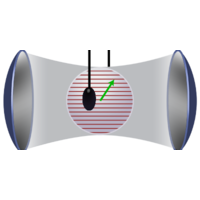
Excitations in a magnet coupled to a microwave cavity can be detected electrically, providing a new way to study magnets in the quantum regime.
[Phys. Rev. Lett. 114, 227201] Published Mon Jun 01, 2015
The winds of Mars

Space Science Image of the Week: Strong winds whip dust and sand from the martian surface into a frenzy, shaping and smoothing the planet’s surface features
Dawn spiral closer to Ceres
The spacecraft is taking its final set of images primarily for navigation purposes and will enter its second mapping orbit around the dwarf planet June 3.
Evidence for a Bubble-Competition Regime in Indirectly Driven Ablative Rayleigh-Taylor Instability Experiments on the NIF
Author(s): D. A. Martinez, V. A. Smalyuk, J. O. Kane, A. Casner, S. Liberatore, and L. P. Masse
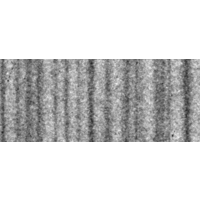
An x-ray radiation source on the National Ignition Facility can drive the Rayleigh-Taylor instability in a plasma from weakly nonlinear to the highly nonlinear regime.
[Phys. Rev. Lett. 114, 215004] Published Fri May 29, 2015
Turbulent Fracture Surfaces: A Footprint of Damage Percolation?
Author(s): Stéphane Vernède, Laurent Ponson, and Jean-Philippe Bouchaud
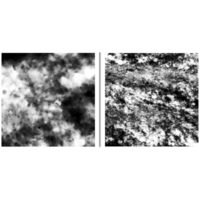
A statistical analysis of crack surfaces from three different types of materials reveals a deep connection with fluid turbulence and a potentially new approach to studying failed machine parts.
[Phys. Rev. Lett. 114, 215501] Published Fri May 29, 2015
Week In Images
Our week through the lens: 25-29 May 2015
Hubble survey confirms link between mergers and supermassive black holes with relativistic jets
The results lend significant weight to the case for jets being the result of merging black holes, but additional conditions must also be met.
Telescopes set limits on space-time quantum “foam”
Tests using X-ray and gamma-ray observations rule out two different models of the quantum nature of space-time.
Cassini Prepares for Last Up-close Look at Hyperion
NASA’s Cassini spacecraft will make its final close approach to Saturn’s large, irregularly shaped moon Hyperion on Sunday, May 31.
Dawn Spirals Closer to Ceres, Returns a New View
A new view of Ceres, taken by NASA’s Dawn spacecraft on May 23, shows finer detail is becoming visible on the dwarf planet.
Predictability of Rogue Events
Author(s): Simon Birkholz, Carsten Brée, Ayhan Demircan, and Günter Steinmeyer
Analysis of experimental data from multi-filament, oceanic and fiber optic rogue wave systems show that rogue waves are often preceded by a short ordered phase, providing a method to predict their occurrence.
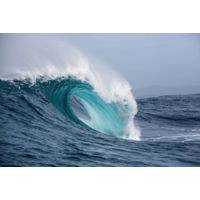
[Phys. Rev. Lett. 114, 213901] Published Thu May 28, 2015
Site-Resolved Imaging of Fermionic ^{6}Li in an Optical Lattice
Author(s): Maxwell F. Parsons, Florian Huber, Anton Mazurenko, Christie S. Chiu, Widagdo Setiawan, Katherine Wooley-Brown, Sebastian Blatt, and Markus GreinerTwo new quantum gas microscopes demonstrate the imaging of fermionic atoms in an optical latti…
Best of Blue Dot
The 32 best images taken by ESA astronaut Alexander Gerst from the International Space Station as voted by his Facebook followers
Threading the Milky Way

These three new images of huge filamentary structures of gas and dust from ESA’s Herschel space observatory reveal how matter is distributed across our Galaxy, the Milky Way.
New Horizons sees more detail as it draws closer to Pluto
The new images reveal more detail about Pluto’s complex and high-contrast surface.
Hubble video shows shock collision inside black hole jet
This discovery was made while piecing together a time-lapse movie of a plasma jet blasted from a supermassive black hole inside a galaxy located 260 million light-years from Earth.
Wired for Sun
Technology image of the week: cabling for the testing of ESA’s Mercury mission, photographed by artist Edgar Martins
Space Station remodelling
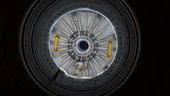
The International Space Station’s Permanent Multipurpose Module was detached and moved by the main robotic arm to another place on the orbiting laboratory yesterday.
Ariane 5’s second launch of 2015

An Ariane 5 lifted off last night from Europe’s Spaceport in Kourou, French Guiana and delivered two telecom satellites into their planned orbits.
The launch of flight VA223 occurred on 27 May at 21:16 GMT (23:16 CEST, 18:16 local time).
Europa Mission to Probe Magnetic Field and Chemistry
JPL has two newly announced science investigations that will help unravel the mystery of whether Jupiter’s moon Europa might have the right conditions for life.
The Supreme Council of Parachute Experts
Building a better parachute – one goal of a team working on NASA’s LDSD, a project to develop breakthrough technologies for landing future robotic and human Mars missions.
JPL’s RoboSimian to compete in DARPA Robotics Challenge Finals
RoboSimian, the ape-like robot developed at NASA’s Jet Propulsion Laboratory, Pasadena, California, will compete in the DARPA Robotics Challenge Finals at the Fairplex in Pomona, California, June 5 and 6.
NASA Begins Testing Mars Lander for Next Mission to Red Planet
Testing is underway on NASA’s next mission on the journey to Mars, a stationary lander scheduled to launch in March 2016.
Measurement of Charged-Particle Stopping in Warm Dense Plasma
Author(s): A. B. Zylstra, J. A. Frenje, P. E. Grabowski, C. K. Li, G. W. Collins, P. Fitzsimmons, S. Glenzer, F. Graziani, S. B. Hansen, S. X. Hu, M. Gatu Johnson, P. Keiter, H. Reynolds, J. R. Rygg, F. H. Séguin, and R. D. Petrasso
Charged particle energy loss and stopping power in warm dense matter (a moderately-coupled plasma at high density and moderate temperature) have been measured at the percent level by the OMEGA laser facility.
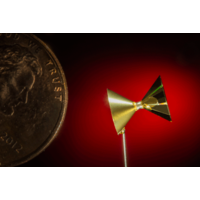
[Phys. Rev. Lett. 114, 215002] Published Wed May 27, 2015
Reentrant Superconductivity Driven by Quantum Tricritical Fluctuations in URhGe: Evidence from ^{59}Co NMR in URh_{0.9}Co_{0.1}Ge
Author(s): Y. Tokunaga, D. Aoki, H. Mayaffre, S. Krämer, M.-H. Julien, C. Berthier, M. Horvatić, H. Sakai, S. Kambe, and S. Araki
NMR measurements near the quantum tricritical point show that reentrance of superconductivity at high fields requires longitudinal fluctuations (parallel to the applied field). These experimental results will require revision of theoretical work, which to date has included only transverse fluctuations.
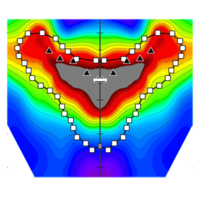
[Phys. Rev. Lett. 114, 216401] Published Wed May 27, 2015
Higgs Boson Gluon-Fusion Production in QCD at Three Loops
Author(s): Charalampos Anastasiou, Claude Duhr, Falko Dulat, Franz Herzog, and Bernhard MistlbergerFirst three-loop calculation of a cross section in perturbative QCD will help with the search for deviations in Higgs boson properties from Standard Mode…
Galactic Center Excess in γ Rays from Annihilation of Self-Interacting Dark Matter
Author(s): Manoj Kaplinghat, Tim Linden, and Hai-Bo Yu
Self-interacting dark matter may explain the gamma-ray excess observed in the Milky Way’s galactic center while also being consistent with the absence of these signals from dwarf spheroidal galaxies.
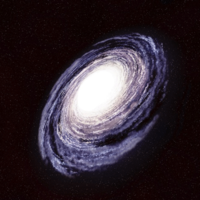
[Phys. Rev. Lett. 114, 211303] Published Wed May 27, 2015
A bubbly cosmic celebration
A new image from the Very Large Telescope reveals that the star-forming region RCW 34 is home to multiple episodes of star birth.
Europa mission begins with selection of science instruments
Jupiter’s moon could be the best place in the solar system to look for present-day life beyond our home planet.
Climate Symposium

Follow the International Climate Symposium in Rome, Italy, via live webstream 27–29 May
The double pendulum: a numerical study
Analysis and characterization of dynamical systems is a common task in computational physics. It
frequently demands new algorithms for finding solutions and new techniques for analysing the
results. Here we review some of these algorithms and techniques in the study of the double pendulum,
which, despite being a very simple mechanical system, can display complex behaviour. Even though it
has been studied before (Yu and Bi 1998 J. Sound Vib. 217 [http://dx.doi.org/10.1006/jsvi.1998.1781]
691736 ; Stachowiak and Okada 2006 Chaos, Solitons & Fractals 29
[http://dx.doi.org/10.1016/j.chaos.2005.08.032/1367-2630/15/2/023027] 417422 ; Rafat, Wheatland and
Bedding 2009 Am. J. Phys. 77 [http://dx.doi.org/10.1119/1.3052072] 216-23 ; Levien and Tan 1993 Am.
J. Phys. 61 [http://dx.doi.org/10.1119/1.17335] 103844 ), here we present a deeper discussion of the
several methods and algorithms t…
Measuring the acceleration due to gravity using an IR transceiver
In this paper, we present a new technique to study the dynamics of a free-falling object in a lab
setting and to measure the acceleration due to gravity g using a simple and economic setup. The
precise measurement of time taken for an object to fall …
NASA/JPL Bring Sights and Sounds to World Science Festival
Exhibits, displays and presenters from NASA’s Jet Propulsion Laboratory, Pasadena, California, are participating in this year’s World Science Festival in New York, to be held from May 27 through 31.
NASA Sets New Launch Window for Supersonic Vehicle Test
The second flight test of NASA’s Low-Density Supersonic Decelerator (LDSD) now will launch no earlier than 10:30 a.m. PDT (7:30 a.m. HST) Tuesday, June 2, from the U.S. Navy’s Pacific Missile Range Facility (PMRF) on Kauai, Hawaii.
…
NASA’s Europa Mission Begins with Selection of Science Instruments
NASA has selected nine science instruments for a mission to Jupiter’s moon Europa, to investigate whether the mysterious icy moon could harbor conditions suitable for life.
Schools at Mars
Human spaceflight and operations image of the week: The first images acquired by Mars Express based on imaging proposals from schools in 12 countries
Selfies with Earth
Space Science Image of the Week: Fifteen years ago, XMM-Newton took a series of mesmerising self-portraits with our planet
NASA’s Curiosity rover adjusts route up martian mountain
The science team wants to examine an outcrop that contains the contact between a pale rock unit the mission analyzed lower on Mount Sharp and a darker bedded rock unit that the mission has not yet examined up close.
NASA’s Curiosity rover adjusts route up martian mountain
The science team wants to examine an outcrop that contains the contact between a pale rock unit the mission analyzed lower on Mount Sharp and a darker bedded rock unit that the mission has not yet examined up close.
And the winner is…

Congratulations to the winners of the Sentinel-2 ‘Colour vision’ photo competition!
Marsikulgur Curiosity kõik silmad näevad jälle teravalt

Antakse teada, et Marsikulgur Curiosity ChemCam nime kandva instrumendi kaamera suudab end jälle Marsi kaljudele fokusseerida. Selle kaamera ülesandeks ei ole maalaste tarvis pilte teha. ChemCam (Chemistry & Camera) ülesandeks on Marsil leiduvate kivimite keemilise koostise kindlaks tegemine. Mis on ühist Marsikulguril, juhitaval termotuumareaktsioonil ja põlevkivi kaevandamisel? Võib öelda, et kõigis neis protsessides kas kavandatakse […]
Mitu olekut on ainel?

Rahvusvaheline teadlaste töörühm uuris rubiidiumiga dopeeritud fullereeni (C60) ja avastas sellel ainel seninägematu metallilise oleku. Erinevate meetoditega tehtud mõõtmised näitavad, et selles olekus on ainel olemas nii elektrijuhile kui ka dielektrikule (mittejuhile) iseloomulikud omadused. Teadlased nimetasid uue oleku Jahn-Telleri metalliks. Töö võeti ette kupraatide jt ebaharilike ülijuhtide ülijuhtivusmehhanismide paremaks mõistmiseks. Juuresolevalt pildilt peaks meile meelde […]
‘Deep Web Search’ May Help Scientists
Researchers at JPL have joined an effort to harness the benefits of searching the “Deep Web,” which could prove useful for both law enforcement and science.
NASA’s Curiosity Rover Adjusts Route Up Martian Mountain
NASA’s Curiosity Mars rover climbed a hill Thursday to approach an alternative site for investigating a geological boundary, after a comparable site proved hard to reach.
Mars Rover’s Laser-Zapping Instrument Gets Sharper Vision
Tests on Mars have confirmed success of a repair to the autonomous focusing capability of the Chemistry and Camera (ChemCam) instrument on NASA’s Curiosity Mars rover.
Week In Images
Our week through the lens: 18-22 May 2015
‘Rocket Science’
ESA at the Chelsea Flower Show
Site-Dependent Evolution of Electrical Conductance from Tunneling to Atomic Point Contact
Author(s): Howon Kim and Yukio HasegawaA highly stable scanning tunneling microscope measures the electrical properties of a metal on a scale smaller than individual atoms.[Phys. Rev. Lett. 114, 206801] Published Fri May 22, 2015
100 days to Andreas Mogensen’s mission

The 100-day countdown begins today for ESA astronaut Andreas Mogensen’s visit to the International Space Station. Following launch on 1 September, he will test new technologies and deliver a fresh spacecraft for the long-stay crew already aboard the orbital complex.
Hubble observes one-of-a-kind star nicknamed “Nasty”
First discovered several decades ago, Nasty 1 was identified as a Wolf-Rayet star, a rapidly evolving star that is much more massive than our Sun.
NASA’s WISE spacecraft discovers most luminous galaxy in universe
The galaxy belongs to a new class of objects — extremely luminous infrared galaxies.
CryoSat detects sudden ice loss in Southern Antarctic Peninsula

A recent acceleration in ice loss in a previously stable region of Antarctica has been detected by ESA’s ice mission.
Electric field of a point charge in truncated hyperbolic motion
We find the electric field of a point charge in ‘truncated hyperbolic motion’, in which the charge
moves at a constant velocity followed by motion with a constant acceleration in its instantaneous
rest frame. The same Lienard–Wiechert formula h…
Non-quadrature amplitude modulation: a novel interferometric method for phase retrieval
Phase-shifting interferometry (PSI) is a well-known technique used to calculate the phase of a
resulting wavefront. This wavefront is commonly originated from the superposition of a known
reference wavefront with a distorted wavefront, resulting in a…
An investigation into the impact of question structure on the performance of first year physics undergraduate students at the University of Cambridge
We describe a study of the impact of exam question structure on the performance of first year
Natural Sciences physics undergraduates from the University of Cambridge. The results show
conclusively that a student’s performance improves when questio…
Õpilaste füüsikaalaste uurimistööde konkurss 2015

TÜ koolifüüsika keskus ja Eesti Füüsika Selts kuulutavad välja õpilaste füüsikaalaste uurimistööde konkursi. Osalema kutsutakse 8.–12. klassi üldharidus- ja kutsekoolide õpilasi. Hinnatakse: töö teaduslikkust, originaalsust, rakenduslikkust; analüüsi- ja üldistusoskust; vormistuse arusaadavust ja korrektsust; kasutatud kirjanduse ja veebimaterjalide valiku otstarbekust ja viitamise korrektsust. Tööde esitamise tähtaeg on 15. juuni 2015. a. Nõuded uurimistööle Hindamisele kuuluvad õpilasuurimused […]
NASA’s WISE Spacecraft Discovers Most Luminous Galaxy in Universe
A remote galaxy shining with the light of more than 300 trillion suns has been discovered using data from NASA’s Wide-field Infrared Survey Explorer (WISE).
Martian Reminder of a Pioneering Flight
NASA’s Mars Exploration Rover Opportunity is studying an elongated crater called “Spirit of St. Louis” and a rock spire called “Lindbergh Mound” within the crater.
Helicons in Unbounded Plasmas
Author(s): R. L. Stenzel and J. M. Urrutia
The plasma waves known as helicons can be created and measured in the laboratory even without confining walls.
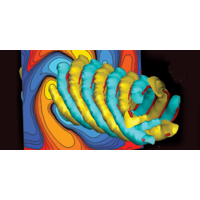
[Phys. Rev. Lett. 114, 205005] Published Thu May 21, 2015
Newly dedicated observatory to search for gravitational waves
Advanced LIGO will now undergo commissioning to ensure instrumentation is ready for its first search this autumn.
Galaxy’s snacking habits revealed
A study not only reveals a spiral galaxy devouring a nearby compact dwarf galaxy but also shows evidence of its past galactic snacks in unprecedented detail.
Impact crater or supervolcano caldera?
At first glance, the region covered by this latest Mars Express image release appears to be pockmarked with impact craters. But the largest structure among them may hold a rather explosive secret: it could be remains of an ancient supervol…
Ceres Bright Spots Seen Closer Than Ever
NASA’s Dawn mission captured a sequence of navigational images of dwarf planet Ceres from a distance of 4,500 miles (7,200 kilometers) on May 16, 2015.
Astronomers observe a supernova colliding with its companion star
The data provide evidence for one model of how type Ia supernovae occur and means both theories actually may be valid.
The dreadful beauty of Medusa
As the star at the heart of this nebula made its transition into retirement, it shed its outer layers into space, forming this colorful cloud.
Science of friction
Bearing balls produced by the European Space Tribology Laboratory, tasked with keeping missions moving in space
New shape resonances in one dimension
Hitherto, a finitely thick barrier next to a well or a rigid wall has been considered the potential
of simplest shape giving rise to resonances (metastable states) in one dimension: x∈ (−∞, ∞). In
such a potential, there are three real turnin…
NASA Soil Moisture Mission Begins Science Operations
NASA’s new Soil Moisture Active Passive (SMAP) mission to map global soil moisture and detect whether soils are frozen or thawed has begun science operations.
Scientists at Keck discover the fluffiest galaxies
These galaxies are nearly as wide as our Milky Way Galaxy — about 60,000 light-years — yet harbor only 1 percent as many stars.
Interferometric phase detection at x-ray energies via Fano resonance control
Author(s): K. P. Heeg, C. Ott, D. Schumacher, H.-C. Wille, R. Röhlsberger, T. Pfeifer, and J. Evers
The phase of an x ray can be detected when it interacts with nuclei, an effect that could be used to characterize the quantum state of a nuclear two-level system.
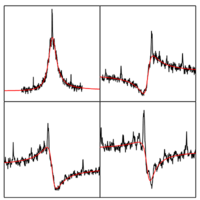
[Phys. Rev. Lett. 114, 207401] Published Mon May 18, 2015
Suppression and Revival of Weak Localization through Control of Time-Reversal Symmetry
Author(s): K. Müller, J. Richard, V. V. Volchkov, V. Denechaud, P. Bouyer, A. Aspect, and V. Josse
Controlled manipulation of the time reversal symmetry in a disordered quantum gas is achieved by applying a dephasing pulse.
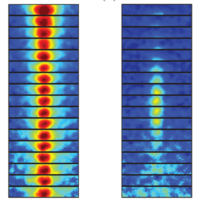
[Phys. Rev. Lett. 114, 205301] Published Mon May 18, 2015
Rotation of Quantum Impurities in the Presence of a Many-Body Environment
Author(s): Richard Schmidt and Mikhail Lemeshko
Immersing a quantum impurity into a Bose-Einstein condensate causes a redistribution of the angular momentum between the impurity and the many-body environment leading to collective excitations. These excitations can be explained using a new quasiparticle: the “angulon”.
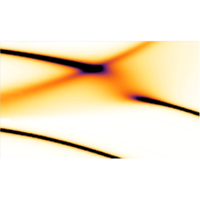
[Phys. Rev. Lett. 114, 203001] Published Mon May 18, 2015
Tunable Subluminal Propagation of Narrow-band X-Ray Pulses
Author(s): Kilian P. Heeg, Johann Haber, Daniel Schumacher, Lars Bocklage, Hans-Christian Wille, Kai S. Schulze, Robert Loetzsch, Ingo Uschmann, Gerhard G. Paulus, Rudolf Rüffer, Ralf Röhlsberger, and Jörg Evers
Slow light effects have been measured for x rays using a cavity filled with iron nuclei, where the speed of light was reduced by a factor of 10,000.
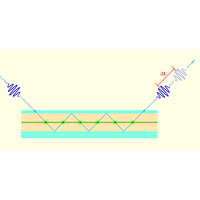
[Phys. Rev. Lett. 114, 203601] Published Mon May 18, 2015
Ultracold Dipolar Gas of Fermionic ^{23}Na^{40}K Molecules in Their Absolute Ground State
Author(s): Jee Woo Park, Sebastian A. Will, and Martin W. ZwierleinThe cooling of strongly dipolar molecules to their absolute ground state has opened the possibility of creating new forms of matter.[Phys. Rev. Lett. 114, 205302] Published Mon May 18, …
Four decades of tracking European spacecraft

Forty years ago this week, a satellite ground station in Spain became the first to be assigned to what would become ESA. Since then, the network – Estrack – has expanded worldwide and today employs cutting-edge technology to link mission controllers with spacecraft orbiting Earth, voyaging deep in our Solar System or anywhere in between.
OSIRIS discovers balancing rock on Comet 67P
Scientists have not determined how the boulder seen in Rosetta images came to perch on the rim of a small depression.
Astronomers baffled by discovery of rare quasar quartet
The quartet of active galaxies reside in one of the most massive structures ever discovered in the distant universe and is surrounded by a giant nebula of cool dense gas.
ESA mourns loss of Director Antonio Fabrizi
On Saturday 16 May, after a long illness, ESA Director of Launchers Antonio Fabrizi passed away in Rome at the age of 67.
Experimental Generation of Squeezed Cat States with an Operation Allowing Iterative Growth
Author(s): Jean Etesse, Martin Bouillard, Bhaskar Kanseri, and Rosa Tualle-BrouriAn optical setup is used to generate a mesoscopic state of light, called a cat state, which can be fed back into the system to increase its nonclassicality.[Phys. Rev. Let…
Satellites make a load of difference to bridge safety
When extreme weather comes our way, realtime information from space can help us to decide if closing a bridge is the right thing to do.
Magnetar near supermassive black hole delivers surprises
A new study reveals that the amount of X-rays from magnetar SGR 1745-2900 is dropping more slowly than other previously observed magnetars, and its surface is hotter than expected.
Hubble catches a stellar exodus in action
The study of white dwarf migration in globular cluster 47 Tucanae challenges some of the ideas about how and when a star loses mass near the end of its life.
OPALS Boosts Space-to-Ground Optical Communications Research
Ever wonder why stars seem to twinkle? This effect is caused by variations in the density of our atmosphere that cause blurring in light coming from space.
It’s the Final Act for Larsen B Ice Shelf, NASA Finds
NASA has found that the last section of Antarctica’s Larsen B Ice Shelf, which partially collapsed in 2002, is likely to disintegrate before the end of the decade.
Combined Measurement of the Higgs Boson Mass in pp Collisions at sqrt[s]=7 and 8 TeV with the ATLAS and CMS Experiments
Author(s): G. Aad et al. (ATLAS Collaboration, CMS Collaboration)
A new value for the Higgs boson mass will allow stronger tests of the standard model and of theories about the Universe’s stability.
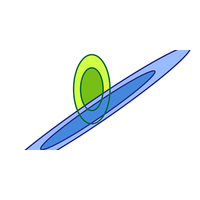
[Phys. Rev. Lett. 114, 191803] Published Thu May 14, 2015