Thanks to a new system developed by scientists in the UK, taking to the waves for a spot of surfing can benefit research into the health of coastal waters, and could help confirm satellite measurements of sea-surface temperature.
Space Kombucha in the search for life and its origin
You might know it as a drink for hipsters or as an ancient brew drunk for centuries in Eurasia, but the culture that ferments sugary tea into Kombucha is going around the world. Bolted to the outside of the International Space Station are …
Astronomers discover powerful aurora beyond solar system
The scientists found the aurora not from a planet, but from a low-mass star at the boundary between stars and brown dwarfs.
First detection of lithium from an exploding star
Observations of Nova Centauri 2013 help to explain the mystery of why many young stars seem to have more of this chemical element than expected.
NASA Mars Orbiter Preparing for Mars Lander’s 2016 Arrival
NASA’s Mars Reconnaissance Orbiter will fire thrusters on Wednesday for a maneuver to get into position for the 2016 arrival of NASA’s next Mars lander.
New Names and Insights at Ceres
Colorful new maps of Ceres, based on NASA’s Dawn spacecraft data, showcase a diverse topography, with dramatic height differences between crater bottoms and mountain peaks.
Control of Optical Transitions with Magnetic Fields in Weakly Bound Molecules
Author(s): B. H. McGuyer, M. McDonald, G. Z. Iwata, W. Skomorowski, R. Moszynski, and T. Zelevinsky
Magnetic fields can be used to make a normally forbidden molecular transition accessible to optical excitation, using much lower fields than would be needed to achieve the same with the constituent atoms.
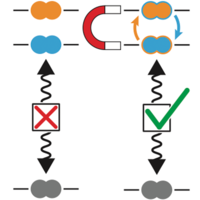
[Phys. Rev. Lett. 115, 053001] Published Tue Jul 28, 2015
Resolving the Tevatron Top Quark Forward-Backward Asymmetry Puzzle: Fully Differential Next-to-Next-to-Leading-Order Calculation
Author(s): Michal Czakon, Paul Fiedler, and Alexander Mitov
Fully differential two loop calculations in the Standard Model explain the excess of top quarks in the direction of the proton beam in pp¯ collisions at the Tevatron collider.
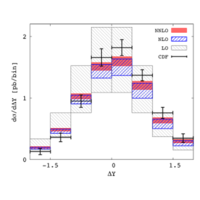
[Phys. Rev. Lett. 115, 052001] Published Tue Jul 28, 2015
Orbital handover

Human spaceflight and operations image of the week: MSG-4 controllers hand over Europe’s newest weather satellite
Dense galaxies hiding in plain sight
Undergraduates discovered two tiny galaxies crammed with stars at more than 10,000 times the density of the Milky Way.
Ceres gets new maps, new names
Now with detailed topography and official feature names from the IAU, these maps of asteroid Ceres are worth exploring.
First applications from Sentinel-2A

From agricultural monitoring to charting changing lands, early images from Europe’s new Sentinel-2A satellite show how the ‘colour vision’ mission’s critical observations can be used to keep us and our planet safe.
Introducing Sentinel-2

Discover some of the mission’s benefits for the planet’s ever-growing population, such as deforestation monitoring, food security and the sustainable management of natural resources
Born-again nebula
Space Science image of the week: XMM-Newton’s view of an eye-shaped cloud carved by a dying star’s brief comeback to life
Negative Differential Conductivity in an Interacting Quantum Gas
Author(s): Ralf Labouvie, Bodhaditya Santra, Simon Heun, Sandro Wimberger, and Herwig OttRubidium atoms in an optical trap have been made to exhibit negative differential conductance, a phenomenon normally found in semiconductor diodes.[Phys. Rev. Lett…
Next two Galileo satellites reach Europe’s Spaceport

Europe’s ninth and tenth Galileo satellites have crossed the Atlantic, touching down in French Guiana ahead of their joint launch this September.
Fossil star clusters reveal their age
A new survey of globular clusters show many of the star groups are almost as old as the universe itself.
New Hubble image shows cosmic wind creating “Pillars of Destruction”
A new study shows how cosmic winds can erode a galaxy’s gas and dust, shutting down star formation.
ESA hands over control of the MSG-4 weather satellite

On 26 July at 09:30 GMT (11:30 CEST), ESA handed control of Europe’s last Meteosat Second Generation weather satellite, MSG-4, to EUMETSAT
New Horizons team finds haze, flowing ice on Pluto
Just 10 days after closest approach, the distant world is showing a diversity of planetary geology that has mission scientists thrilled.
Week In Images
Our week through the lens: 20-24 July 2015
Drag Moderation by the Melting of an Ice Surface in Contact with Water
Author(s): Ivan U. Vakarelski, Derek Y. C. Chan, and Sigurdur T. Thoroddsen
An ice coating can halve the drag of an object moving in water by reducing the turbulent wake behind it.
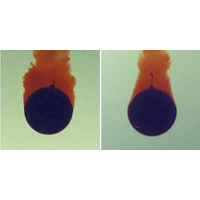
[Phys. Rev. Lett. 115, 044501] Published Fri Jul 24, 2015
Atom-Light Hybrid Interferometer
Author(s): Bing Chen, Cheng Qiu, Shuying Chen, Jinxian Guo, L. Q. Chen, Z. Y. Ou, and Weiping Zhang
A new type of interferometer, sensitive to the phases of an atomic spin wave and a light wave is experimentally demonstrated.
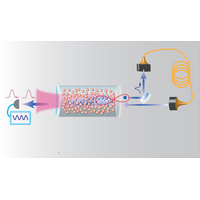
[Phys. Rev. Lett. 115, 043602] Published Fri Jul 24, 2015
Explore the Space Station

Explore the International Space Station with ESA astronaut Samantha Cristoforetti as your guide in this 360° interactive view
Andreas Mogensen launch moved by a day

The next ESA astronaut to work on the International Space Station, Andreas Mogensen, will arrive a day later than previously planned because the Station’s orbit has been changed.
The Danish flight engineer, commander Sergei Volkov and Kazakh cosmonaut Aidyn Aimbetov will leave Earth from Baikonur, Kazakhstan, at 4:34 GMT (6:34 CEST, 10:34 local time) on 2 September and arrive at the Space Station just six hours later.
Andreas and Aidyn’s stay will be short – they will be back on terra firma just 10 days later. They will leave Sergei on the Station and return to Earth in a different Soyuz under commander Gennady Padalka, who is already in space.
Brown dwarfs, stars share formation process, new study indicates
This is the first time that jets have been found coming from brown dwarfs at such an early stage of their formation and shows that they form in a way similar to that of stars.
NASA’s Curiosity Rover Inspects Unusual Bedrock
The laser-firing instrument on NASA’s Curiosity Mars rover has identified a rock target that is rich in silica, prompting further investigation with the rover.
Less Algae, Not Clearer Water, Keeps Tahoe Blue
Lake Tahoe’s iconic blueness is more strongly related to the lake’s algal concentration than to its clarity.
Finding Another Earth
Kepler’s newest planetary find joins a pantheon of planets with similarities to Earth.
NASA’s Kepler Mission Discovers Bigger, Older Cousin to Earth
NASA’s Kepler mission has confirmed the first near-Earth-size planet in the “habitable zone” around a sun-like star.
Coherent Addressing of Individual Neutral Atoms in a 3D Optical Lattice
Author(s): Yang Wang, Xianli Zhang, Theodore A. Corcovilos, Aishwarya Kumar, and David S. WeissResearchers manipulate atomic qubits individually in a three-dimensional optical lattice.[Phys. Rev. Lett. 115, 043003] Published Thu Jul 23, 2015
Earth from Space

Join us Friday, 24 July, at 10:00 CEST for the ‘Earth from Space’ video programme. This week features a Sentinel-1 radar image over southern Bavaria
Kepler mission discovered bigger, older cousin to Earth
The newly discovered Kepler-452b is the smallest planet to date discovered orbiting in the habitable zone or a G2-type star like our Sun.
Pulsar punches hole in stellar disk
Scientists have discovered a binary system where a rapidly spinning neutron star’s wind is rocketing away material from the disk around its companion.
New Website Gathering Public Input on NASA Mars Images
Mars researchers are soliciting volunteers to locate odd polar-area features on Mars that have names such as “Swiss cheese terrain” and “spiders.”
A Wi-Fi Reflector Chip To Speed Up Wearables
Researchers at JPL and UCLA have developed a technology that could reduce the power needed to send information from wearable devices.
Could ‘Windbots’ Someday Explore the Skies of Jupiter?
Wind-harvesting robotic probes might someday explore the atmospheres of other planets, as well as our home planet, thanks to an innovative NASA JPL study.
Temperature-Dependent Three-Dimensional Anisotropy of the Magnetoresistance in WTe_{2}
Author(s): L. R. Thoutam, Y. L. Wang, Z. L. Xiao, S. Das, A. Luican-Mayer, R. Divan, G. W. Crabtree, and W. K. Kwok
Tungsten-ditelluride cleaves easily into atomically thin layers, but its electrons conduct almost isotropically, suggesting a rare case of good charge conduction across weak mechanical bonds.
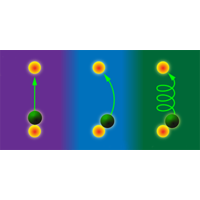
[Phys. Rev. Lett. 115, 046602] Published Wed Jul 22, 2015
Heat on Mercury antenna
Technology image of the week: Testing the antenna that will keep ESA’s Mercury mission linked to Earth
New Horizons finds second mountain range in Pluto’s “heart”
The heights of these mountains are comparable to those found in the U.S. Appalachian range.
ALMA witnesses assembly of galaxies in the early universe for the first time
The new observations allow astronomers to start to see how the first galaxies were built up and how they cleared the cosmic fog during the era of reionization.
New Horizons captures two of Pluto’s smaller moons
As more data on Nix and Hydra come back from the spacecraft, scientists will be able to make more detailed findings on these moons’ surface characteristics and other properties.
Greenland’s Undercut Glaciers Melting Faster than Thought
Greenland’s glaciers are badly undercut and melting faster than thought, raising sea levels faster than currently estimated.
Dark science
Human spaceflight and operations image of the week: Container for storing snow samples at the remotest base in the world
Discontinuous Buckling of Wide Beams and Metabeams
Author(s): Corentin Coulais, Johannes T. B. Overvelde, Luuk A. Lubbers, Katia Bertoldi, and Martin van Hecke
The buckling of mechanical beams under a compressive force can be tuned by adding holes into the beam.
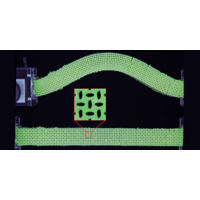
[Phys. Rev. Lett. 115, 044301] Published Tue Jul 21, 2015
Dead galaxies in Coma Cluster may be packed with dark matter
New computer simulations show that these galaxies stopped star formation as early as 7 billion years ago but haven’t been ripped apart due to their dark matter.
NASA Hosts Media Telecon About Latest Kepler Discoveries
NASA will host a news teleconference at 9 a.m. PDT (noon EDT) Thursday, July 23, to announce new discoveries made by its planet-hunting mission, the Kepler Space Telescope.
Thermal Conductivity through the Quantum Critical Point in YbRh_{2} Si_{2} at Very Low Temperature
Author(s): M. Taupin, G. Knebel, T. D. Matsuda, G. Lapertot, Y. Machida, K. Izawa, J.-P. Brison, and J. Flouquet
Experiments with heavy-fermion materials show that quasiparticles exist at the critical point of a quantum phase transition.
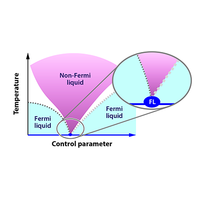
[Phys. Rev. Lett. 115, 046402] Published Mon Jul 20, 2015
Experimental Satellite Quantum Communications
Author(s): Giuseppe Vallone, Davide Bacco, Daniele Dequal, Simone Gaiarin, Vincenza Luceri, Giuseppe Bianco, and Paolo VilloresiFragile photon states useful for quantum communication can be faithfully transmitted and distinguished over a link between a…
Cool summer boosts Arctic ice
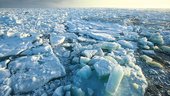
Measurements from ESA’s CryoSat satellite show that the volume of Arctic sea ice increased by a third following the unusually cool summer of 2013. This new finding suggests that ice in the northern hemisphere is more sensitive to changes in summer melting than it is to winter cooling.
Inside Imhotep

Tour one of the most geologically diverse regions on Rosetta’s comet
Satellite camera provides “EPIC” view of Earth
Data from the new NASA camera will be used to study the sunlit face of our planet.
Internet investor Yuri Milner joins with Berkeley in $100 million search for extraterrestrial intelligence
The Breakthrough Prize Foundation has already contracted with two of the world’s largest radio telescopes to devote major telescope time to searching for signals from other civilizations.
The Argo’s hidden cargo
Space science image of the week: Intricate dust lanes are revealed in this far-infrared view of the constellation Carina
Dawn Maneuvering to Third Science Orbit
NASA’s Dawn spacecraft is using its ion propulsion system to descend to its third mapping orbit at Ceres, and all systems are operating well.
Preparing to build ESA’s Jupiter mission
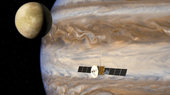
Airbus Defence & Space in France has been selected as the prime industrial contractor for ESA’s Juice mission to Jupiter and its icy moons.
Week In Images
Our week through the lens: 13-17 July 2015
Thin Films in Partial Wetting: Internal Selection of Contact-Line Dynamics
Author(s): Amir Alizadeh Pahlavan, Luis Cueto-Felgueroso, Gareth H. McKinley, and Ruben JuanesA classic problem of a spreading puddle might be solved by incorporating intermolecular forces between the liquid and the solid underneath.[Phys. Rev. Lett. 1…
Pluto’s icy plains, pits, and mountains take shape in Tombaugh Regio
New views of Tombaugh Regio, Pluto’s icy heart, provide still more evidence of a geologically rich world.
Gaia satellite and amateur astronomers spot one in a billion star
It is a type of a two-star system known as a cataclysmic variable, where one super dense white dwarf star is stealing gas from its companion star, effectively “cannibalizing” it.
A simple demonstration of Einstein’s lift: a body thrown upwards moves rectilinearly and uniformly relative to a free-falling model of the lift
The educational model of Einstein’s lift consists of a table suspended from an electromagnet. A
flexible support is attached to the table. A metal ball is on the support and deforms it. When the
electromagnet is deenergized, the table falls, the syst…
Measurement reduction method for the Millikan oil-drop experiment
To overcome the shortcomings of the measurement procedure used for the Millikan oil-drop experiment
course, this paper suggests a measurement reduction method based on simplification of the
conventional formula. In this method, only the voltage and t…
Calculation of the ac to dc resistance ratio of conductive nonmagnetic straight conductors by applying FEM simulations
This paper analyzes the skin and proximity effects in different conductive nonmagnetic straight
conductor configurations subjected to applied alternating currents and voltages. These effects have
important consequences, including a rise of the ac res…
A relativistic spin zero particle in a spherical cavity
The problem of a relativistic massive scalar particle trapped in an infinite potential spherical
well is pedagogically addressed in this paper. The wave function solutions and probability density
of the Klein–Gordon equation in spherical coordinate…
Evidence of Wγγ Production in pp Collisions at sqrt[s] =8 TeV and Limits on Anomalous Quartic Gauge Couplings with the ATLAS Detector
Author(s): G. Aad et al. (ATLAS Collaboration)The first measurement of triple gauge boson production (W boson and two photons) at the LHC provides new limits on interactions beyond the standard model.[Phys. Rev. Lett. 115, 031802] Published Thu Jul 16,…
Coupling Ferroelectricity with Spin-Valley Physics in Oxide-Based Heterostructures
Author(s): Kunihiko Yamauchi, Paolo Barone, Tatsuya Shishidou, Tamio Oguchi, and Silvia PicozziA theoretically proposed oxide-based heterostructure indicates how coupling of spin and valley degrees of freedom may be engineered and controlled via the fe…
Earth from Space
Join us Friday, 17 July, at 10:00 CEST for the ‘Earth from Space’ video programme. This week features a satellite image of New York City
A dark matter bridge in our cosmic neighborhood
This is the first time scientists have had observational verification that large filamentary superhighways are channeling dwarf galaxies across the cosmos along bridges of dark matter.
The mysterious “lakes” on Saturn’s moon Titan
A new study of Titan’s surface depressions suggests that it dissolves in a process similar to the creation of sinkholes on Earth.
Full launch coverage
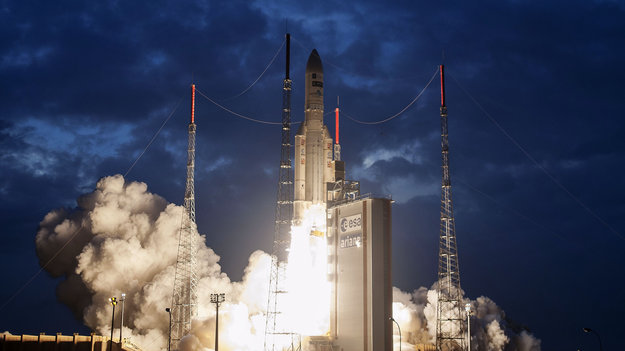
Watch the replay of the full MSG-4 launch coverage from Europe’s Spaceport in French Guiana on 15 July
Launch replay

Missed MSG-4 liftoff? Watch the replay of the launch from Europe’s Spaceport in French Guiana on 15 July
X-ray specs
Technology image of the week: ESA’s 7.5 tonne X-ray machine for seeing into space parts
THz-Pulse-Induced Selective Catalytic CO Oxidation on Ru
Author(s): Jerry L. LaRue, Tetsuo Katayama, Aaron Lindenberg, Alan S. Fisher, Henrik Öström, Anders Nilsson, and Hirohito Ogasawara
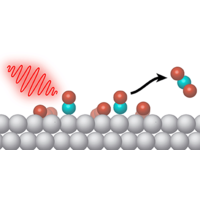
Terahertz pulses drive certain reactions on a metal surface by selectively exciting some of the adsorbed molecules.
[Phys. Rev. Lett. 115, 036103] Published Wed Jul 15, 2015
Physical Limit to Concentration Sensing Amid Spurious Ligands
Author(s): Thierry MoraThe accuracy with which a cell can sense a specific ligand is limited by the concentration of incorrect ligands that can bind to and interfere with the cell receptors.[Phys. Rev. Lett. 115, 038102] Published Wed Jul 15, 2015
Boundary conditions

Stunning shots of Rosetta’s comet reveal details of regional boundaries
MSG-4 liftoff

MSG-4 lifted off on an Ariane 5 launcher from Europe’s Spaceport in French Guiana at 21:24 GMT (23:42 CEST) on 15 July
MSG-4 in orbit
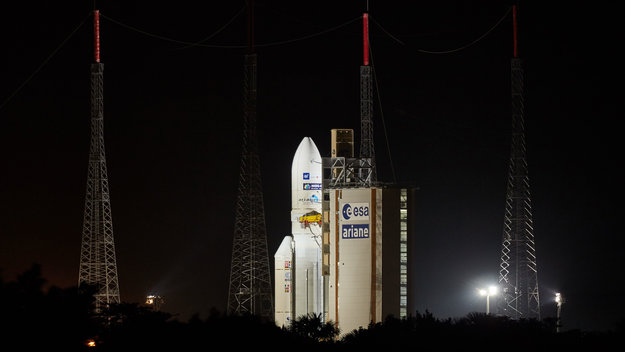
The last weather satellite in Europe’s highly successful Meteosat Second Generation series has been launched from Europe’s Spaceport in Kourou, French Guiana
Europe’s MSG-4 weather satellite delivered into orbit
The last weather satellite in Europe’s highly successful Meteosat Second Generation series lifted off on an Ariane 5 launcher at 21:42 GMT (23:42 CEST) on 15 July from Europe’s Spaceport in Kourou, French Guiana.
Discovery of a new class of particles at the LHC
The pentaquark represents a way to aggregate the fundamental constituents of ordinary protons and neutrons in a pattern that has never been observed before.
Pluto’s bright heart and Charon’s dark spot revealed in HD
New Horizons’ first high-resolution images of Pluto are giving astronomers insight into the dwarf world’s complex ice geology.
Jupiter twin discovered around solar twin
The existence of a Jupiter-mass planet in a Jupiter-like orbit around a Sun-like star opens the possibility that the system of exoplanets around this star may be similar to our solar system.
Measuring the hydrogen Balmer series and Rydberg?s constant with a homemade spectrophotometer
In a recent paper (Amrani 2014 Eur. J. Phys. 35 [http://dx.doi.org/10.1088/0143-0807/35/4/045001]
045001 ), the author presented two different methods to measure the wavelength of visible lines of
Balmer series from the hydrogen atomic spectrum and e…
Elucidating the electron transport in semiconductors via Monte Carlo simulations: an inquiry-driven learning path for engineering undergraduates
Within the context of higher education for science or engineering undergraduates, we present an
inquiry-driven learning path aimed at developing a more meaningful conceptual understanding of the
electron dynamics in semiconductors in the presence of …
Visualizing the phenomena of wave interference, phase-shifting and polarization by interactive computer simulations
In this manuscript a computer based simulation is proposed for teaching concepts of interference of
light (under the scheme of a Michelson interferometer), phase-shifting and polarization states. The
user can change some parameters of the interfering…
An RGB approach to extraordinary spectra
After Newton had explained a series of ordinary spectra and Goethe had pointed out its complementary
counterpart, Nussbaumer discovered a series of extraordinary spectra which are geometrically
identical and colourwise analogous to Newton’s and Goe…
The Klein paradox: a new treatment
The Dirac equation requires a treatment of the step potential that differs fundamentally from the
traditional treatment, because the Dirac plane waves, besides momentum and spin, are characterized
by a quantum number with the physical meaning of sign…
Measuring the hydrogen Balmer series and Rydberg’s constant with a homemade spectrophotometer
In a recent paper (Amrani 2014 Eur. J. Phys. 35 [http://dx.doi.org/10.1088/0143-0807/35/4/045001]
045001 ), the author presented two different methods to measure the wavelength of visible lines of
Balmer series from the hydrogen atomic spectrum and e…
Construction of an inexpensive molecular iodine spectrometer using a self-developed Pohl wavemeter around 670 nm wavelength
We describe the construction of an inexpensive iodine spectrometer with a homemade iodine vapour
cell and a self-developed wavemeter based on the Pohl interferometer, around the 670 nm wavelength.
This can be easily realized in an undergraduate teach…
Pluto and Charon show craters, dark spots, and even signs of snow as New Horizons flies by
Mission scientists are thrilled with the data already, and they haven’t even received information from the flyby yet.
Watch MSG-4 launch

Follow the launch of Europe’s next weather satellite live on Wednesday night. MSG-4 is set for liftoff on an Ariane launcher in a 37-minute window starting at 21:42 GMT (23:42 CEST) on 15 July
Density-Functional Theory for Strongly Correlated Bosonic and Fermionic Ultracold Dipolar and Ionic Gases
Author(s): F. Malet, A. Mirtschink, C. B. Mendl, J. Bjerlin, E. Ö. Karabulut, S. M. Reimann, and Paola Gori-Giorgi
An alternative functional for DFT calculations enables simulations of ultracold gases with long-ranged interactions.
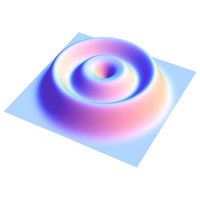
[Phys. Rev. Lett. 115, 033006] Published Tue Jul 14, 2015
Dzyaloshinskii-Moriya Interaction and Hall Effects in the Skyrmion Phase of Mn_{1−x} Fe_{x} Ge
Author(s): J. Gayles, F. Freimuth, T. Schena, G. Lani, P. Mavropoulos, R. A. Duine, S. Blügel, J. Sinova, and Y. Mokrousov
A new theoretical treatment of Skyrmions in ferromagnets shows that electron dynamics are governed by Berry phase physics.
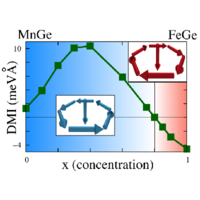
[Phys. Rev. Lett. 115, 036602] Published Tue Jul 14, 2015
iriss ground control
Human spaceflight and operations image of the week: ESA astronaut Andreas Mogensen visiting the Columbus Control Centre for the last time before his iriss mission
Astronomy summer school radar observations shine new light on near-Earth asteroid
The images reveal an elongated object that is only 260 feet (80 meters) across at its widest point.
NASA’s three-billion-mile journey to Pluto reaches historic encounter
New Horizons made closest approach to the distant world at 7:50 a.m. EDT this morning.
Live coverage: New Horizons’ historic Pluto flyby
Twenty-five years in the making, this close-up examination of the Pluto system represents the capstone of the first era of planet reconnaissance.
Europe advances with safer air travel

A safer airspace over Europe by 2018 is materialising as ESA’s Iris precursor project today began development with the unlocking of a further €7.6 million of funding.
MSG-4 launch timeline
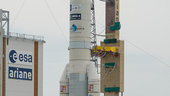
On 15 July, a powerful Ariane launcher will loft Europe’s final Meteosat Second Generation weather satellite into orbit from Kourou, French Guiana. For the mission control team at ESA, liftoff will mark the end of months of careful preparations and the start of the mission’s first critical phase.
How big is Pluto? New Horizons settles decades-long debate
Based on the most recent data, Pluto is actually larger than previous conservative estimates, making it the largest of all known solar system objects beyond Neptune.
Experimental Test of Entropic Noise-Disturbance Uncertainty Relations for Spin-1/2 Measurements
Author(s): Georg Sulyok, Stephan Sponar, Bülent Demirel, Francesco Buscemi, Michael J. W. Hall, Masanao Ozawa, and Yuji Hasegawa
Experiments on neutrons confirm an information-theoretic formulation of Heisenberg’s noise-disturbance uncertainty principle: There is a reciprocal trade-off in knowledge of two incompatible spin observables.
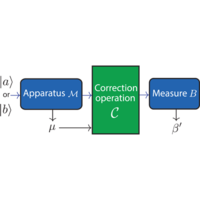
[Phys. Rev. Lett. 115, 030401] Published Mon Jul 13, 2015