Author(s): Minoru Kawamura, Keiji Ono, Peter Stano, Kimitoshi Kono, and Tomosuke AonoNuclear magnetic moments inside a quantum point contact (QPC) can be polarized by a DC current. This polarization influences the QPC conductance at 0.7*2e2/h, where a …
Spatially Resolved Detection of a Spin-Entanglement Wave in a Bose-Hubbard Chain
Author(s): Takeshi Fukuhara, Sebastian Hild, Johannes Zeiher, Peter Schauß, Immanuel Bloch, Manuel Endres, and Christian Gross
A quantum microscope images a propagating wave of entanglement between atoms trapped in an optical lattice.
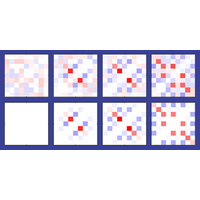
[Phys. Rev. Lett. 115, 035302] Published Mon Jul 13, 2015
Preparing for launch
MSG-4 is set for launch on Wednesday night. Learn more about the European weather satellite with ESA TV
Rosetta: preparing for perihelion

Rosetta’s investigations of its comet are continuing as the mission teams count down the last month to perihelion – the closest point to the Sun along the comet’s orbit – when the comet’s activity is expected to be at its highest.
Fermi sees record flare from a black hole in a distant galaxy
One day 3C 279 was just one of many active galaxies scientists see, and the next day it was the brightest thing in the gamma-ray sky.
Searing Sun seen in X-rays
NASA’s NuSTAR usually examines the mysteries of black holes, supernovae, and other high-energy objects, but it occasionally looks closer to home to study our star.
Pioneering Rosetta mission scientist Claudia Alexander dead at 56
As a research scientist, she inspired a generation, especially young women, to seek careers in science, technology, engineering and math.
Here comes the Sun
Space Science Image of the Week: 20 SOHO snapshots of our Sun, one for each year of operations
Robots under test for oil and gas rig duty

A robot building on ESA’s ExoMars rover is bidding to win a place on oil and gas production rigs around the world, to work in remote and hazardous environments.
New Horizons’ last portrait of Pluto’s puzzling spots
While composition and color data still need to be downlinked, this hemisphere will be invisible to New Horizons during the July 14 flyby.
New image of Pluto: “Houston, we have geology”
Among the structures tentatively identified in this new image are what appear to be polygonal features, a complex band of terrain stretching east-northeast across the planet, and a complex region where bright terrains meet the dark terrains of the “wha…
SMAP Team Investigating Radar Instrument Anomaly
Mission managers at NASA’s Jet Propulsion Laboratory, Pasadena, California, are assessing an anomaly with the radar instrument on NASA’s Soil Moisture Active Passive (SMAP) satellite observatory.
NASA’s Curiosity Mars Rover Tracks Sunspots
Curiosity is monitoring sunspots on the side of the sun facing away from Earth, during weeks when sun-monitoring spacecraft can’t provide that information.
Week In Images
Our week through the lens: 6-10 July 2015
High Gain Submicrometer Optical Amplifier at Near-Infrared Communication Band
Author(s): Xiaoxia Wang, Xiujuan Zhuang, Sen Yang, Yu Chen, Qinglin Zhang, Xiaoli Zhu, Hong Zhou, Pengfei Guo, Junwu Liang, Yu Huang, Anlian Pan, and Xiangfeng DuanResearchers have demonstrated an amplifier for near-infrared light that is 20 times more…
Gigantic early black hole could upend evolutionary theory
Because the galaxy the 7-billion-solar-mass black hole was discovered in is fairly typical in size, the study calls into question previous assumptions on the development of galaxies.
Swift reveals a black hole bull’s-eye
The satellite detected the start of a new outburst from V404 Cygni, where a black hole and a Sun-like star orbit each other.
Astronomy enthusiasts fear losing access to Mauna Kea permanently
A proposed rule change aimed at thwarting TMT protestors could block public access to some of the most pristine dark skies on Earth.
Pluto and Charon: New Horizons’ Dynamic Duo
The two worlds orbit the same gravitational point, but their similarities seem to end there.
NASA Missions Have Their Eyes Peeled on Pluto
NASA’s New Horizons will have the support of other spacecraft during its historic Pluto flyby, with observations from their outposts across the solar system.
NASA Finds Oceans Slowed Global Temperature Rise
A NASA study shows heat has been trapped in the Pacific and Indian oceans. The finding explains the recent slowdown in global temperature rise.
Distant Black Hole Wave Twists Like Giant Whip
Magnetic waves from a black hole are set in motion as if a whip is being cracked.
iriss for kids
ESA astronaut Andreas Mogensen narrates this animated story about his iriss mission to space starting September
Craters and Granular Jets Generated by Underground Cavity Collapse
Author(s): F. E. Loranca-Ramos, J. L. Carrillo-Estrada, and F. Pacheco-Vázquez
Planetary craters that form from a collapsing cavity have features distinct from those formed by a large object’s impact, according to experiments.
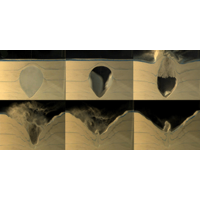
[Phys. Rev. Lett. 115, 028001] Published Thu Jul 09, 2015
ESA in UK
The flags are raised at the new Roy Gibson building at ESA ECSAT in UK, 9 July
Chameleon satellite to revolutionise telecom market
Telecom satellites are set to enter a new age, as ESA, Eutelsat and Airbus Defence & Space begin designing the most flexible payload ever.
Earth from Space

Join us Friday, 10 July, at 10:00 CEST for the ‘Earth from Space’ video programme. This week features the sandy and rocky terrain of the Sahara desert as seen by Sentinel-2
Radio astronomers see black hole come to life
A new study shows convincing evidence of the “switching on” of the active phase in a black hole at the center of galaxy NGC 660.
Huge new survey to shine light on dark matter
The first KiDS survey results show how the characteristics of the observed galaxies are determined by the invisible vast clumps of dark matter surrounding them.
A “heart” from Pluto as flyby begins
The New Horizons mission has officially begun the flyby sequence of science observations that will culminate with closest approach July 14.
Cutting through martian history
This colourful image resembles an abstract watercolour, but it is in fact a colour-coded topographic map of one of the most geologically diverse regions on Mars.
ESA teams ready for Europe’s next weather satellite

Ground control teams are ready to shepherd Europe’s next weather satellite through its critical first days in orbit, ensuring it is working and healthy in the harsh environment of space.
Searing Sun Seen in X-rays
A bouquet of colors highlights X-rays streaming off our sun.
Reentry rockers
Technology image of the week: UK band Public Service Broadcasting examine a reentry capsule during a recent visit to ESA’s technical heart
Optically Induced Nuclear Spin Polarization in the Quantum Hall Regime: The Effect of Electron Spin Polarization through Exciton and Trion Excitations
Author(s): K. Akiba, S. Kanasugi, T. Yuge, K. Nagase, and Y. HirayamaThe nuclear spins of Gallium and Arsenic are manipulated optically, providing an alternative to traditional qubits for quantum information processing.[Phys. Rev. Lett. 115, 026804] Pu…
Neptune’s badly behaved magnetic field
New computer simulations show that the distant planet’s magnetic field is constantly rotating and changing.
Some long-duration gamma-ray bursts are driven by magnetars
A new study reveals that a supernova discovered after a gamma-ray burst must have been powered by a highly magnetic neutron star.
New Horizons map of Pluto: The whale and the doughnut
While the new maps gives mission scientists an important tool for deciphering the patterns of bright and dark markings on the distant planet’s surface, they are holding off on making any interpretations of features for now.
NASA Selects Leading-Edge Technology Concepts for Continued Study
NASA has selected seven technology proposals for continued study under Phase II of the agency’s Innovative Advanced Concepts (NIAC) Program, including one from JPL.
With One Year to Jupiter, NASA’s Juno Team Prepares
With one year remaining in a five-year trek, NASA’s Juno mission team is preparing for the spacecraft’s expedition to the solar system’s largest planet.
Turning Bacteria Suspensions into Superfluids
Author(s): Héctor Matías López, Jérémie Gachelin, Carine Douarche, Harold Auradou, and Eric Clément
Self-propelling bacteria can reduce the viscosity of a fluid to zero through a collective organization of their swimming.

[Phys. Rev. Lett. 115, 028301] Published Tue Jul 07, 2015
Station Moon transit
Human spaceflight and operations image of the week: the International Space Station crosses the Moon seen from Australia
Cosmology looks beyond the standard model
A special session at the National Astronomy Meeting has been convened for astronomers to take stock of the evidence and stimulate further investigation of cosmology beyond the standard model.
Pluto dark spots continue to intrigue
These regularly spaced patches are each hundreds of miles across.
Rings and loops in the stars: Planck’s stunning new images
The new maps show regions of the sky that produce anomalous microwave emission.
Pluto: The “other” red planet
Pluto’s reddish color has been known for decades, but New Horizons is now allowing scientists to correlate the color of different places on the surface with their geology and soon with their compositions.
Dawn Holding in Second Mapping Orbit
NASA’s Dawn spacecraft is healthy and stable, after experiencing an anomaly in the system that controls its orientation.
Opportunity Rover’s 7th Mars Winter to Include New Study Area
NASA’s Opportunity rover has resumed driving after Mars emerged from behind the sun. Plans call for the rover to examine sites in Marathon Valley during the upcoming winter.
NuSTAR Stares Deep into Hidden Lairs of Black Holes
The high-energy X-ray eyes of NASA’s NuSTAR have peered into some of the most heavily buried supermassive black holes known.
Astronomers use cosmic gravity to create a ‘black-hole-scope’
The Integral, Fermi and Swift space observatories have used the magnifying power of a cosmic lens to explore the inner regions of a supermassive black hole.
Share the Sun
Share your summer pictures with the crew in Concordia research station in Antarctica, who have not seen the Sun since 4 May
Shear Viscosity of a Unitary Fermi Gas Near the Superfluid Phase Transition
Author(s): J. A. Joseph, E. Elliott, and J. E. Thomas
Measurements of a Fermi gas below the superfluid transition temperature provide the first determination of the local shear viscosity, revealing features that were hidden in previous trap-averaged measurements.
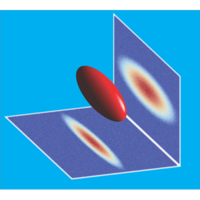
[Phys. Rev. Lett. 115, 020401] Published Mon Jul 06, 2015
Direct Evidence of Flexomagnetoelectric Effect Revealed by Single-Molecule Spectroscopy
Author(s): I. S. Veshchunov, S. V. Mironov, W. Magrini, V. S. Stolyarov, A. N. Rossolenko, V. A. Skidanov, J.-B. Trebbia, A. I. Buzdin, Ph. Tamarat, and B. Lounis
Single molecule spectroscopy provides direct experimental evidence for electric polarization induced by magnetization inhomogeneities in an iron garnet film.
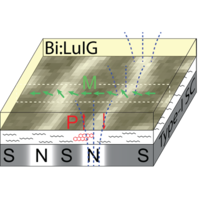
[Phys. Rev. Lett. 115, 027601] Published Mon Jul 06, 2015
Scanning Quantum Dot Microscopy
Author(s): Christian Wagner, Matthew F. B. Green, Philipp Leinen, Thorsten Deilmann, Peter Krüger, Michael Rohlfing, Ruslan Temirov, and F. Stefan Tautz
A new scanning probe technique provides increased sensitivity to the electrostatic potential surrounding a single atom or molecule.
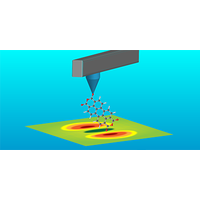
[Phys. Rev. Lett. 115, 026101] Published Mon Jul 06, 2015
Quantum Signature of Analog Hawking Radiation in Momentum Space
Author(s): D. Boiron, A. Fabbri, P.-É. Larré, N. Pavloff, C. I. Westbrook, and P. Ziń
Momentum correlations across the acoustic analog of a black hole in a Bose-Einstein condensate could be used to demonstate the quantum nature of Hawking radiation.
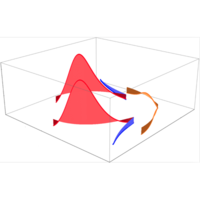
[Phys. Rev. Lett. 115, 025301] Published Mon Jul 06, 2015
Fullerene C_{60} Simulated with a Superconducting Microwave Resonator and Test of the Atiyah-Singer Index Theorem
Author(s): B. Dietz, T. Klaus, M. Miski-Oglu, A. Richter, M. Bischoff, L. von Smekal, and J. WambachA centimeter sized superconducting buckyball made from lead and brass is used to simulate the spectral properties of C60.[Phys. Rev. Lett. 115, 026801] …
Hybrid Matter-Wave–Microwave Solitons Produced by the Local-Field Effect
Author(s): Jieli Qin, Guangjiong Dong, and Boris A. MalomedA new species of matter-wave-microwave solitons is predicted in the ground state of a spinor gas. The state is a result of short-range attractive interactions between spinors, and long-range, g…
Metasurface-Enabled Remote Quantum Interference
Author(s): Pankaj K. Jha, Xingjie Ni, Chihhui Wu, Yuan Wang, and Xiang ZhangA proposed metasurface made of tiny gold antennas could act as either a flat mirror or a concave, focusing mirror, depending on the radiation pattern of the source, which could…
Europa’s blood-red scars

Space Science Image of the Week: The criss-crossing scars marking the surface of Jupiter’s icy moon Europa in this Galileo image look disturbingly biological
Universe’s hidden supermassive black holes revealed
A team of scientists using NuSTAR detected high-energy X-rays from five supermassive black holes previously clouded from direct view by dust and gas.
Astronomers see pebbles poised to make planets
Although scientists thought this is how planets form, this is the first time they’ve actually seen the process in action.
NASA’s New Horizons to return to normal science operations after spacecraft anomaly
Preparations are ongoing to resume the originally planned science operations July 7 and to conduct the entire close flyby sequence as planned.
Luca Parmitano: this year’s Captain NEEMO

ESA astronaut Luca Parmitano is to lead NASA’s 20th underwater astronaut training mission this month. Starting on 20 July, the 14-day NASA Extreme Environment Mission Operations sortie, or NEEMO, will see a team of four living and working in the Aquarius underwater research station off the coast of Florida, USA.
Week In Images
Our week through the lens: 29 June – 3 July 2015
Counting stars with Gaia

This image, based on housekeeping data from ESA’s Gaia satellite, is no ordinary depiction of the heavens. While the image portrays the outline of our Galaxy, the Milky Way, and of its neighbouring Magellanic Clouds, it was obtained in a rather unusual way.
Northwest Sardinia
Earth observation image of the week: a false-colour image from Sentinel-2A over part of the Italian island of Sardinia, also featured on the Earth from Space video programme
Stellar Sparklers That Last
A new image containing data from NASA’s Spitzer and Chandra space telescopes shows a cluster of young stars expected to burn for billions of years.
Accelerating Self-Imaging: The Airy-Talbot Effect
Author(s): Yaakov Lumer, Lee Drori, Yoav Hazan, and Mordechai SegevThe Talbot effect, where an optical field reproduces itself at constant intervals along a straight propgation line, has been demonstrated along a bent trajectory.[Phys. Rev. Lett. 115, …
Shifting the Voltage Drop in Electron Transport Through a Single Molecule
Author(s): Sujoy Karan, David Jacob, Michael Karolak, Christian Hamann, Yongfeng Wang, Alexander Weismann, Alexander I. Lichtenstein, and Richard BerndtSmall changes in the configuration of a molecule can significantly influence its resistive behavior …
Visualizing Pure Quantum Turbulence in Superfluid ^{3} He: Andreev Reflection and its Spectral Properties
Author(s): A. W. Baggaley, V. Tsepelin, C. F. Barenghi, S. N. Fisher, G. R. Pickett, Y. A. Sergeev, and N. Suramlishvili
Quantum turbulence in superfluid 3He is probed at length scales smaller than the average inter-vortex separation using the Andreev reflection of quasiparticle excitations.
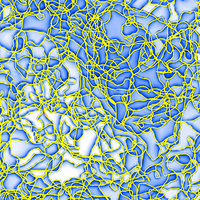
[Phys. Rev. Lett. 115, 015302] Published Thu Jul 02, 2015
Earth from Space
Join us Friday, 3 July, at 10:00 CEST for the ‘Earth from Space’ video programme. This week features an image over northwest Sardinia – one of the first from the Sentinel-2 mission
Spots on Pluto fascinate as New Horizons gets the all clear
Not finding new moons or rings is a bit of a scientific surprise, but as a result, no engine burn is needed to steer clear of potential hazards.
Rosetta spacecraft sees sinkholes on comet
These circular pits on Comet 67P/Churyumov-Gerasimenko likely formed when ices beneath the surface turned directly to gas.
NASA Maps Beach Tar from California Oil Pipeline Spill
When an oil spill sullied beaches near Santa Barbara, California, in May, a JPL airborne instrument tested new techniques that may help responders after future oil spills.
NASA Takes to Kansas Skies to Study Nighttime Thunderstorms
In most of the U.S., summer thunderstorms form on hot days. In the Great Plains, they often form at night. NASA is joining a multi-agency field campaign to learn why.
NASA’s Curiosity Mars Rover Studies Rock-Layer Contact Zone
As Mars emerges from passing nearly behind the sun, NASA has resumed full operations of the Curiosity rover, which has reached a site where at least two rock types meet.
Comet sinkholes generate jets
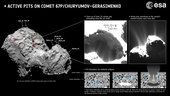
A number of the dust jets emerging from Rosetta’s comet can be traced back to active pits that were likely formed by a sudden collapse of the surface. These ‘sinkholes’ are providing a glimpse at the chaotic and diverse interior of the comet.
Tuning the Liquid-Liquid Transition by Modulating the Hydrogen-Bond Angular Flexibility in a Model for Water
Author(s): Frank Smallenburg and Francesco SciortinoA liquid-liquid transition with no intervening ice stage is predicted in supercooled water when the hydrogen bond flexibility is tuned.[Phys. Rev. Lett. 115, 015701] Published Wed Jul 01, 2015
Unexpectedly little black hole monsters rapidly suck up surrounding matter
Such “supercritical accretion” produces powerful outflows in the form of a dense disk wind coming from these ultra-luminous X-ray sources.
Buried in the heart of a giant
NGC 2367 is an infant stellar grouping that lies at the center of an immense and ancient structure on the margins of the Milky Way.
Ice mountains
Technology image of the week: original technology demonstration mission Proba-1 images the site of Antarctica’s first zero-emission base
My first day at ESA
First blog post by Jan Woerner, on taking up duty as ESA Director General
Director General
Meet Johann-Dietrich Woerner
NASA Explains Why June 30 Will Get Extra Second
The day will officially be a bit longer than usual on Tuesday, June 30, 2015, because an extra second, or “leap” second, will be added.
Surrounded by Gaia
Human spaceflight and operations image of the week: Gaia avionics model settles into new home
Photoemission Circular Dichroism and Spin Polarization of the Topological Surface States in Ultrathin Bi_{2} Te_{3} Films
Author(s): C.-Z. Xu, Y. Liu, R. Yukawa, L.-X. Zhang, I. Matsuda, T. Miller, and T.-C. ChiangThe complex behavior of photoemission in topological insulators is a result of quantum interference involving three photoemission channels according to abinitio…
Search for Ultralight Scalar Dark Matter with Atomic Spectroscopy
Author(s): Ken Van Tilburg, Nathan Leefer, Lykourgos Bougas, and Dmitry BudkerScientists have now enlisted atomic spectroscopy in the hunt for dark matter.[Phys. Rev. Lett. 115, 011802] Published Tue Jun 30, 2015
Observation of the Berezinskii-Kosterlitz-Thouless Phase Transition in an Ultracold Fermi Gas
Author(s): P. A. Murthy, I. Boettcher, L. Bayha, M. Holzmann, D. Kedar, M. Neidig, M. G. Ries, A. N. Wenz, G. Zürn, and S. Jochim
Experiments with cold atoms explore the low temperature superfluid phase transition of paired fermions in two dimensions.
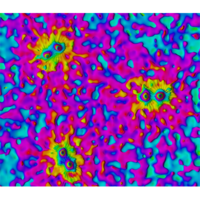
[Phys. Rev. Lett. 115, 010401] Published Tue Jun 30, 2015
Increasingly active comet
Space Science image of the week: Rosetta is monitoring the ever-increasing activity of the comet as they move closer to the Sun
Helping Europe prepare for asteroid risk
Each year, astronomers worldwide discover over 1000 new asteroids or other space rocks that could strike our planet. And if one is spotted heading towards Earth, experts working in ESA and national emergency offices need to know who should…
Life on Mars?
As the 2016 spacecraft nears completion, mission scientists explain how the ExoMars programme will help in the search for life on Mars
Speak to Peake
Watch a replay of the hangout with ESA astronaut Tim Peake
Exposed water ice detected on Rosetta comet’s surface
Scientists have identified 120 bright regions on the surface of Comet 67P/Churyumov-Gerasimenko.
New Horizons sees Pluto’s “bright fringe,” Charon’s “dark pole”
Scientists on the New Horizons team have found that the “close approach hemisphere” on Pluto has the greatest variety of terrain types seen on the planet so far.
Expert asteroid answers
Your asteroid questions answered by ESA experts, for World Asteroid Day
Bang goes an asteroid
ESA’s proposed Asteroid Impact Mission in pictures – for World Asteroid Day
Telescopes focus on target of ESA’s asteroid mission

Telescopes around the globe recently homed in on one point in the sky, observing the paired Didymos asteroids – the target for ESA’s proposed Asteroid Impact Mission.
The 800 m-diameter main body is orbited by a 170 m moon, informally dubbed Didymoon. The duo were more favourably placed from March until early June for studies.
Evidence for Collective Multiparticle Correlations in p−Pb Collisions
Author(s): V. Khachatryan et al. (CMS Collaboration)The plasma of quarks and gluons that forms when a proton collides with a lead nucleus has unexpected liquid-like properties.[Phys. Rev. Lett. 115, 012301] Published Mon Jun 29, 2015
Can planets be rejuvenated around dead stars?
New research from NASA’s Spitzer Space Telescope has identified one such candidate, seemingly looking billions of years younger than its actual age.
Monster black hole wakes up after 26 years
Since June 15, the black hole/star system V404 Cygni has featured repeated bright X-ray flashes on time scales shorter than an hour.